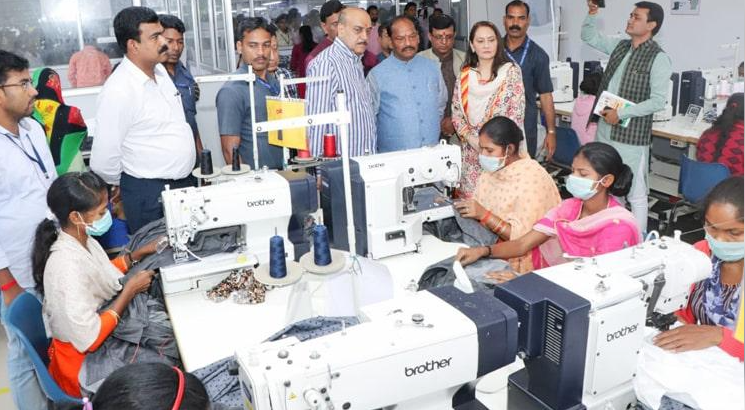
Indian clothing manufacturers are drastically reducing their reliance on the US market following a sharp rise in import duties imposed by Donald Trump’s administration. Companies are redirecting their supplies to the UK, the European Union and the Indian domestic market. One of the largest exporters, Orient Craft, has already reduced the share of its sales to the US from 84 per cent to less than 10 per cent, and manufacturers have no plans to return to their previous level of dependence, even in the event of a new trade agreement.
- Indian clothing manufacturers are shifting their exports from the US to European markets.
- Orient Craft has reduced the proportion of its US sales from 84 per cent to less than 10 per cent.
- Exports of Indian textiles and clothing to the US fell by 9.8 per cent.
- Companies are expanding their production and seeking new customers in Europe.
US tariffs have forced Indian factories to shift their markets
In 2025, the administration Donald Trump raised import duties on certain Indian goods to 50 per cent. This led to American retailers cancelling orders and demanding that manufacturers lower their prices.
Founder of Orient Craft Sudhir Dinga He explained that American buyers had suggested that suppliers cover up to 25 per cent of customs costs themselves, even though production profit margins often did not exceed 10 per cent.
The company, which previously worked with the American brands Gap and American Eagle, now actively supplies clothing to the British chains Next and Marks & Spencer.
Even following the reduction in tariffs, Dinga has no intention of restoring its previous sales structure. Business owners fear that yet another change in Washington’s trade policy will once again put their businesses at risk.
Similar consequences US trade tariffs have already forced companies in various countries to review their production and export strategies.
Europe is becoming the main destination for Indian exports
Gokaldas Exports, a major manufacturer employing over 53,000 people, plans to increase the share of the European market in its revenue from 15–16 per cent to 25–30 per cent over the next three to five years.
At the same time, the company’s dependence on the US is set to fall from 50–55 per cent to 35–40 per cent.
Germany, France, Italy and the Netherlands are becoming particularly attractive markets for Indian exporters. The UK has already granted duty-free access for Indian clothing under a trade agreement that came into force in July 2026.
A potential agreement between India and the European Union could further remove import duties on clothing, which currently stand at 12–17 per cent.
Clothing exports from the US are shifting towards other countries
According to the Global Trade Research Institute, between April and August 2026, India’s exports of textiles, clothing and home textiles to the US fell by 9.8 per cent to $4 billion.
Over the same period, exports to other markets rose by 3.7 per cent, reaching 15.2 billion dollars.
At the same time, manufacturers are looking for cheaper sites on which to locate their factories. In the city of Ranchi in eastern India, Gokaldas Exports plans to open a third plant, which could create up to 4,600 jobs.
India’s domestic market provides further support. It is estimated to be worth 150 billion dollars, with annual growth of 7–8 per cent.
Manufacturers do not plan to withdraw completely from the US market, but they consider it unlikely that the US will regain its former dominant role in exports of Indian clothing.