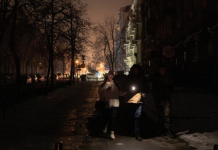
Power cuts disrupt not only the city’s usual rhythm but also road traffic conditions. Without street lights, it is harder to spot pedestrians at crossings, cyclists can remain almost invisible to motorists, and a ride on an electric scooter becomes a dangerous ordeal due to potholes and obstacles. Even the familiar journey home requires greater caution. Let’s look at how to get around safely on unlit streets, what the Highway Code stipulates, and what you should carry with you.
Briefly about the main points
- Reflective elements help drivers spot pedestrians in the dark much earlier.
- At unlit pedestrian crossings, it is important to make sure that cars actually do stop.
- Cyclists need a working headlight, indicators and to be alert when manoeuvring.
- E-scooter users should reduce their speed and avoid poorly lit routes.
Why might a driver spot a pedestrian wearing dark clothes too late?
On a well-lit street, a driver can see not only pedestrians, but also the pavement, the kerb, road signs and the area around the crossing. When the streetlights are off, many of these landmarks disappear. A person wearing a black jacket can practically blend into the surroundings, especially when it’s raining.
According to the Patrol Police, Under certain conditions, a pedestrian without reflective elements can only be seen from a distance of 25–30 metres in the light of dipped headlights. Using a flasher can increase this distance to 130–150 metres. Actual visibility depends on the weather, lighting conditions, the condition of the headlights and other factors.
That is precisely why a reflective strip, bracelet or sticker on a rucksack is not just an accessory. They reflect the light from car headlights back towards the driver, helping them to spot a person sooner.
It is best to attach reflectors on both sides of the body, on the sleeves, near the knees or ankles. Moving elements are more visible, and having several reflectors makes it possible to see a pedestrian from different directions. Light-coloured clothing also helps, but is no substitute for special reflective materials.
In Ukraine. Clause 4.4 of the Highway Code requires pedestrians who are walking on the carriageway or hard shoulder at night or in conditions of poor visibility to wear reflective elements or clothing incorporating them. This provision does not apply to pavements; however, it is also advisable to wear reflectors there.
How to cross the road safely when the streets are unlit
The most dangerous mistake is to assume that a driver will definitely see a person at a pedestrian crossing. Even if a car is travelling at the permitted speed, on a wet or slippery road it needs more time and distance to come to a stop.
Before stepping onto the carriageway, you should stop, check the traffic in both directions and make sure that drivers are giving way. If a car has stopped in the first lane, you need to check whether another is approaching in the adjacent lane.
Parked cars, buses and advertising structures pose a particular danger, as they block the driver’s view of pedestrians. You must not step out onto the road from behind such obstacles without first checking that it is safe to do so.
It’s best to put your mobile phone in your pocket, pause the music in your headphones, and adjust your hood so that it doesn’t obstruct your view. You can use your smartphone’s torch to light up the road ahead, but you shouldn’t shine it directly into other drivers’ eyes.
A pedestrian crossing remains a pedestrian crossing even without street lighting. Drivers must observe the rules on giving way, whilst pedestrians must ensure it is safe to cross.
Cycling in the dark — what rules do you need to follow?
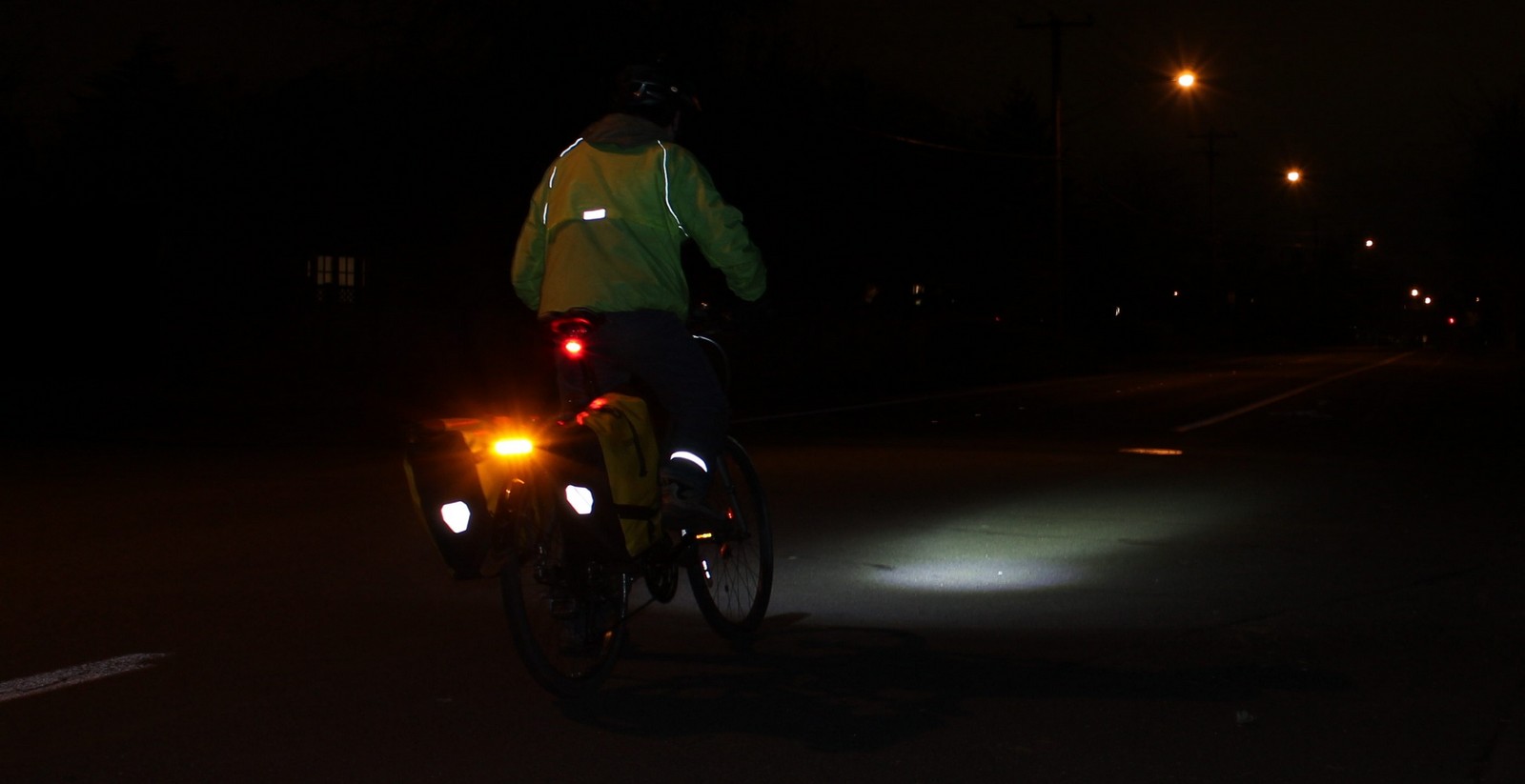
Bicycle without lighting It is difficult to spot amongst cars, especially when the cyclist is wearing dark clothing. What’s more, a cyclist can come into a driver’s field of vision much more quickly than a pedestrian.
In accordance with clause 6.2 of the Ukrainian Highway Code, a bicycle must be fitted with a bell and reflectors: a white one at the front, orange ones on the sides and a red one at the rear. During hours of darkness and in conditions of poor visibility, the bicycle’s headlamp or rear light must be switched on.
For greater visibility, it is advisable to use a white front light and a red rear light. The front light should not only make the cyclist visible to others, but also help them to spot potholes, debris and uneven surfaces. It should be adjusted so as not to dazzle oncoming road users.
Cyclists should also wear a helmet and clothing with reflective strips. Before setting off, you should check your brakes, ensure your lights are fully charged and verify that your bike is securely fastened.
At junctions and near driveways, you should pay particular attention to vehicles turning. When crossing the road at a pedestrian crossing, it is safer to dismount and walk your bike alongside you. Do not confuse a pedestrian crossing with a dedicated cycle crossing.
Electric scooters require particular care during power cuts
The small wheels of an electric scooter make it sensitive to uneven road surfaces. A pothole, a raised paving stone, a kerb or wet leaves can cause you to lose your balance. It is harder to spot such obstacles in the dark.
Before setting off, you should check that the brakes, front and rear lights, tyres and battery are in good working order. If the standard headlight is too dim, it’s worth adding a compatible bicycle light that won’t dazzle oncoming traffic.
A helmet and reflective elements on clothing are particularly important in the evening. A rucksack with a large reflective panel will help make the wearer more visible from behind.
On unlit stretches of road, you should reduce your speed to ensure you have enough time to stop within the visible section of the road. If there is a complex junction ahead, a crowd of pedestrians or a kerb that is difficult to see, it is safer to stop and walk along that section.
Electric scooters and other light personal electric vehicles are recognised as vehicles in Ukraine. Their users must comply with the applicable road traffic regulations, as well as local restrictions and the rules of the hire service. You should not assume that you can travel at any speed on the pavement simply because there are no cars there.
What to do if the traffic lights at a junction aren’t working
During power cuts, traffic lights may switch off completely. In such cases, the order of traffic flow at the junction changes.
According to Clause 16.1 of the Highway Code, if the traffic lights are not working or are flashing amber, and there is no traffic warden, the junction is considered to be uncontrolled. Drivers must follow the priority road signs and the rules for passing through uncontrolled junctions.
For pedestrians, this means they need to be more vigilant when assessing traffic, particularly on multi-lane roads. At the same time, a traffic light being out of order does not remove the obligation on drivers to give way to pedestrians in the circumstances specified in the Highway Code.
Drivers should slow down in good time at pedestrian crossings, schools, public transport stops and residential areas during the hours of darkness. Particular attention should be paid to children, older people and cyclists, who are harder to spot in unlit areas.
How to prepare your child for the journey home in the dark
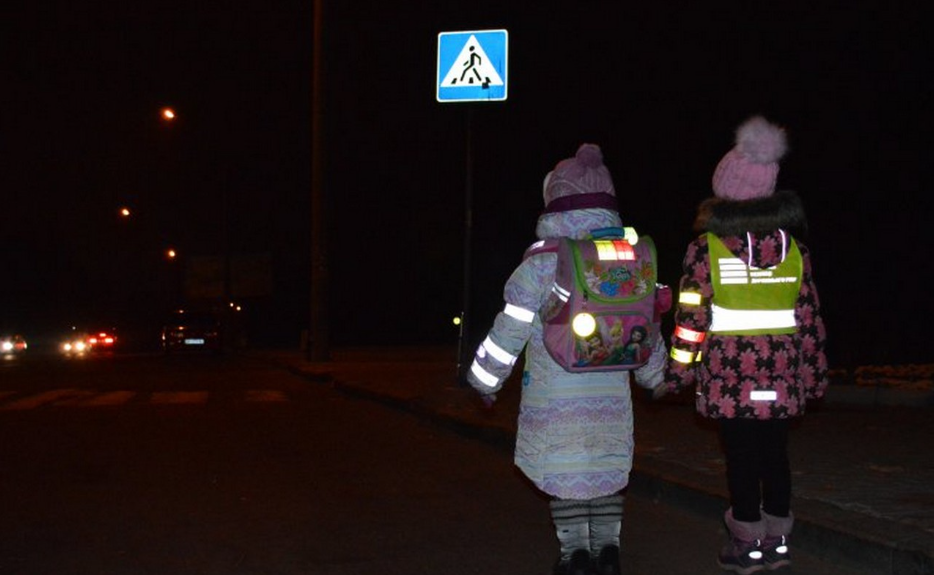
Children may misjudge a car’s speed and the distance to it. Therefore, when choosing a route from school or an after-school club, it is important to consider not only the length of the route but also the number of dangerous crossings.
It is advisable to attach a large reflector to a child’s rucksack, and additional reflectors to the front, back and sleeves of their jacket. It is important to check that these are not covered by the rucksack or outer clothing.
Younger schoolchildren need to be told that even at a familiar pedestrian crossing, they should stop and make sure that there are no cars coming or that they are actually giving way. If the street is completely dark, it is best to arrange for an adult to accompany them if possible.
Before you set off, it’s also worth checking your phone’s battery level and making sure your small torch is in working order. A standard head torch will help you see the path ahead, but you should point it downwards so as not to blind other people.