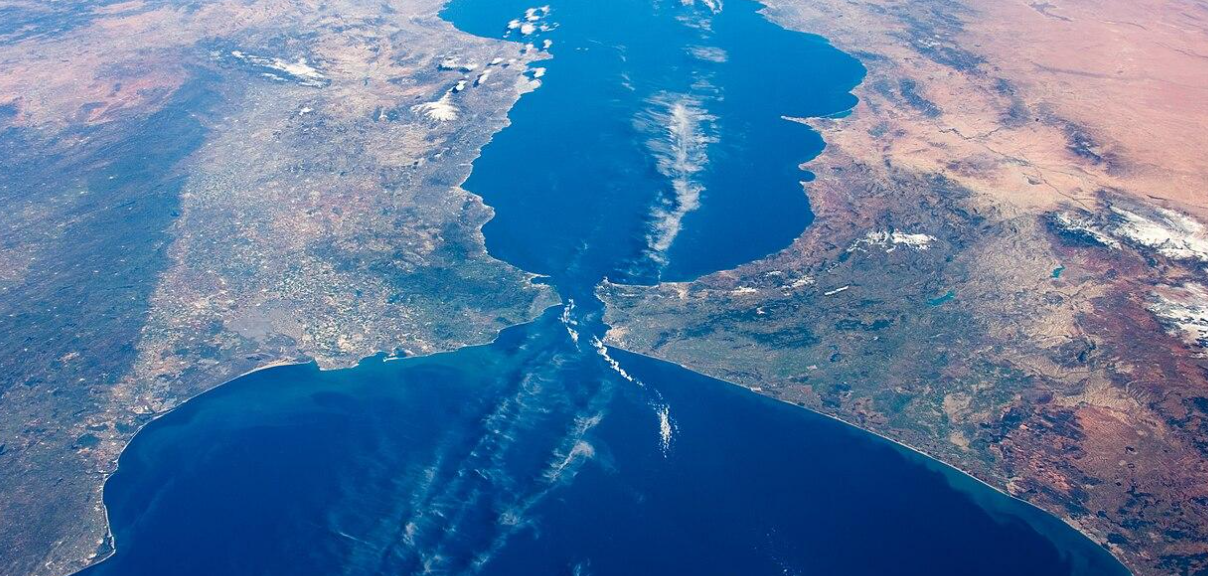
On the southern coast of Spain, there are places from which, on a clear day, you can see Africa with the naked eye. At the narrowest point of the Strait of Gibraltar, the distance between the two continents is only about 14 kilometres. Humanity has already learnt to build much longer bridges, dig tunnels under the sea and create artificial islands. However, there is still no regular transport link between Spain and Morocco. The reason lies not so much in the distance between the shores as in the unique geological conditions, sea currents and the scale of investment required.
- Europe and Africa are separated by just 14 kilometres of the Strait of Gibraltar.
- The depth of the strait along the shortest route reaches 900 metres in places.
- The construction of the bridge is hampered by earthquakes, strong currents and heavy shipping traffic.
- Spain and Morocco have been exploring the possibility of a transport link for over four decades.
- A railway tunnel beneath the seabed is considered the most promising option.
The Strait of Gibraltar — 14 kilometres separating two continents
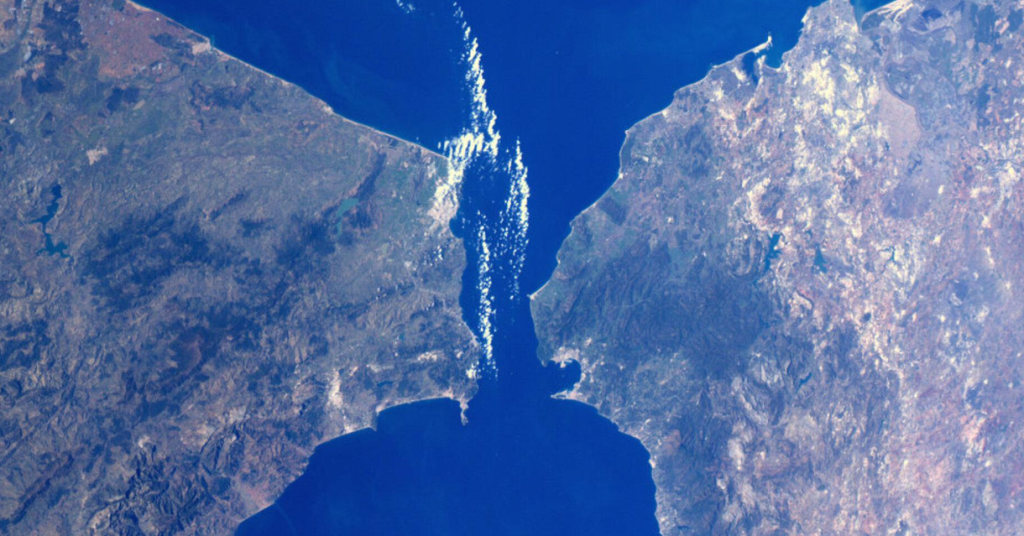
the Strait of Gibraltar connects the Atlantic Ocean with the Mediterranean Sea, separating the Iberian Peninsula from North Africa. On the European side lie Spain and the British Overseas Territory of Gibraltar, whilst on the African side lie Morocco and the Spanish city of Ceuta.
For thousands of years, this area has been of exceptional strategic importance. In antiquity, the cliffs on either side of the strait were known as the Pillars of Hercules, which symbolised the edge of the known world.
Today, Gibraltar remains one of the most important maritime transport corridors, alongside the Suez Canal, the Strait of Hormuz and the Bab el-Mandeb Straits.
At first glance, building a bridge here seems entirely logical. However, beneath the water’s surface lies a complex system of underwater ridges, deep troughs and unstable geological formations.
The depth of the channel proved to be the main obstacle
Most large sea-crossing bridges are built over relatively shallow stretches of water, where engineers can install the piers directly on the seabed. In the Strait of Gibraltar, this is considerably more difficult.
According to UN report, the depth along the shortest route between the two continents reaches 900 metres in places. Further west lies the Camarinal underwater shoal, where the maximum depth is around 300 metres, although the distance between the shores increases to approximately 28 kilometres.
Engineers are therefore faced with a difficult choice: to build a shorter bridge over an extremely deep stretch of water, or to significantly increase its length in order to secure more favourable conditions.
Installing massive supports at such a depth would require the sort of technology used in the construction of large offshore oil platforms. At the same time, the structure would have to withstand not only its own weight but also constant loads from traffic, wind, waves and currents.
Why even the world’s longest bridges do not solve the problem of Gibraltar
The length of a bridge does not in itself determine the complexity of its construction. For example, a bridge several tens of kilometres long may consist of hundreds of relatively short spans supported by numerous piers.
In the Strait of Gibraltar, such a solution would be extremely costly due to the depth of the sea. Engineers would therefore have to increase the distance between the supports.
In the 1990s, an American engineer Tai Lin proposed a design for a bridge approximately 14 kilometres long, with main spans of five kilometres each. An engineering firm worked on the technical feasibility study for the project OPAC.
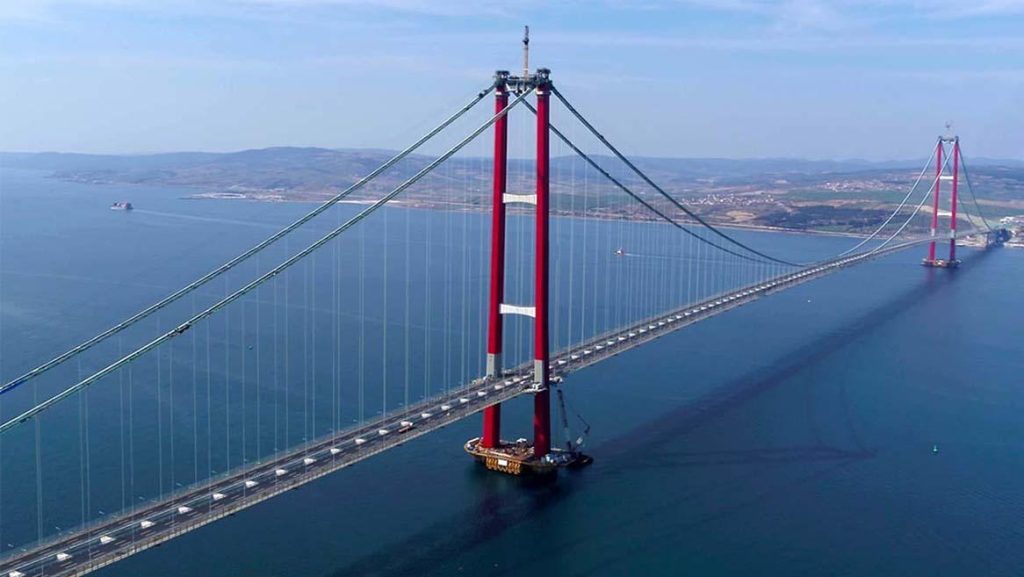
By way of comparison, the central span of the Turkish Çanakkale suspension bridge, which opened in 2022, is 2,023 metres. This means that the proposed spans of the Gibraltar Bridge would have been almost 2.5 times longer.
Such a design would require fundamentally new solutions in the fields of aerodynamics, material strength and bridge deck stabilisation.
The boundary between major tectonic plates runs beneath Gibraltar
Another problem is the strait’s location within the zone where the African and Eurasian tectonic plates meet. Their movement causes seismic activity in the western Mediterranean.
For a bridge with giant spans, even relatively small displacements of the foundations can create significant additional loads.
Another challenge lies in the heterogeneous structure of the seabed. Research has revealed alternating layers of different rock types, flysch formations and ancient underwater channels filled with sedimentary material.
Before starting construction, engineers need to determine how these rock types will behave under prolonged mechanical stress and high pressure.
In the Strait of Gibraltar, the water flows in two directions
A distinctive feature of the strait is the constant exchange of water masses between the Atlantic Ocean and the Mediterranean Sea.
In the upper layers, water from the Atlantic flows mainly eastwards. At the same time, the denser and saltier Mediterranean water at greater depths flows in the opposite direction.
This process is compounded by tides and strong winds. The result is a complex system of currents, which complicates underwater construction work.
Even carrying out geological drilling in the central part of the strait is a challenging task. Specialised offshore platforms and equipment capable of operating at considerable depths would be required to install the foundations for the future bridge.
One of the busiest shipping lanes in the world
The construction of the bridge must not hinder the movement of merchant ships between the Atlantic and the Mediterranean.
Pros. according to data from the Spanish Maritime Rescue Service, during 2025, the coordination centre in Tarifa monitored the passage of more than 80,000 vessels through the Strait of Gibraltar’s traffic management system.
Container ships, oil tankers, gas carriers, passenger ships and military vessels use this route. The future bridge must provide sufficient vertical clearance for large vessels, and its piers must be protected against potential collisions.
It is particularly important to maintain uninterrupted navigation during the construction itself, which could last for many years.
Spain and Morocco are considering building a tunnel
The idea of a permanent transport link between the two continents has been under discussion for over a century. Official cooperation between Spain and Morocco began in 1979, when the governments signed an agreement on joint scientific and technical research.
In 1981, the countries established the specialised organisations SECEGSA and SNED. Their task was to identify the most feasible way of connecting the two banks.
Following decades of research, the preference was given to a railway tunnel beneath the seabed. As the Spanish Government noted in its reply to Parliament, in 1995 the option of an underground railway link was deemed technically more feasible than the construction of a bridge.
One of the previous projects envisages the following specifications:
| Parameter. | Tunnel project |
|---|---|
| Distance between terminals | 42 km |
| Length of the tunnel | 37.7 km |
| Underwater section | 27.7 km |
| Maximum depth | About 475 metres below sea level |
| Type of transport | Railway |
| Estimated journey time between terminals | 30 minutes |
Parameters from preliminary design studies by the UN and Amberg Engineering. Final specifications are subject to change.
It is envisaged that cars, buses and lorries will be transported on special railway platforms where necessary, as is already the case when crossing the English Channel.
How will the Gibraltar Tunnel differ from the Channel Tunnel?
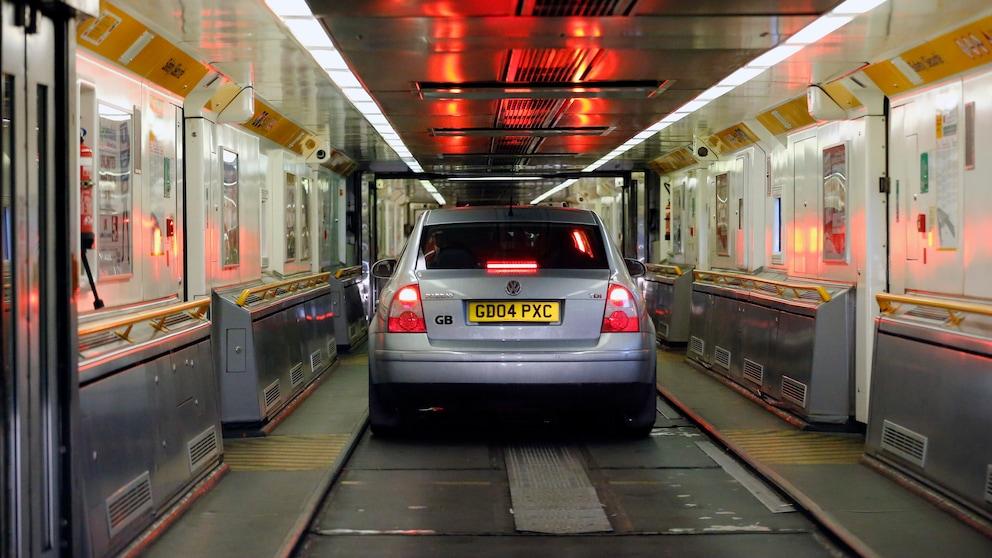
The Channel Tunnel, which opened in 1994, has a total length of around 50 kilometres. Approximately 37 kilometres of it run under the sea.
However, as noted by Getlink, the operator of the Eurotunnel, the structure is laid, on average, 40 metres below the seabed. In the Strait of Gibraltar, the future tunnel is set to pass through far more challenging geological conditions and at a greater depth.
One of the main challenges will be tunnelling through sections of unstable rock under high water pressure. This may require the development of specialised tunnelling systems and the prior construction of an exploratory tunnel.
How much will it cost to connect Europe and Africa?
There is currently no final, approved construction budget.
In previous studies by Amberg Engineering The cost of the railway tunnel was estimated at between 6 and 9 billion euros. However, these calculations were carried out many years ago and cannot be regarded as an up-to-date estimate of the cost of the future building.
It is also necessary to take into account the construction of railway access routes, passenger and freight terminals, ventilation systems, power supply systems, border control facilities and emergency evacuation systems.
Spain and Morocco must determine who will fund the project, what the fare will be, and whether future revenue will be sufficient to cover the costs of construction and operation.
How a tunnel could change global trade
The introduction of a direct rail link would open up a new transport corridor between the European Union and North Africa.
Freight trains could transport goods between Spain and Morocco without the need to transfer them onto ferries. Reducing delivery times is particularly important for industrial enterprises, the automotive sector and agricultural exporters.
A passenger tunnel would also create opportunities for the development of international tourism and rail routes between the largest cities in both countries.
At the same time, the new infrastructure would not abolish the state border. Customs terminals and agreed rules for border control would be required to manage the movement of people and goods.
Sea transport would also retain its importance, particularly for large consignments, where transport by rail may not be economically viable.
When Europe and Africa will finally be united
In April 2023, Spain and Morocco resumed active work on the project. At the end of 2025, the Spanish authorities made the agreement public regarding the conduct of further geological surveys of the seabed.
As of November 2026, the project remains at the technical and economic feasibility study stage. No final decision has been made regarding the start of construction or the official opening date of the tunnel.
The history of the Strait of Gibraltar shows that, even with today’s level of technology, the shortest distance between two points does not always mean the easiest route. And it is quite possible that the first permanent link between Spain and Morocco will not be a bridge over the sea, but a railway line laid deep beneath the seabed.