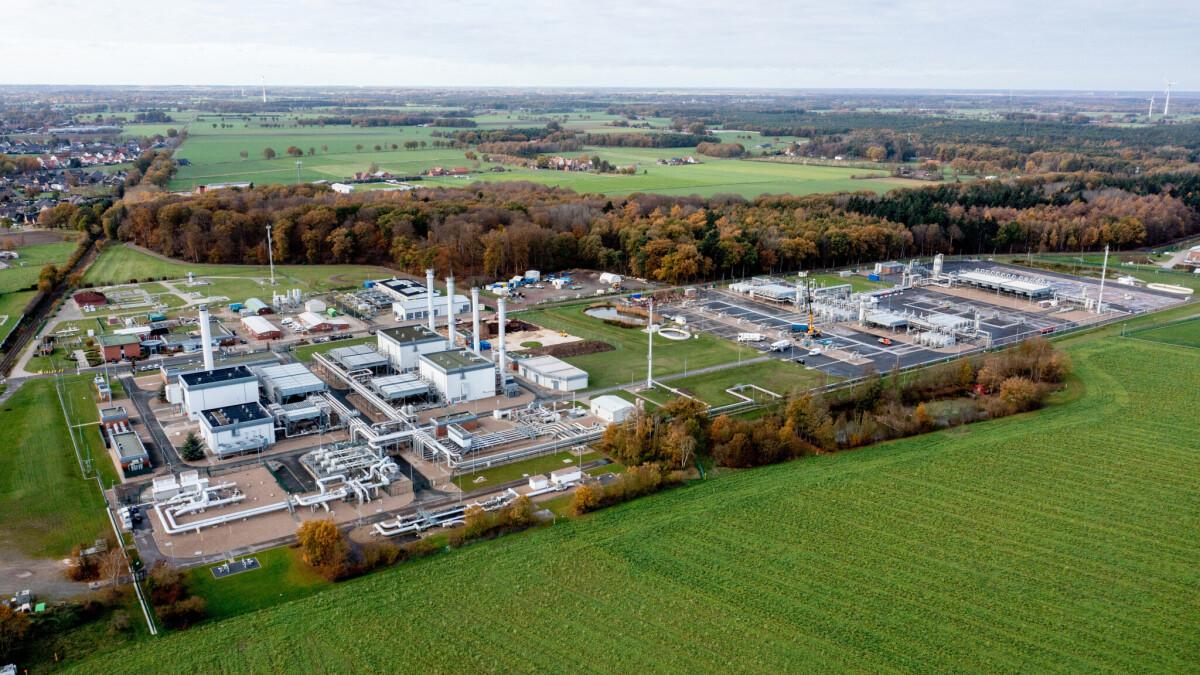
Europe is entering the 2026–2027 heating season with its lowest natural gas reserves in over a decade. As of 11 November, gas reserves in the European Union and the UK stood at around 810 terawatt-hours (TWh) — 200 TWh, or approximately 20 per cent, below the ten-year seasonal average. This is according to a Reuters analysis published on 16 November. European importers are stepping up purchases of liquefied natural gas (LNG), but these are not yet sufficient to make up for the shortfall in reserves. In the event of a prolonged cold spell or further supply disruptions, the region could face a further rise in prices and the need to restrict consumption.
Why has Europe run out of its usual gas reserves?
The current situation is the result of several factors which have simultaneously affected the European energy market.
Once completed heating season In 2025–2026, the EU’s underground storage facilities were only 28 per cent full. A year earlier, this figure stood at 34 per cent, whilst the average over the past nine years has been around 40 per cent.
Consequently, Europe began the gas injection season with lower reserves than usual. At the same time, purchases over the summer proved to be more difficult and more expensive due to the war in the Middle East.
According to the EU Agency for the Cooperation of Energy Regulators (ACER), the upper estimate for the cost of filling storage facilities in 2026 reached 27 billion euros. The average cost of gas injected into storage was the second highest in the last decade.
The structure of the European gas market also played a part. High summer prices and the spread between gas prices across different seasons weakened traders’ economic incentive to purchase gas for storage.
Put simply, it was not profitable for companies to buy expensive gas in the summer if its future price did not guarantee a profit after storage costs.
As a result, Europe was unable to build up its usual safety margin before the onset of cold weather.
How much gas is left in the EU’s storage facilities?
Data from Gas Infrastructure Europe show that storage facility fill levels vary significantly between European countries.
Gas storage levels in European countries
As at 14 November 2026, % of capacity
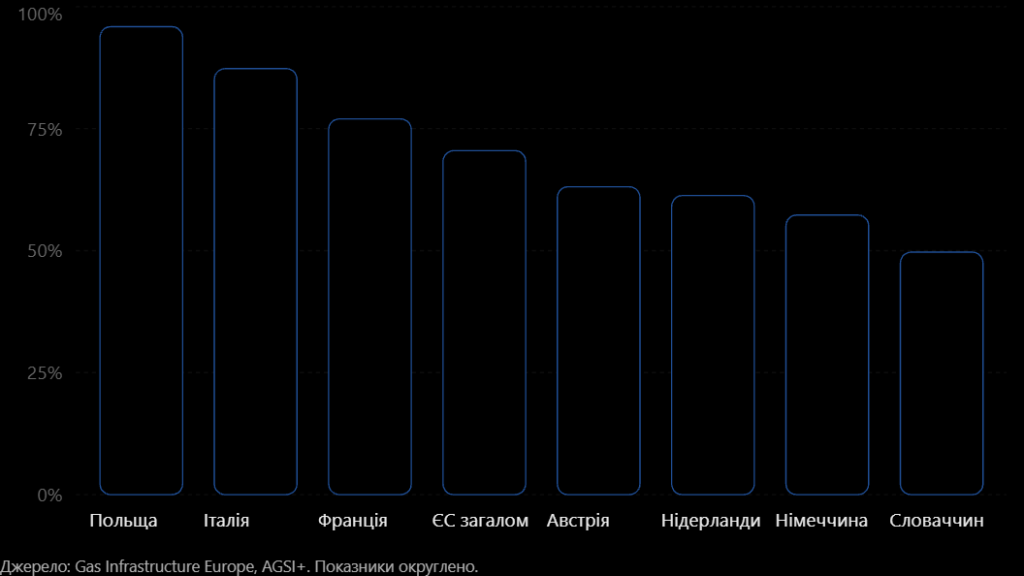
At the same time, Poland and Italy have maintained much higher reserves. This imbalance places an additional strain on the cross-border transmission system.
However, the fact that gas storage facilities are 70 per cent full does not mean that Europe has only 70 per cent of the gas it needs for the winter. These storage facilities act as a reserve, which is replenished by regular pipeline supplies, LNG imports and domestic production.
It is therefore necessary to assess the risk of a shortage not only in terms of stock levels, but also in terms of the system’s ability to meet daily consumption requirements.
Why importing liquefied gas does not solve the problem
Following the reduction in supplies of Russian pipeline gas, Europe has become significantly more reliant on LNG. The fuel is delivered by sea, after which it is converted from a liquid to a gaseous state at specialised terminals and fed into the gas transmission network.
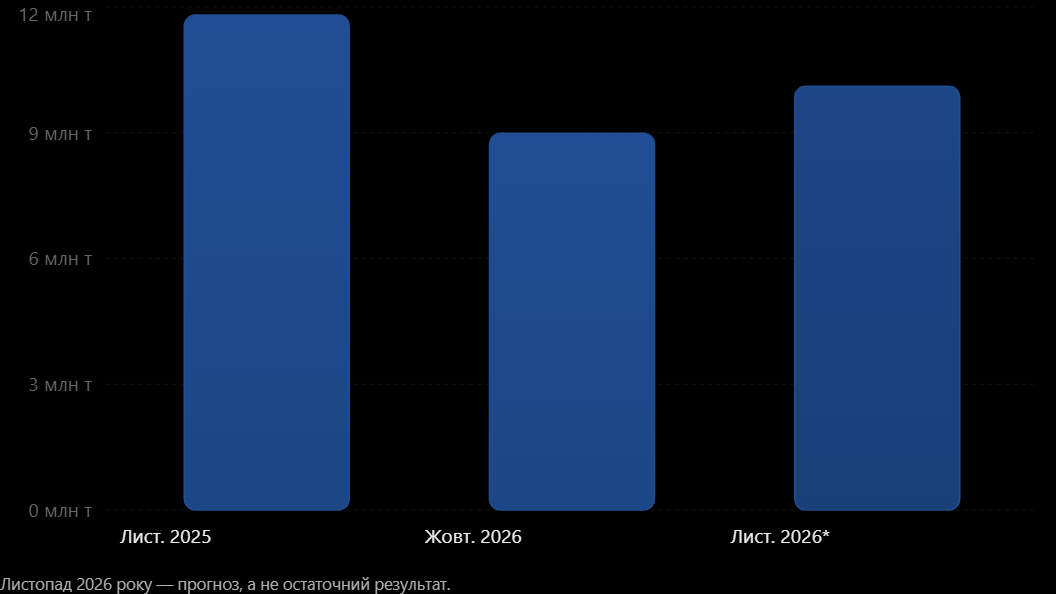
According to data from the analytics firm Kpler, as reported by Reuters, European LNG imports could rise to 10.11 million tonnes in November. In October, they stood at 8.99 million tonnes, whilst in November last year they were 11.81 million tonnes.
This means that procurement is picking up pace, but remains below last year’s level.
LNG imports to Europe
The biggest external factor was the conflict in the Middle East. Due to restrictions on shipping in the Strait of Hormuz The global market is missing out on significant volumes of gas from Qatar and the United Arab Emirates.
The International Energy Agency reported that between March and October 2026, LNG loading in these countries fell by more than 60 billion cubic metres compared with normal conditions. According to the IEA’s forecast, global LNG supplies in 2026 will fall by approximately 3 per cent.
Europe is being forced to compete more fiercely with Asian consumers for available gas supplies. Although China and Japan are cutting back on their purchases due to high prices, this does not mean that large volumes of cheap fuel are becoming available.
As a result, the EU is increasingly relying on US LNG, but additional supplies depend on production capacity, logistics and market prices.
Will there be enough gas for Europe for the winter of 2026–2027?
Low stocks do not necessarily mean an inevitable shortage. The weather will remain the key factor.
The European Network of Transmission System Operators for Gas (ENTSOG) has considered several scenarios for the coming winter — ranging from normal temperatures to a prolonged cold spell and supply disruptions.
Under normal conditions, the European infrastructure is capable of supplying gas to consumers. However, a combination of severe cold spells, limited availability of LNG and the loss of individual supply sources may necessitate a reduction in demand. In certain simulated scenarios, there is a risk of unmet gas demand.
Three main scenarios can be identified:
-
A mild winter. Demand remains under control, and supplies are arriving without any significant disruptions. Under these circumstances, Europe is better placed to get through the season without a shortage, although gas remains expensive.
-
A prolonged cold spell. Heating costs are rising, storage facilities are running out faster, and importers are having to buy additional LNG at high prices.
-
A cold winter and disruptions to imports. This is the most challenging combination. It may lead to the need to restrict consumption, primarily in industry, depending on the decisions taken by national governments.
At the same time, the situation differs from the 2022 energy crisis. The EU has expanded its LNG import capacity, diversified its supply sources and reduced gas consumption by around 20 per cent compared with the pre-crisis period.
These changes improve the system’s resilience, but do not eliminate its dependence on the global market.
How will the gas shortage affect prices, industry and consumers?
The main economic risk lies not only in a physical shortage of gas, but also in its cost.
According to ACER, in mid-October, wholesale prices on European gas markets were approaching 90 euros per MWh. The agency estimates that the conflict in the Middle East has increased Europe’s gas import costs by 18–33 billion euros, whilst the volume of purchases has remained unchanged.
For industry, this means an increase in production costs, particularly in the chemical, metallurgical and fertiliser sectors, where gas is used as a fuel or raw material.
For households, the impact will depend on national tariffs, government support and the terms of suppliers’ contracts. Rising exchange prices will not necessarily be reflected immediately in bills, but a prolonged period of high gas prices will increase the pressure on consumers.
Gas is also used to generate electricity, so a rise in its price could also affect the electricity market.
A separate issue is preparing for next winter. If Europe ends March 2027 with reserves that are too low, it will have to buy more gas during the summer.
The IEA warns that the need to replenish European stocks could keep the global gas market under pressure for much of 2027.
What will determine Europe’s energy security in 2027?
How the situation develops from here will depend on three interrelated factors: winter temperatures, the stability of gas imports, and the volume of gas remaining in storage in the spring.
If the heating season is mild and LNG supplies stabilise, Europe will be able to minimise the risks without having to impose drastic restrictions.
However, the prolonged cold spell and fresh disruptions in the global market could lead to a sharp increase in gas withdrawals from storage facilities and a subsequent rise in energy prices.
European gas operators emphasise that the region’s infrastructure has become more flexible, but the current low stock levels leave significantly less scope for responding to unforeseen circumstances.
As of 16 November 2026, no Europe-wide gas shortage has been recorded. At the same time, the EU is entering the coldest period of the year with unusually low reserves, and international energy organisations are warning that, even if this winter passes without incident, high demand for LNG may persist throughout 2027.