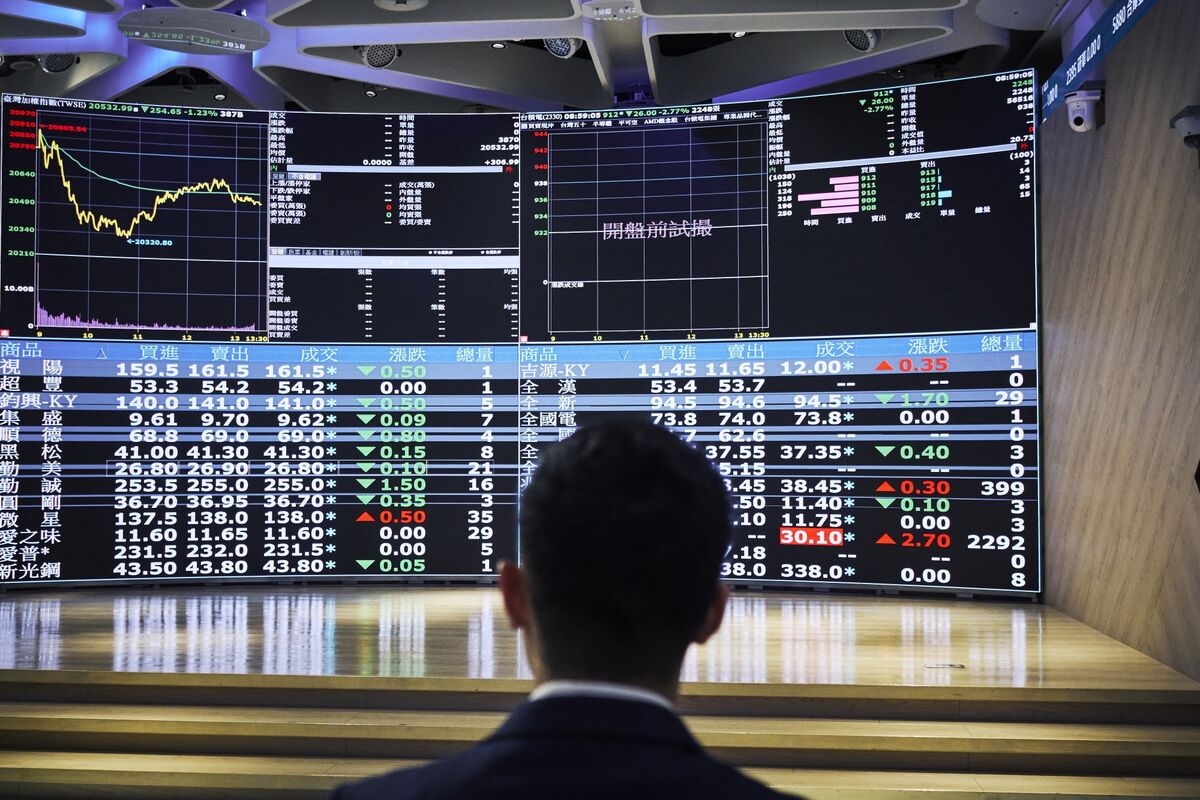
The Taiwanese stock market has experienced its biggest weekly fall in the last 35 years. Between 16 and 20 November, the main stock market index, the TAIEX, fell by 17.5 per cent, dropping to 36,033 points. Amid a global sell-off of technology shares, the Taiwanese authorities announced tighter restrictions on short selling of securities, which will come into force on 23 November.
- Taiwan’s TAIEX index plummeted by 17.5 per cent over the week.
- Since its October high, the index has fallen by almost 28.5 per cent.
- The regulator is tightening restrictions on short selling of shares.
- A state fund totalling $15.2 billion was deployed to stabilise the market.
The Taiwan Stock Exchange suffered its biggest fall in 35 years
According to official figures from the Taiwan Stock Exchange, the TAIEX index fell by 7,641.83 points during the last trading week.
On Friday, 20 November alone, the fall amounted to 6.23 per cent. From its all-time intraday high on 6 October to the low reached during Friday’s session, the index fell by 28.48 per cent.
One of the factors behind the decline was the crisis of confidence in the technology sector following Jensen Huang’s resignation from his post as Chief Executive Officer of Nvidia.
Investors are also reassessing the profitability of companies that are investing hundreds of billions of dollars in the development of artificial intelligence.
Taiwan is restricting short selling of shares
According to Focus Taiwan, the Financial Supervisory Commission has announced new measures to stabilise the market:
a ban on short selling at a price below the closing price of the previous trading session;
an increase in the minimum margin requirements for short positions from 130 per cent to 150 per cent;
suspension of the acceptance of applications for the issue of put warrants;
encouraging companies to buy back their own shares.
Furthermore, from 6 November, the State Stabilisation Fund, with assets of around $15.2 billion, has been authorised to carry out market interventions.
Why the slump in the Taiwanese market is important for the global economy
Taiwan is one of the key centres of global semiconductor manufacturing, particularly of advanced processors for artificial intelligence systems.
A widespread sell-off of chipmakers’ shares points to growing investor doubts about the current valuations of technology companies and the return on investment in AI.
At the same time, the fundamentals of Taiwan’s manufacturing sector remain strong. Taiwan’s export orders reached $123.82 billion in October, driven by global demand for technology products.