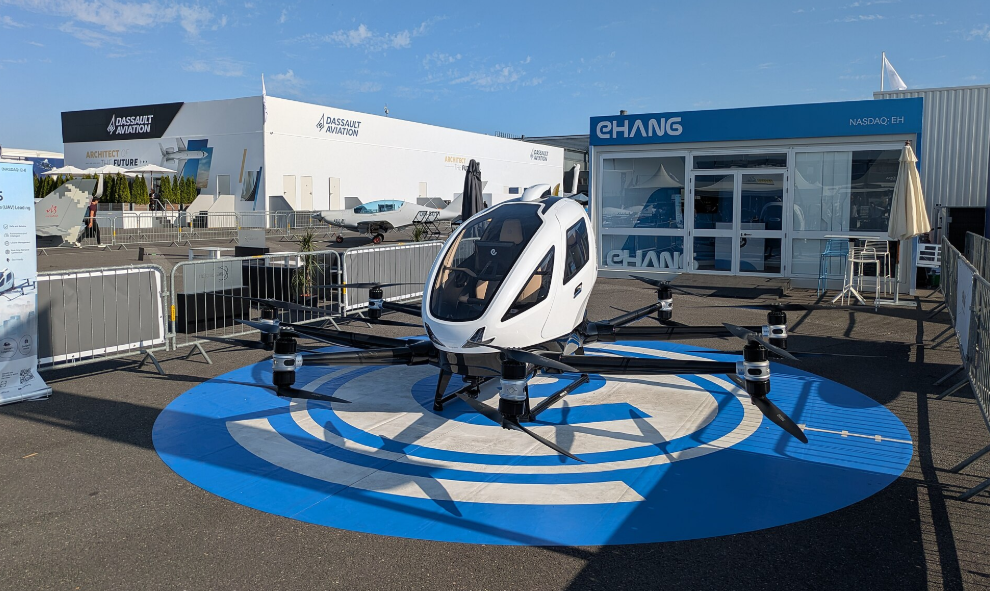
On 20 November, a demonstration flight of an unmanned air taxi carrying a passenger took place in Yamanashi Prefecture, Japan. The two-seater EH216-S electric aircraft, manufactured by the Chinese company EHang, took off vertically and travelled 380 metres along a pre-programmed route without a pilot on board.
- An EHang air taxi carried a passenger without a pilot on board.
- The aircraft is fitted with 16 electric motors.
- The maximum flight range is 30 kilometres.
- Japan is preparing to launch commercial air services.
How the EHang EH216-S flying taxi works
An air taxi belongs to the class eVTOL — electric aircraft capable of vertical take-off and landing. It does not require a conventional runway, and flight control is automated, with the option of monitoring by a ground station.
Following the demonstration with a passenger on board, the aircraft carried out another flight without anyone on board, covering a distance of 1.8 kilometres over the Kamanasi River.
Whilst car manufacturers are developing unmanned ground vehicles, whilst airlines are working on developing similar in-flight services.
Technical specifications of the EH216-S
Pros. according to the manufacturer’s data, the air taxi has the following specifications:
- passenger capacity — 2 people;
- maximum design speed — 130 km/h;
- flight range — 30 km;
- flight time — up to 25 minutes;
- maximum take-off weight — 620 kg;
- Number of electric motors — 16.
The aircraft is equipped with backup control and power supply systems, as well as an automatic emergency landing system.
When will flying taxis become available in Japan?
Japan plans to launch limited commercial operations of electric air taxis by the end of the 2020s. According to the government’s aviation development roadmap, the route network is expected to expand gradually in the 2030s, alongside the introduction of autonomous passenger transport.
Such vehicles are seen as an alternative to road transport for short journeys, airport transfers and tourist routes.