The administration of US President Donald Trump has approved the export of nearly 880,000 advanced Nvidia and AMD processors to Chinese companies, some of which the Pentagon links to the Chinese armed forces. Documents released by Congress have shown that the US Department of Commerce has issued licences for the supply of 879,868 chips designed for use with artificial intelligence. US Treasury Secretary Scott Bessent did not support the introduction of additional restrictions and stated that the cooperation of certain Chinese corporations with the military does not mean that they themselves are part of the army.
Key points at a glance:
- The US has approved the export of 879,868 Nvidia and AMD processors to China.
- Among those granted licences are Alibaba, Tencent, Baidu and BYD.
- The Pentagon has added these companies to its list of those linked to the Chinese military.
- Scott Bessent considers the current export restrictions to be sufficient.
The US has authorised the supply of Nvidia H200 and AMD MI325X processors
On 19 November, the US House of Representatives Committee on Foreign Affairs published data from the Bureau of Industry and Security at the Department of Commerce. According to the documents, as at 11 May 2026, the US regulator had approved 21 applications for the export, re-export or transfer of a total of 879,868 Nvidia H200 and AMD MI325X processors to Chinese companies.
At the same time, manufacturers submitted applications to supply over 3.44 million chips. Some of the licences were granted to companies that the US Department of Defence had included on a list of entities linked to the Chinese military.
120 000
80 000
40 000
0
Nvidia has stopped supplying chips to China despite the authorisations previously granted by the US authorities. New documents from Congress provide an insight into the scale of the previously approved exports.
Bessent sees no need for new restrictions
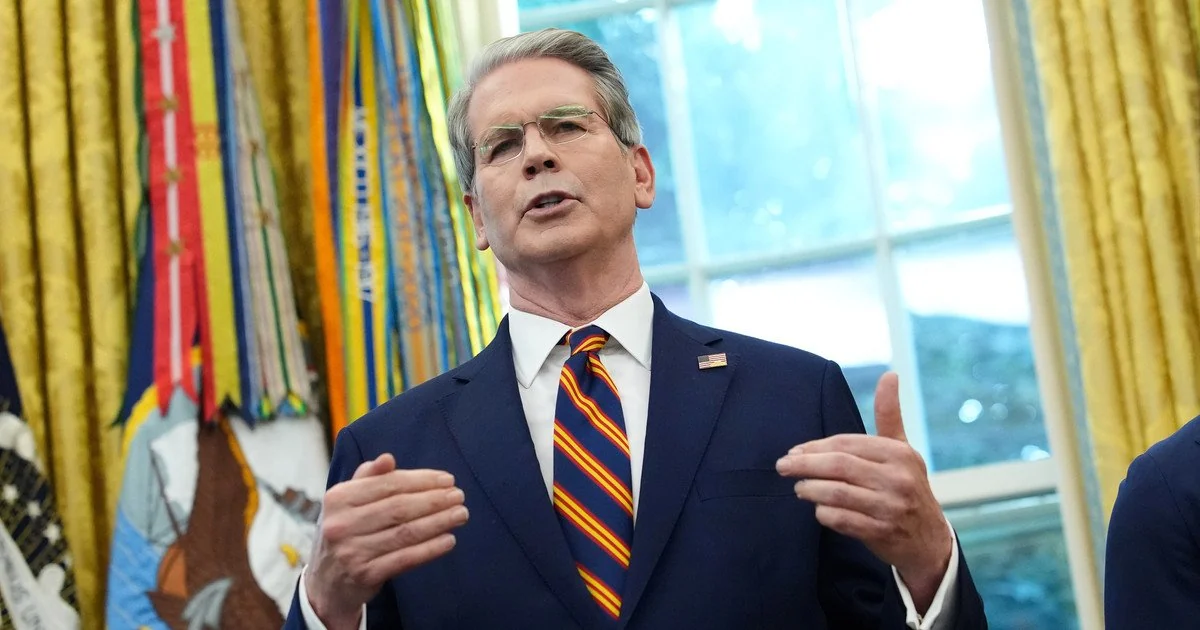
During an interview with CBS News on 22 November, the presenter Margaret Brennan asked the Minister of Finance Scott Bessent, is it permissible to sell cutting-edge American processors to companies linked to the Chinese military?
Bessent replied that the administration Trump has set a clear technical threshold for authorised supplies at the level of the Nvidia H200. He also emphasised that corporations such as Alibaba should not be directly equated with the Chinese armed forces merely because of their business ties with them.
The minister had previously told CNBC that Washington already has sufficient restrictions on the export of processors and does not need new bans on the relevant models Nvidia.
At the same time, the US administration has tightened controls on the remote use of American AI chips via foreign data centres, in an attempt to block any potential workarounds that might allow Chinese companies to access cutting-edge computing power.
Trump authorised the sale of high-performance AI chips to China in December 2025
On 8 December 2025, Donald Trump announced that the sale of Nvidia H200 processors to approved Chinese buyers would be permitted. In January 2026, the US Department of Commerce established a procedure for reviewing such export applications.
The H200 is used for training and running large artificial intelligence models, processing vast amounts of data and building high-performance computing systems. The AMD MI325X is designed for similar tasks.
US lawmakers have expressed concern that access to these technologies could accelerate the development of Chinese military AI, intelligence analysis systems and other defence projects.
At the same time, export licences do not in themselves confirm that all the chips authorised for export were actually delivered. Nvidia stated that the limited shipments under the H200 programme were lawful, but the company subsequently ceased them.
Chip exports have become a new bone of contention in Washington
The publication of the documents has intensified the debate over how effectively the US controls the transfer of strategic technologies to China.
Some US lawmakers are calling for more thorough checks on the end-users of processors, particularly if they are working with the Chinese defence sector.
Instead, the Trump administration is attempting to reconcile the protection of national security with support for American technology companies in the global market.
The key question remains whether the current export controls are capable of preventing the use of American AI chips in Chinese military programmes without a complete halt to technology trade between the two countries.