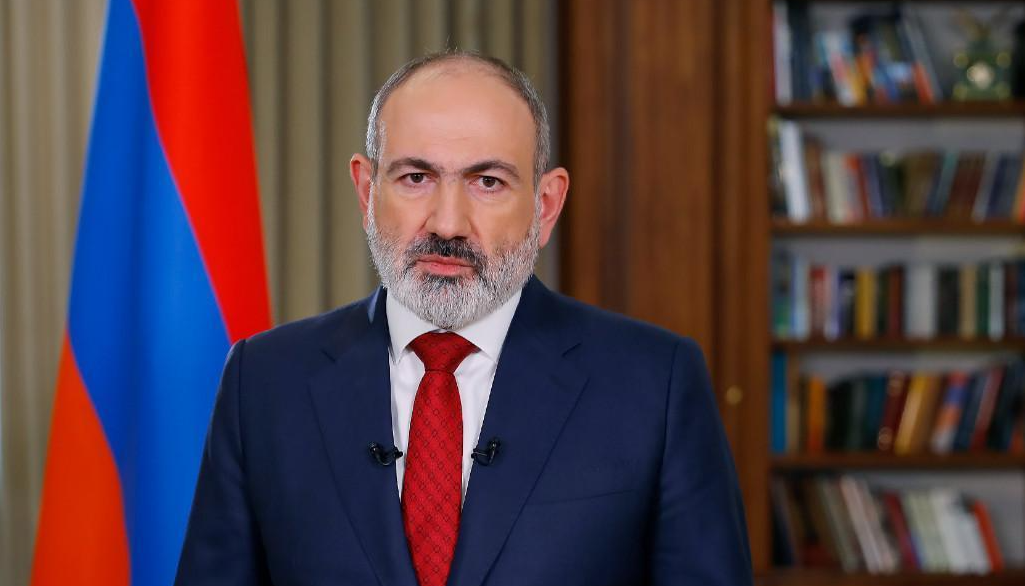
On 23 November, Armenian Prime Minister Nikol Pashinyan presented a draft of the new Constitution, from which references to the 1990 Declaration of Independence had been removed, inrelates to the issue of the unification of Armenia and Nagorno-Karabakh. This change is one of Azerbaijan’s key demands for signing a final peace agreement between the two countries. The document has been published for public consultation, after which it is planned to be put to a referendum. At the same time, the Armenian opposition has spoken out against the constitutional reform, viewing it as a concession to Baku.
- Pashinyan presented a draft of Armenia’s new Constitution without any reference to the Declaration of Independence.
- Baku regards the previous wording as constituting veiled territorial claims on Nagorno-Karabakh.
- Azerbaijan welcomed the changes and spoke of the prospect of a peace agreement.
- In order to hold a referendum, the Armenian authorities need the support of some opposition MPs.
- Pashinyan has promised to resign if the public rejects the new Constitution.
What has changed in Armenia’s new Constitution
The main change was the revised preamble to the Basic Law. References to the Declaration of Independence of Armenia of 23 August 1990, which mentions the decision adopted in 1989 on the unification of the Armenian SSR and Nagorno-Karabakh, have been removed from it.
It is precisely this provision that Azerbaijan has for years regarded as evidence of Yerevan’s territorial claims. The Armenian authorities, meanwhile, have insisted that the current Constitution contains no legal claims against neighbouring states.
The new version emphasises the development of an independent, peaceful and secure state within the internationally recognised borders of Armenia. Pashinyan described the reform as a transition to a new model of statehood, focused on peace and the well-being of citizens.
These constitutional changes are taking place against the backdrop of a broader reorientation of Yerevan’s foreign policy. UkrMedia previously reported that the deterioration in relations between Armenia and Russia and the de facto suspension of its membership of the Collective Security Treaty Organisation.
Azerbaijan has set out a condition for signing a peace agreement
Minister for Foreign Affairs of Azerbaijan Jeyhun Bayramov welcomed the published document. According to him, Baku’s main demand is that there should be no constitutional provisions that could be interpreted as territorial claims against Azerbaijan.
Bayramov noted that, judging by the text available, the published draft does not contain any such claims. Once the constitutional issue has been resolved, Baku sees no other obstacles to the signing of a peace agreement.
In August 2025, Armenia and Azerbaijan, with the US acting as mediator, agreed on the text of a peace treaty and signed a joint declaration. However, the final signing and ratification of the treaty have yet to be completed.
Pashinyan has promised to resign if the referendum fails
In order to put the new Constitution to a referendum, the support of at least two-thirds of the members of parliament is required. The ruling «Civic Contract» party is six votes short, so Pashinyan called on the opposition to support the vote.
The Prime Minister stated that he would resign if the public rejected the document. If, however, the Constitution is adopted, he promised not to stand as a candidate for the post of Prime Minister in the next parliamentary elections.
Opposition forces, in particular the «Armenia» and «Strong Armenia» alliances, are opposed to the reform. They accuse the government of making concessions to Azerbaijan and criticise the proposed redistribution of state powers.
How the Karabakh conflict has affected the peace talks
Nagorno-Karabakh has remained the main bone of contention between Armenia and Azerbaijan for decades. Following the 2020 war, Baku regained control of a significant portion of the territory and, in September 2023, established full control over the region.
Following the Azerbaijani military operation, almost the entire ethnic Armenian population of Nagorno-Karabakh left their homes and moved, for the most part, to Armenia.
Pashinyan links the adoption of a new constitution to the possibility of finally resolving the conflict and ensuring long-term peace. At the same time, the outcome will depend on the parliament’s decision on a referendum, the will of the people and further agreements with Baku.