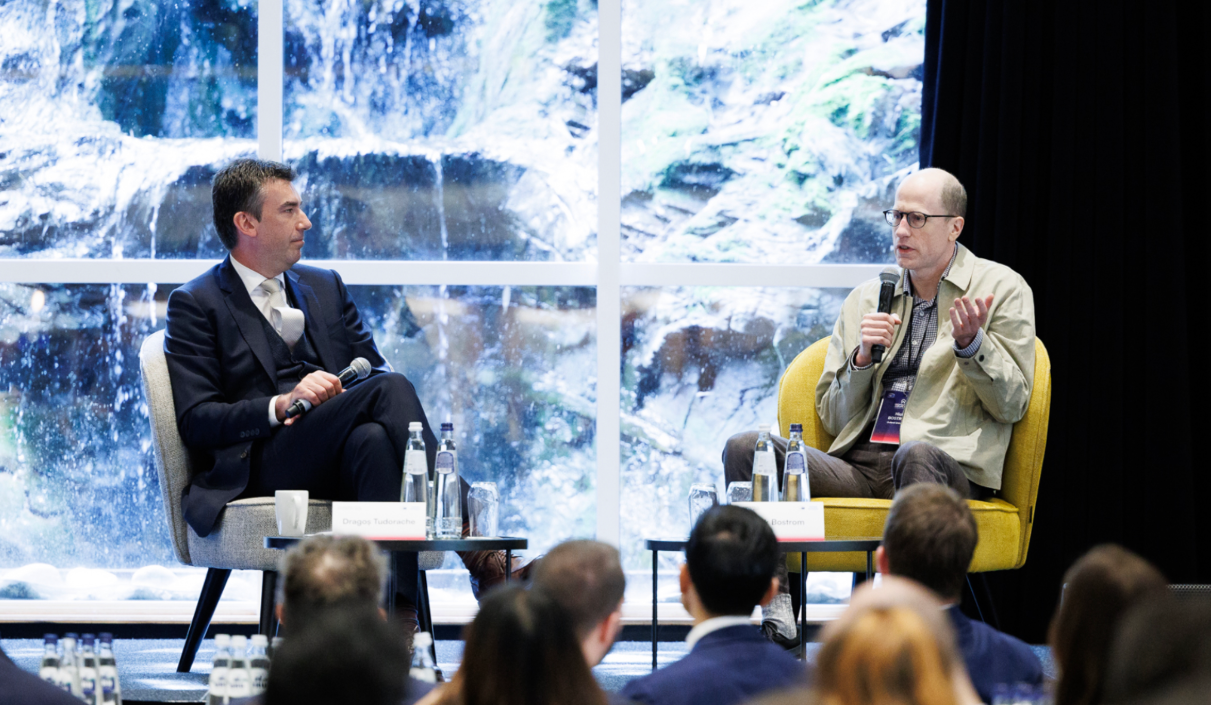
The Swedish philosopher and artificial intelligence researcher Nick Bostrom has suggested that future advances in biomedicine could increase the average human lifespan to between 1,200 and 1,400 years. Such a scenario would become possible if, with the help of AI, scientists learn to halt the ageing process and maintain a mortality rate typical of healthy 20-year-olds. Bostrom discussed this on the podcast *The a16z Show*, published on 19 November.
- Nick Bostrom suggests that human life expectancy could increase to 1,400 years.
- A key requirement is the ability to halt the body’s biological ageing processes.
- Artificial intelligence could significantly speed up discoveries in biomedicine.
- The prognosis remains a theoretical scenario rather than a proven medical achievement.
Why does Bostrom refer to 1,400 years?
The forecast is based on the assumption that the medicine of the future will be able to reverse the gradual age-related decline in bodily functions. If the risk of death does not increase with age and remains at the level of a 20-year-old, life expectancy will rise dramatically.
According to Business Insider, Bostrom He even considers his estimate to be conservative, as future technologies may further reduce mortality from accidents and other external factors.
Similar optimistic forecasts had previously been put forward by Dario Amodei, head of Anthropic, which suggests that AI will help to overcome a number of the most challenging diseases over the next decade.
How artificial intelligence could transform medicine
This potential breakthrough is linked to the emergence of a superintelligence — an AI system whose intellectual capabilities will surpass those of humans.
Such technologies can speed up researchers’ work in several areas:
- research into the molecular mechanisms of ageing;
- the development of medicines to repair damaged cells;
- research into treatments for genetic disorders;
- tissue and organ regeneration;
- the development of personalised treatment methods.
Bostrom also emphasises that unduly delaying the development of a safe superintelligence could cost millions of human lives that could potentially have been saved through medical breakthroughs.
How realistic is it to live for over a thousand years?
At present, medicine has no proven method for completely halting biological ageing. Most experimental rejuvenation techniques require further research and clinical trials.
The officially recognised record for human longevity is held by a French woman Janni Kalman, who lived for 122 years and 164 days, according to Guinness World Records.
Bostrom’s prediction should therefore be viewed primarily as a theoretical model of a future in which ageing will cease to be the main cause of mortality, rather than as a specific timeframe for the emergence of the relevant technologies.