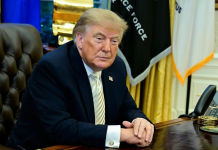
The administration of US President Donald Trump has shelved the idea of using business deals as a financial incentive for Russia to persuade it to end the war against Ukraine. According to the Financial Times, citing five officials familiar with the matter, this decision was taken after Moscow showed no interest in the proposed projects in the energy and aviation sectors.
- The Trump administration has shelved the idea of business deals with Russia as an incentive to end the war.
- US negotiators Jared Kushner and Steve Witkoff have told the Europeans that business partnerships are no longer key.
- The Kremlin initially reacted positively, but subsequently cooled to the idea and focused on demanding territorial concessions from Ukraine.
- At present, the main focus of the negotiations has shifted to the issues of territory and security guarantees.
Why has Washington abandoned economic stimulus measures?
Special Envoys of the US President Jared Kushner and Steve Witkoff They informed their European counterparts that corporate partnerships no longer play a leading role in US proposals to Moscow. Over recent months, the Trump team has been considering post-war business initiatives as a potential financial incentive for the Kremlin.
In particular, according to the FT article, these ideas included:
investments by American companies in Russian oil projects;
joint ventures in the titanium production sector;
projects in the aviation sector;
the resumption of pipeline supplies of Russian gas to Europe.
At first, Russian officials viewed these proposals favourably, seeing them as a way of holding people’s attention Donald Trump. However, as early as the November round talks in Abu Dhabi Representatives of the Russian Federation showed little interest in economic agreements and instead stepped up their political demands.
The shift towards the «land for peace» formula»
According to the publication’s sources, some US officials have concluded that Vladimir Putin is not guided by business interests when it comes to the war. As a result, the strategy of economic incentives has taken a back seat, and Washington has shifted to a more traditional approach, in which borders and security are the main issues.
At the same time, the Kremlin continues to insist on territorial concessions from Ukraine, which Kyiv considers unacceptable. A source familiar with the Russian leadership’s position claims that Putin will not agree to a deal without the transfer of new territories, even if it involves a format security guarantees for Ukraine along the lines of Article 5 of the NATO Treaty, without formally joining the Alliance.
Preliminary discussions regarding the terms of the agreement
The shift in emphasis in the US negotiating strategy is taking place against the backdrop of discussions about a possible timeframe for a settlement. Previously, the President Volodymyr Zelenskyy He noted that Kushner and Witkoff were aiming to reach agreements by January, although Donald Trump himself publicly denied that there were any strict deadlines.