
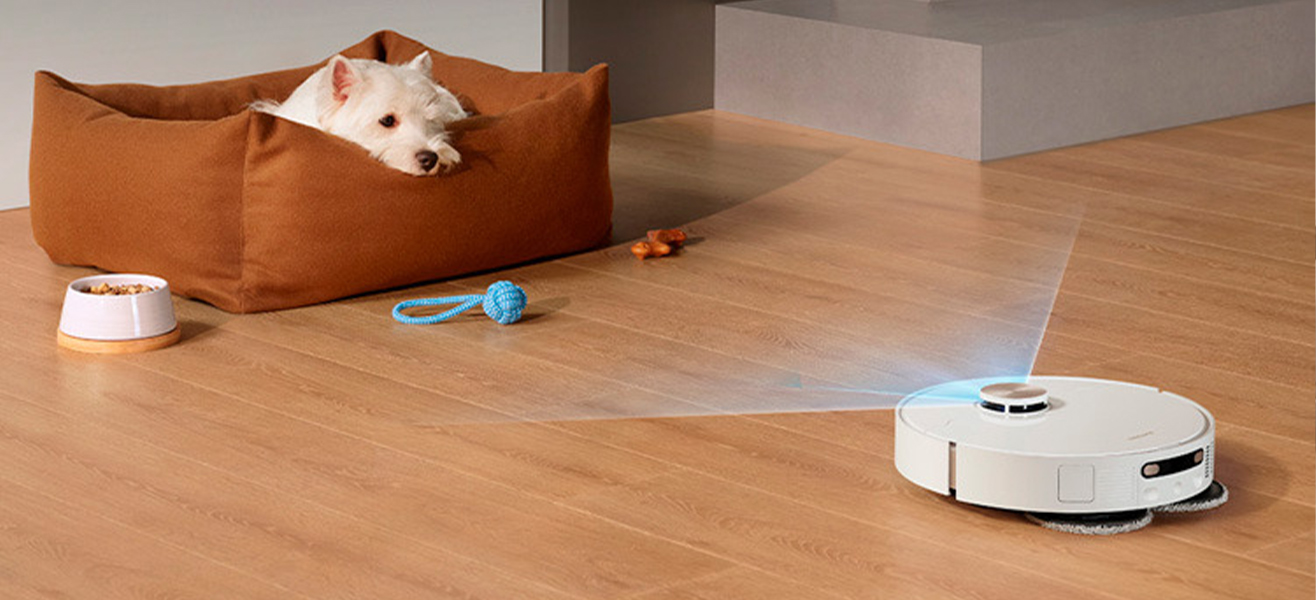
Automated cleaning has long since ceased to be a rare novelty and has become a familiar part of everyday home life, saving hours of free time every week. Modern smart devices can independently map out a flat, recognise the type of flooring, navigate around obstacles and even recharge themselves at their base without the owner’s involvement. You can find the best model for your specific floor area, floor type and budget in the catalogue https://allo.ua/ua/roboty-pylesosy/ on Allo, which brings together products from Xiaomi, Roborock, Dreame, Kärcher, Rowenta and other manufacturers — from entry-level models to top-of-the-range models with full self-service functionality.
Navigation system: why a laser scanner is more important than the price
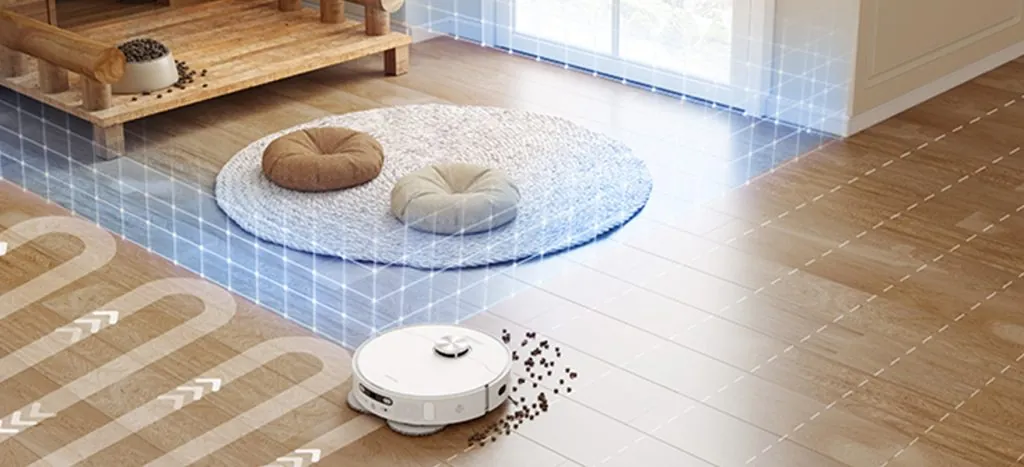
It is the navigation system that determines how logically the device will move through the rooms and whether it will miss areas near walls and furniture. Budget models usually rely on a gyroscope and basic infrared sensors, which means they take longer to orientate themselves in the room.
Devices equipped with a LiDAR laser rangefinder are considerably more accurate. They quickly scan the room, generate a detailed map within the app, memorise the layout of several floors and allow you to customise the cleaning of individual rooms or restricted areas. In the more expensive models, the laser is complemented by front-facing cameras and artificial intelligence algorithms: Thanks to this, the vacuum cleaner detects cables, socks, toys or pets’ bowls on the floor and carefully avoids them.
Dry and wet cleaning: which factors really matter
Suction power and brush design
If your flat mainly has tiled, laminate or parquet flooring, a suction power of 4,000–6,000 Pa will be sufficient for daily cleaning. However, for homes with carpets and pets, it’s worth looking at models with a suction power of 10,000 Pa and above — they’re better at removing dust, sand and pet hair from the pile. Also, pay attention to the main brush: solid silicone rollers are much less likely to trap hair and are easier to clean than traditional bristle brushes.
Wet cleaning methods and carpet protection
Most modern robots combine dry dusting with wet mopping. The simplest option is a fixed microfibre cloth, which refreshes the floor and removes fine dust. However, if you need to thoroughly scrub away stains in the kitchen or hallway, it’s best to choose models with dual rotating mops or a roller mop, as well as extendable attachments for cleaning along the skirting boards. A useful feature is the automatic retraction of the mops when the machine moves onto a carpet – this ensures the pile always stays dry.
Charging station: when it’s worth paying extra for autonomy
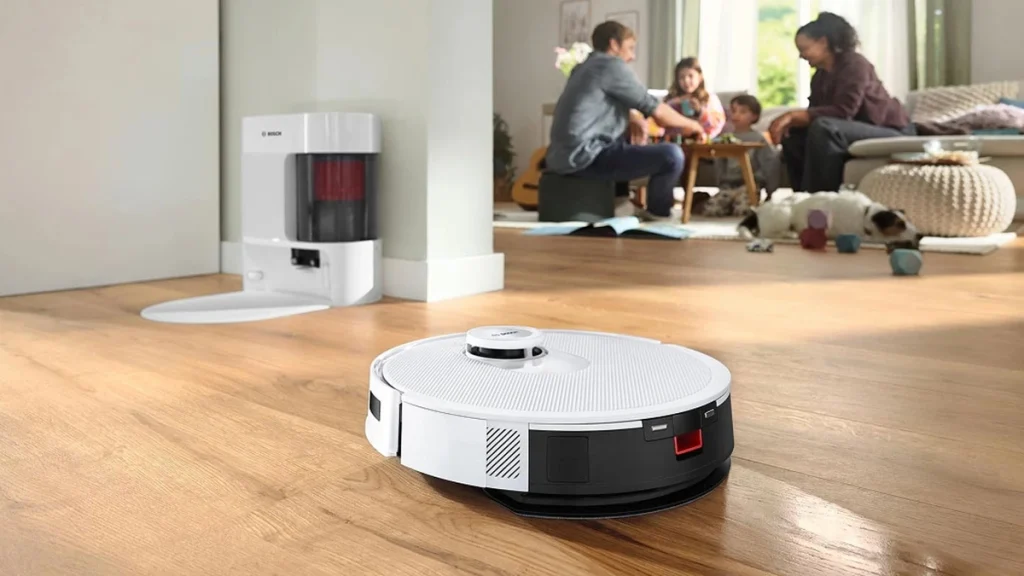
A robot with a base charging station requires regular maintenance: the bin needs to be emptied every few days, and the cloth needs to be washed by hand after each cycle. The dry debris self-cleaning station automatically transfers dust into a bag, which lasts for several weeks.
The flagship fully self-service bases take care of almost all the routine tasks: not only do they collect dry rubbish, but they also rinse the mops with water, dry them with warm air and refill the robot’s tank with clean water. This format is particularly convenient for large flats and families with children or pets.
What else should you look out for before buying?
Battery capacity. A 3,200 mAh battery will be sufficient for a one- or two-bedroom flat, whilst for larger areas exceeding 80–100 m², it is better to choose a battery with a capacity of 5,200 mAh or more.
Housing height and thresholds. To ensure the vacuum cleaner can reach under beds and sofas, check its height (ideally up to 9.5–10 cm) and the maximum height of thresholds it can negotiate (the standard is up to 2 cm).
Control via smartphone. Please ensure that the app supports scheduling, water flow control and works reliably with your home’s 2.4 GHz Wi-Fi network.