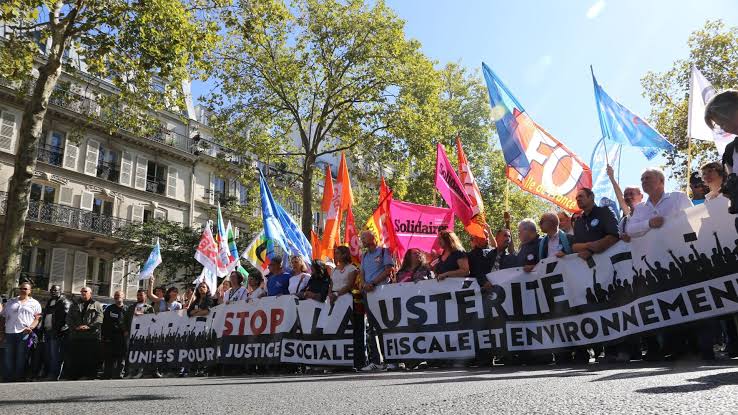
France has been gripped by a new nationwide strike organised by an alliance of the country’s leading trade unions. Student and secondary school movements, as well as activists from the «Yellow Vests» civil movement, have joined the mass protests that have spread across the country. This joint mobilisation of various social groups is increasing the pressure on the French government against the backdrop of a protracted standoff over the cost of living, wages and budget cuts.
- The French trade union confederation has organised a nationwide strike across the country.
- Student and school pupil movements, as well as «yellow vest» activists, joined the protests.
- The protesters are demanding higher wages, the protection of social benefits and increased funding for education.
- The French government insists that budgetary savings are necessary to curb the deficit.
Who is taking part in the strike and what are the protesters demanding?
As stated in the summary of events according to CNN, the general strike was coordinated by the French inter-union federation, which comprises the largest workers« confederations (notably the CGT, CFDT, FO, UNSA and FSU). The trade unions were supported by student organisations and the »Yellow Vests’ (Gilets jaunes) movement, which emerged in 2018 during protests against rising fuel prices.
The current wave of mobilisation has followed on from the large-scale social protests that have been taking place in the country since September 2026 — in particular following previous protests in France and nationwide the strike on 17 November.
The main demands of the united protest movement cover several areas:
Wages and inflation: an increase in wages in the public and private sectors, as well as the indexation of pensions in line with the rising cost of living.
Funding for education: an increase in teaching staff, the refurbishment of educational establishments, and the reversal of staff cuts in schools and universities.
Social protection: a refusal to cut public services, to revise the conditions for sick pay, and to implement austerity measures in the draft budget for 2027.
Tax policy: the introduction of a fairer tax system and measures to curb rising prices for housing and essential goods.
The French Government’s position
In the Prime Minister’s government Sébastien Lecornu and the Presidential Administration Emmanuel Macron They had previously recognised the legitimacy of the peaceful demands made by young people and workers, but emphasise the constraints on the state budget. According to the French authorities, a tighter financial framework for 2027 is necessary to curb the budget deficit and maintain the country’s economic stability.
At the same time, the authorities in Paris emphasise that the right to strike and demonstrate is guaranteed by law only on condition that public order is maintained and critical infrastructure continues to function without disruption. During the previous days of mobilisation, the authorities deployed tens of thousands of police officers and gendarmes to monitor the routes of the marches and prevent clashes.