Bringing a pet into your home changes your daily routine more quickly than you might think. Your new pet needs to get used to unfamiliar smells, sounds and people, whilst you need to find a place for feeding, resting and daily care. It’s best to think these details through before you move: that way, your first evening will pass without any last-minute shopping or unnecessary stress.
Start with the things you’ll need straight away: bowls, a place to sleep, toys and cleaning products. If you’re not sure what to choose, visit the website Vitomax You can get an idea of the range of products available for cats and dogs: there are beds, litter, grooming products, treats and anti-parasite products. Buy according to the age and size of your future pet, rather than stocking up on a large quantity at random. This applies particularly to food and litter: first, you should find out what the animal is already used to.
A safe place and essential items
Take a look at your home from a kitten’s or puppy’s perspective. Tidy away any cables, small objects, household chemicals and medicines, and check access to the bin and any gaps behind furniture. Windows and balconies must be secured so that the animal cannot fall out or get trapped. Houseplants should also be checked to ensure they are safe for your pet. Something that has been sitting on your windowsill for years may prove tempting to a curious newcomer.
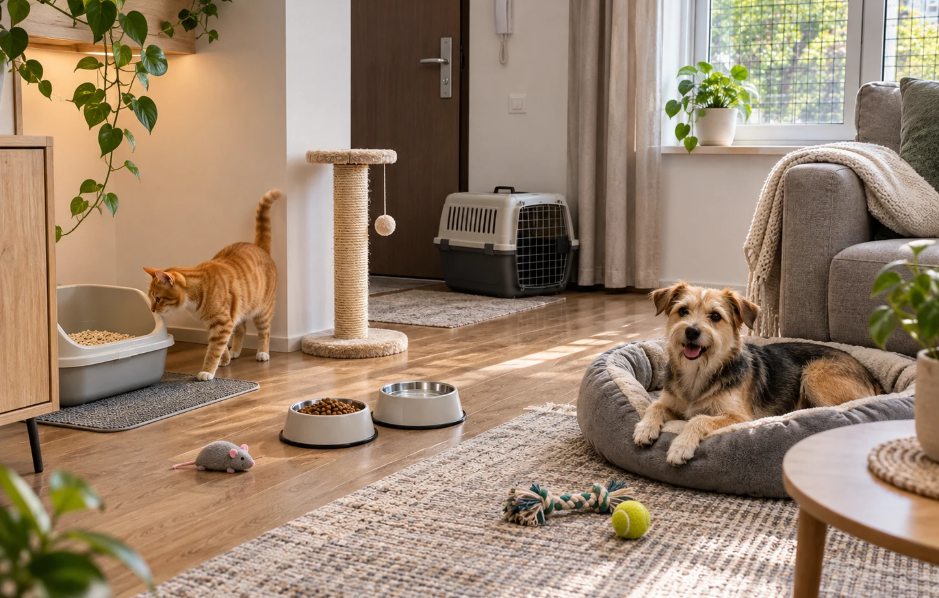
To start with, it’s a good idea to set aside a quiet room or a peaceful corner for the cat. Put a bowl of water, a resting spot, a feeding tray and a scratching post in there, but keep the litter tray and feeding area separate. You’ll need a sturdy carrier: this is essential for the journey home and trips to the vet. Don’t force the cat out of its hiding place. Once it has got used to one part of the house, gradually give it access to the other rooms.
Set up a bed for your dog somewhere where it can rest without people constantly moving about. Before your first walk, check that the collar or harness and lead are the right size, and keep some poo bags and a towel for wiping their paws by the door. If you’re bringing home a puppy, temporary nappies can make life easier, but they are no substitute for gradually training your puppy to do its business outside. Choose toys that are sturdy and the right size, so that your pet doesn’t chew off any small parts.
The first few days, taking things at a leisurely pace
Ask the previous owners or the shelter about the pet’s usual diet, feeding routine, vaccinations, parasite treatments and behavioural traits. If you plan to change their diet, do so gradually and consult your vet if necessary. For an animal from the street or with an unknown health history, book a check-up in good time. Medicines and anti-parasitic treatments should not be chosen based solely on the appearance of the packaging: age, weight, health status and previous treatments are all important factors.
Agree in advance who will feed your pet, clean its litter tray or take it for a walk, and what to do if everyone is delayed away from home. Set aside a separate place to store your pet’s food, hygiene products and documents. Make a note of the contact details for the nearest veterinary clinic and work out how to get your cat or dog there safely. This simple household plan helps you stay calm whilst your new pet is getting used to your routine.
On the day of arrival, do not invite guests to meet the new pet. Show them where to drink and where to sleep, and give them time to explore their new surroundings. Calmly take the dog to its designated toilet area; show the cat its litter tray and do not move it every hour. If there are already other pets in the home, introduce them gradually, starting by separating the living areas and ensuring each has its own resources.
Don’t expect your new pet to trust you straight away. One cat might come out of its carrier within a minute, whilst another might take a few days; a dog might be excited or, conversely, quiet after the move. Maintain a predictable routine, speak calmly and check whether your pet is eating, drinking water and using the litter tray. A pet-friendly home isn’t about a mountain of new purchases, but a space where your pet can safely settle in at their own pace.