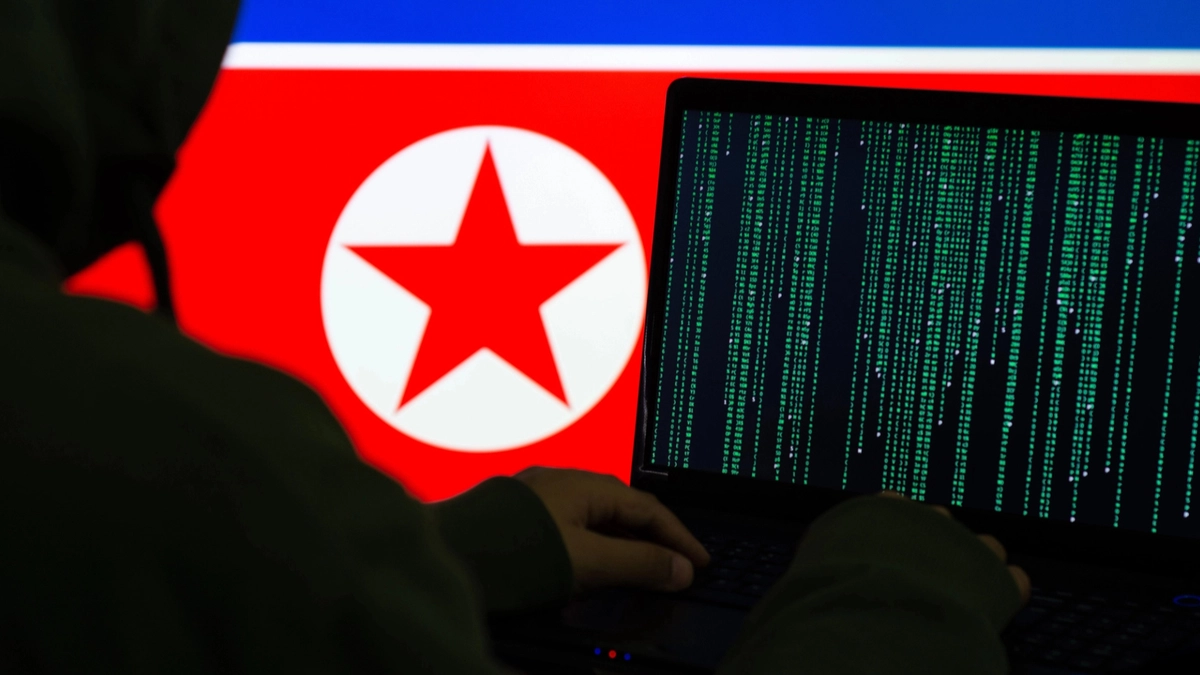
North Korean money launderers are close to cashing out some of the cryptocurrency stolen during the record-breaking hack of the Binance exchange in October. According to blockchain researchers, the attackers are actively using little-known online services, including the THORChain exchange and «coinjoin» technology, to cover their tracks. As part of a complex operation, hundreds of millions of dollars have already passed through tens of thousands of transactions across various blockchains.
- Over $600 million worth of cryptocurrency stolen from Binance has already passed through the decentralised service THORChain.
- The criminals transferred a further $342 million via the CoinJoin service, with the majority of transactions on the platform being coordinated by a pseudonymous user known as Kruw.
- Of the total $6.3 billion stolen on 29 October, the issuers have frozen around $2.85 billion, whilst the remainder remains in circulation.
How THORChain and coinjoin work in a money-laundering scheme
After a record theft of $6.3 billion On 29 October, the US authorities blamed hackers from North Korea for the attack on the Binance exchange, whilst Pyongyang denies any involvement. The issuers have managed to freeze around $2.85 billion worth of tokens, and efforts are continuing freezing of Binance’s misappropriated assets by US law enforcement agencies, but the rest of the funds are still in circulation.
According to analysts at Chainalysis and Elliptic, the movement of funds has accelerated sharply in recent days. Over $600 million has already passed through the THORChain protocol (Elliptic notes that part of this amount may have been circulated there multiple times). A further $342 million was laundered via the CoinJoin service, which combines cryptocurrency from various sources into a single transaction to conceal its origin; most of these transactions are coordinated by an anonymous individual using the pseudonym Kruw.
THORChain’s position and the FBI’s risk assessment
Back on 31 October, the FBI published a list of the criminals« crypto wallets and called on providers, including the THORChain network of nodes, to block them. Ari Redbord, Head of Policy at TRM Labs, described the FBI’s direct appeal to a specific decentralised service as »rather unusual’.
On its website, THORChain states that there is no «censorship» of transactions or KYC checks, and according to TRM Labs’ estimates, the service could have earned up to $1 million in fees from the exchange of stolen assets. The project’s co-founder, Chad Barraford, stated in a video message on X that 98 per cent of trading on the platform relates to the financial freedom of ordinary users, and that if the platform were to be shut down, criminals would simply switch to another service.
Elliptic adds that even after a coinjoin, hackers will still need intermediaries — such as over-the-counter (OTC) brokers — to ultimately convert the funds into fiat currency. According to Redboard, the money-laundering process could take months or years; however, as the total amount stolen is equivalent to approximately one-sixth of North Korea’s GDP, it would be profitable for the regime to cash out even a small proportion of these funds.