
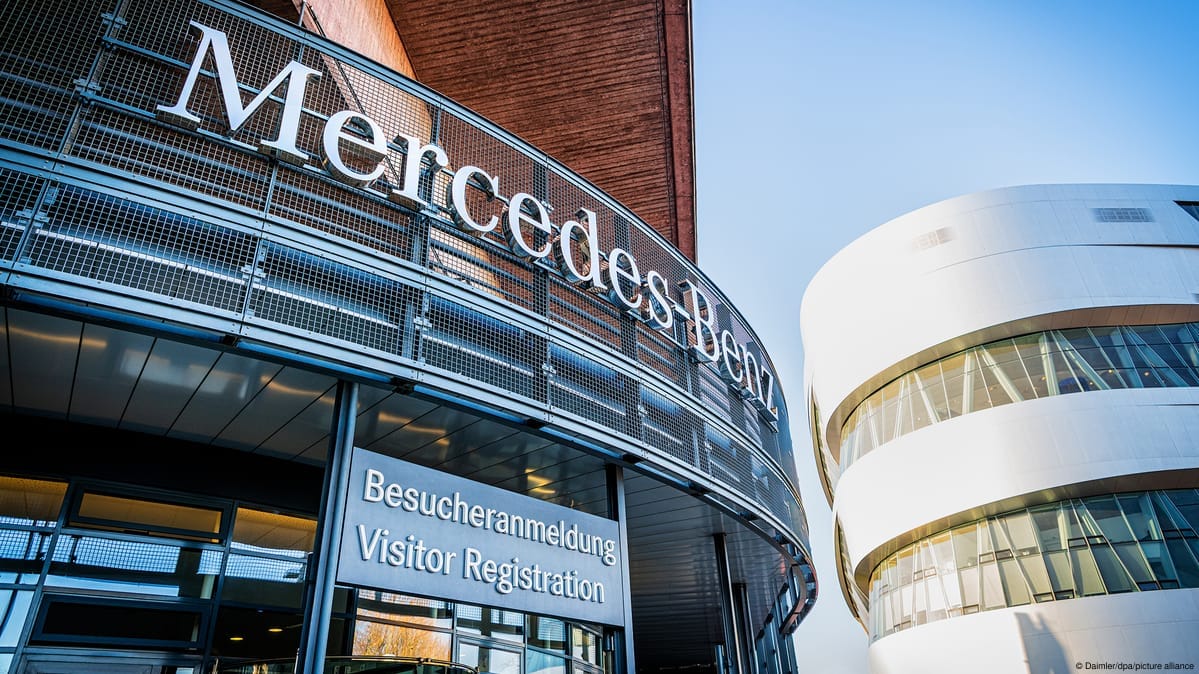
The German car manufacturer Mercedes-Benz is offering its employees compensation of up to €422,000 for voluntary redundancy. More than 30,000 staff in administrative and management departments who have worked for the company for over three years will receive letters to this effect. In this way, the group is seeking to significantly reduce its personnel costs against a backdrop of deteriorating financial performance and falling profitability.
Briefly about the main points
- Mercedes-Benz is launching a voluntary redundancy scheme running from 1 December 2026 to 30 September 2027.
- Personalised offers will be sent to over 30,000 staff members working outside production lines who have been with the company for at least three years.
- The maximum payout during the so-called «turbo period» until the end of March 2027 is €422,000, and without the speed bonus, it is up to €340,000.
- The company is optimising its costs against the backdrop of a slump in sales in China and a downward revision to its profit margin forecast for 2026.
How much is on offer and who is eligible for payments?
The ten-month programme will run from 1 December 2026 to 30 September 2027. A spokesperson for the group has officially confirmed these dates.
To encourage staff not to delay, the company has introduced a so-called «turbo period» running until the end of March 2027, with a higher bonus for quick decisions:
A 52-year-old engineer with a basic gross monthly salary of €5,460–€6,920 could receive up to €422,000 if their resignation is processed quickly (after March, the maximum amount is reduced to €340,000);
Office staff are eligible for severance packages of up to €253,000;
The scheme covers office staff, foremen, team leaders, department heads and — for the first time — business unit managers, but does not apply to production floor workers.
Staff can already calculate an approximate figure using the internal calculator on the company’s intranet, and the first personalised letters will be sent out in early December.
Why is the German car giant cutting jobs?
Western financial analysts attribute the aggressive cost-cutting primarily to weak demand in China and rising stock levels. At the end of October 2026, the group lowered its annual operating profit forecast for its passenger car division to 2–3 per cent, down from the previously expected 3–5 per cent, as the adjusted margin in the third quarter fell by almost half to 2.5 per cent.
A wave of corporate redundancies in Germany is gathering pace across several sectors: on the same day, it emerged that another German giant — a software group SAP plans to cut 10,000 jobs due to the reallocation of budgets towards artificial intelligence.