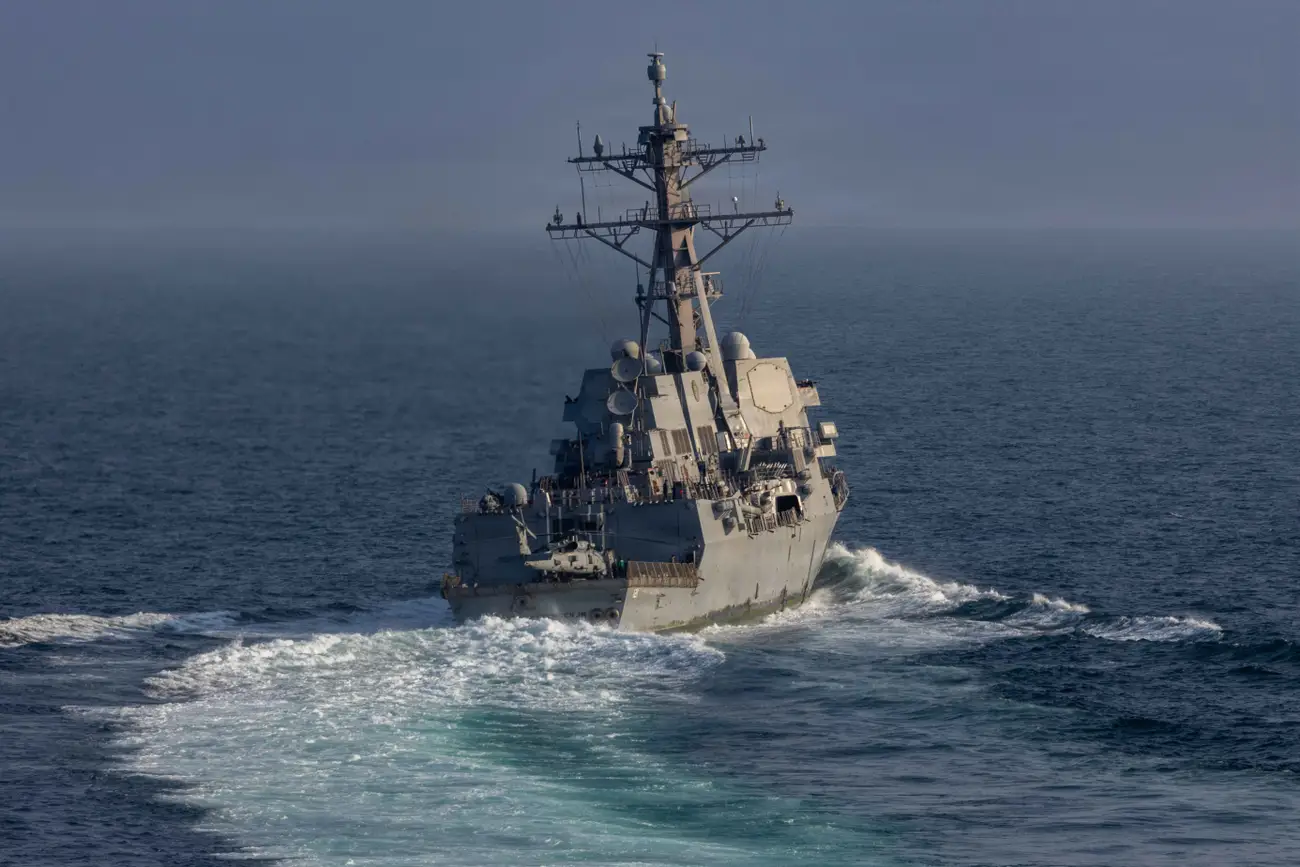
The United States Air Force carried out a precision strike on the stern of the Palau-flagged merchant vessel M/V Pacific Archer in the Gulf of Oman, disabling its propulsion system. According to the US Central Command (CENTCOM), the crew of the dry cargo ship ignored repeated warnings from the US military and attempted to break through the naval blockade of Iranian ports. As a result of the strike, the vessel lost propulsion, but none of the civilian crew members on board were injured.
- The US military air force struck the stern of the merchant vessel M/V Pacific Archer in the Gulf of Oman with high-precision munitions.
- A dry cargo ship flying the Palau flag left the Iranian port of Bandar Abbas and ignored demands to stop within the Iranian naval blockade.
- The vessel’s propulsion system has failed, the ship itself is adrift, and the civilian crew have not been injured.
- Since the blockade was reimposed in July 2026, US forces have turned back 158 merchant vessels and immobilised six violators.
How the US Air Force stopped the dry cargo ship M/V Pacific Archer
The incident took place in the waters of the Gulf of Oman on Thursday, 26 November, and official confirmation of the operation was provided by the command CENTCOM was made public on 27 November. According to the US military and Al Jazeera, events unfolded as follows:
The offender’s route: The bulk carrier M/V Pacific Archer, with a deadweight of approximately 52,400 tonnes and registered under the Palau flag, departed from the Iranian port of Bandar Abbas bound for the Gulf of Oman, stating Singapore as its destination;
Ignoring warnings: Coalition forces issued a series of warnings to the crew regarding breaches of the regulations blockades of Iranian ports, but the vessel continued on its way;
Precision strike: A US military aircraft used high-precision munitions struck the stern of the dry cargo ship, damaging the rudder and propeller assembly and rendering the vessel unable to move;
Crew status: The ship’s civilian crew were unharmed, whilst the bulk carrier itself remained adrift in the Gulf of Oman.
CENTCOM emphasised that US forces always issue multiple warnings to commercial vessels before opening fire to destroy a power plant, and urged seafarers in the Gulf of Oman and in the approaches to Strait of Hormuz Strictly follow the instructions given by military patrols.
The extent of the naval blockade of Iran and Tehran’s response
The naval blockade of Iranian ports was imposed by Washington back in April 2026 following the collapse of negotiations in Islamabad, and was tightened in July in response to Tehran’s attempts to disrupt shipping in the Strait of Hormuz. According to US Central Command, as of the end of November, American forces had diverted 158 commercial vessels that had complied with the demands and forcibly stopped six ships since July (and at least 15 vessels in total since April) that had attempted to circumvent the restrictions.
Furthermore, in November, the US extended its controls to cover the ship-to-ship transhipment of oil and goods in the Persian Gulf, and launched Task Force Iron Gate to disrupt the smuggling of arms and sanctioned goods across Iran’s land borders and via the Caspian Sea. The Commander of the Iranian Navy Shahram Irani stated on state television that he intended to «break through the enemy blockade», yet neither the flag states nor the owners of the detained vessels have officially contested the US’s actions.