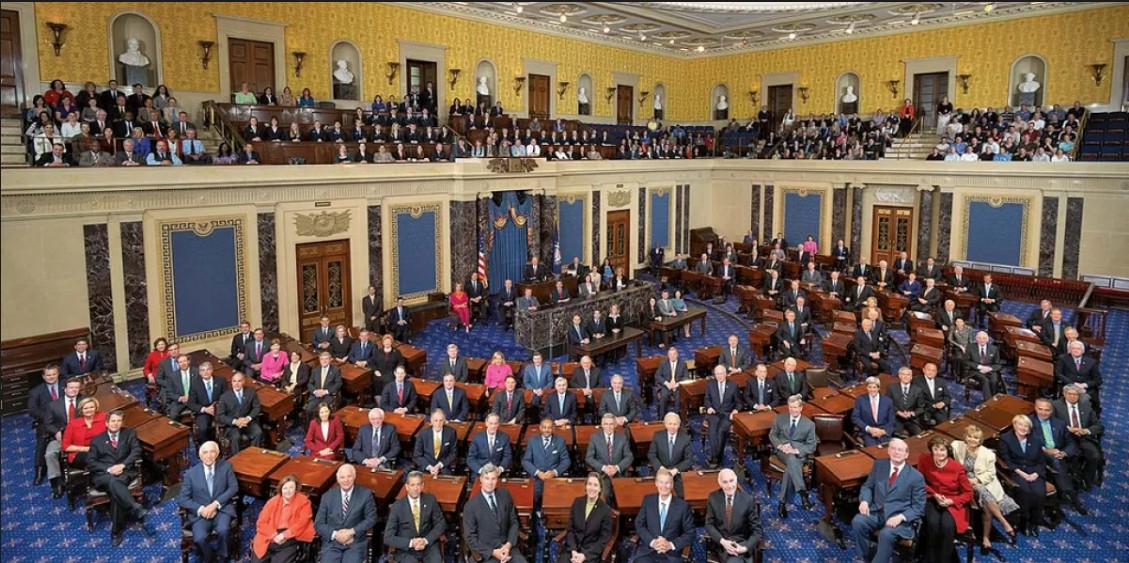
The United States Congress is developing legislative mechanisms designed to limit the scope for unilateral decisions by Donald Trump’s administration in the areas of foreign and trade policy. Democratic senators are drafting legislation, which will oblige the White House to maintain consistent support for Ukraine and Taiwan. At the same time, some Republican members of Congress have expressed a willingness to review the US President’s tariff policy.
- US Democratic Party senators are developing legislative mechanisms to ensure support for Ukraine and Taiwan.
- These initiatives should oblige the White House administration to maintain a consistent approach towards Kyiv and Taipei.
- At the same time, some Republicans in Congress are prepared to reconsider the US President’s approach to trade policy.
- Legislative measures are strengthening parliamentary oversight of key decisions taken by the executive branch in the areas of security and trade.
Legislative safeguards to support Ukraine and Taiwan
In the upper house of the US Parliament, senators—democrats have focused on drafting legal instruments that will prevent the executive branch from arbitrarily cutting off aid to Washington’s key partners in Eastern Europe and the Indo-Pacific region. This involves enshrining in law the White House’s direct obligations regarding continued support for Ukraine, as well as Taiwan.
According to the initiators of these proposals, such mechanisms are intended to safeguard the United States’ strategic approach from sudden shifts and provide allies in Kyiv and Taipei with predictability in matters of security and defence cooperation. Such measures form part of a system of checks and balances, under which Congress uses budgetary and regulatory levers to influence foreign policy.
The Republicans’ stance on the White House’s trade policy
At the same time, the debate over the limits of presidential powers has extended not only to security matters but also to foreign trade. Some Republican members of Congress have signalled their willingness to review the President’s trade policy, restoring greater control to lawmakers over the imposition of tariffs.
Among the key factors prompting MPs to call for a change in the White House’s course are:
Maintaining the trust of our allies: lawmakers are seeking to reaffirm the reliability of the US’s security commitments to Ukraine and Taiwan;
Economic pragmatism: The review of tariff decisions is intended to minimise risks to US businesses, consumers and trading partners;
Parliamentary oversight: strengthening the role of the Senate and the House of Representatives in the executive branch’s strategic decision-making.