Russia's war against Ukraine: a complete analytical picture
Russia's war against Ukraine is not only an armed confrontation, but a multidimensional conflict that combines military operations, economic exhaustion, global geopolitics and the transformation of the international security system.
Chronology of the war: from hybrid aggression to full-scale invasion
2014: the beginning of the conflict
The war began with the annexation of Crimea and Russia's armed intervention in Donbas. It was a classic example of hybrid warfareA combination of military force, propaganda, economic pressure and denial of direct involvement.
2014-2021: the frozen war
The Minsk agreements did not lead to peace. russia used the period of relative calm to:
-
army training
-
resource accumulation
-
political pressure on Ukraine and the West
24 February 2022
Russia carried out a full-scale invasion of Ukraine, The company's main goal is to:
-
The imminent collapse of the Ukrainian government
-
minimal resistance
-
limited response from the West
These calculations turned out to be wrong.
2022-2025: war of attrition
After the failure of the lightning campaign, the war transformed into Long-term confrontation of resources, where the key role is played by the key players:
-
economy
-
industry
-
technologies
-
international support
Goals of the parties: why compromise is almost impossible
Russia's strategic goals
For the Kremlin, this war is not about territory, but about control over Ukraine as a state:
-
Elimination of Ukrainian subjectivity
-
blocking Euro-Atlantic integration
-
demonstration of the West's strength as «incapacitated»
Defeat in the war will mean for the Russian authorities loss of legitimacy within the country.
Goals of Ukraine
For Ukraine, the war has existential nature:
-
preservation of statehood
-
return of the occupied territories
-
security guarantees
-
Integration into the EU and NATO as a defence against repeated aggression
Any «peace» without security guarantees will only mean a pause before a new war.
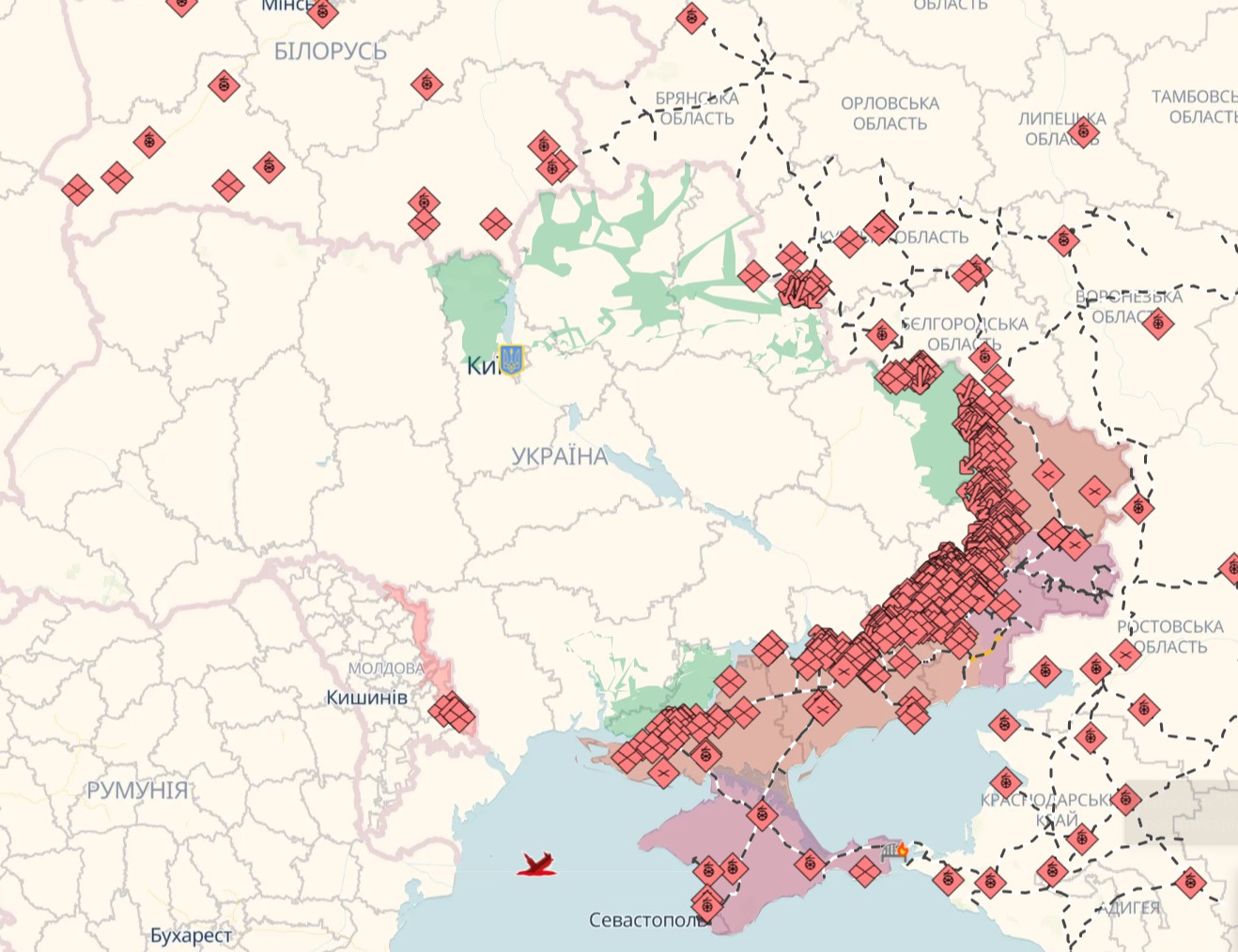
State of the front: a new type of modern warfare
Nature of the hostilities
The frontline is increasingly resembling industrial war of the XXI century:
-
massive use of drones
-
counter-battery warfare
-
high-precision strikes
-
EWR and the cyber component
Balance of power
-
Ukraine relies on precision, technology and asymmetric solutions
-
Russia - on the enemy's numbers, mobilisation resources and wear and tear
This creates a stalemate where a breakthrough is possible only if a qualitative change in the resources of one of the parties.
The economic dimension of war
Ukraine: an economy of survival and transformation
-
significant GDP losses
-
large-scale destruction of infrastructure
-
dependence on external financing
At the same time, the war accelerated it:
-
defence industrialisation
-
digitalisation
-
reorientation of the economy to EU standards
russia: war as a financial trap
-
chronic budget deficit
-
dependence on energy exports
-
sanctions pressure
-
Increased military spending
The longer the war lasts, the more less room for manoeuvre remains with the Kremlin.
International support: key to Ukraine's resilience
Military aspect
Western support defines Ukraine's ability to deter Russia:
-
AIR DEFENCE
-
artillery
-
long-haul vehicles
-
technologies
Political aspect
-
sanctions
-
diplomatic isolation of russia
-
international coalitions
Risks
Support for Ukraine depends on:
-
US domestic policy
-
European unity
-
global crises
Possible scenarios for the development of the war
1. 1. A protracted war
The most likely scenario is war of attrition without a quick peace.
2. A turnaround in favour of Ukraine
Available on condition:
-
Increase in military aid
-
technological superiority
-
Russia's economic exhaustion
3. 3. an unstable «peace»
A temporary cessation of hostilities without resolving the causes of the conflict.
Conclusion.
Russia's war against Ukraine is The battle for the future world order.
It will determine the outcome:
-
whether international law works
-
whether the security system makes sense
-
whether great powers can change borders with impunity
This material is used for analytical base, It is worth referring to in all news and explanatory materials about the war.