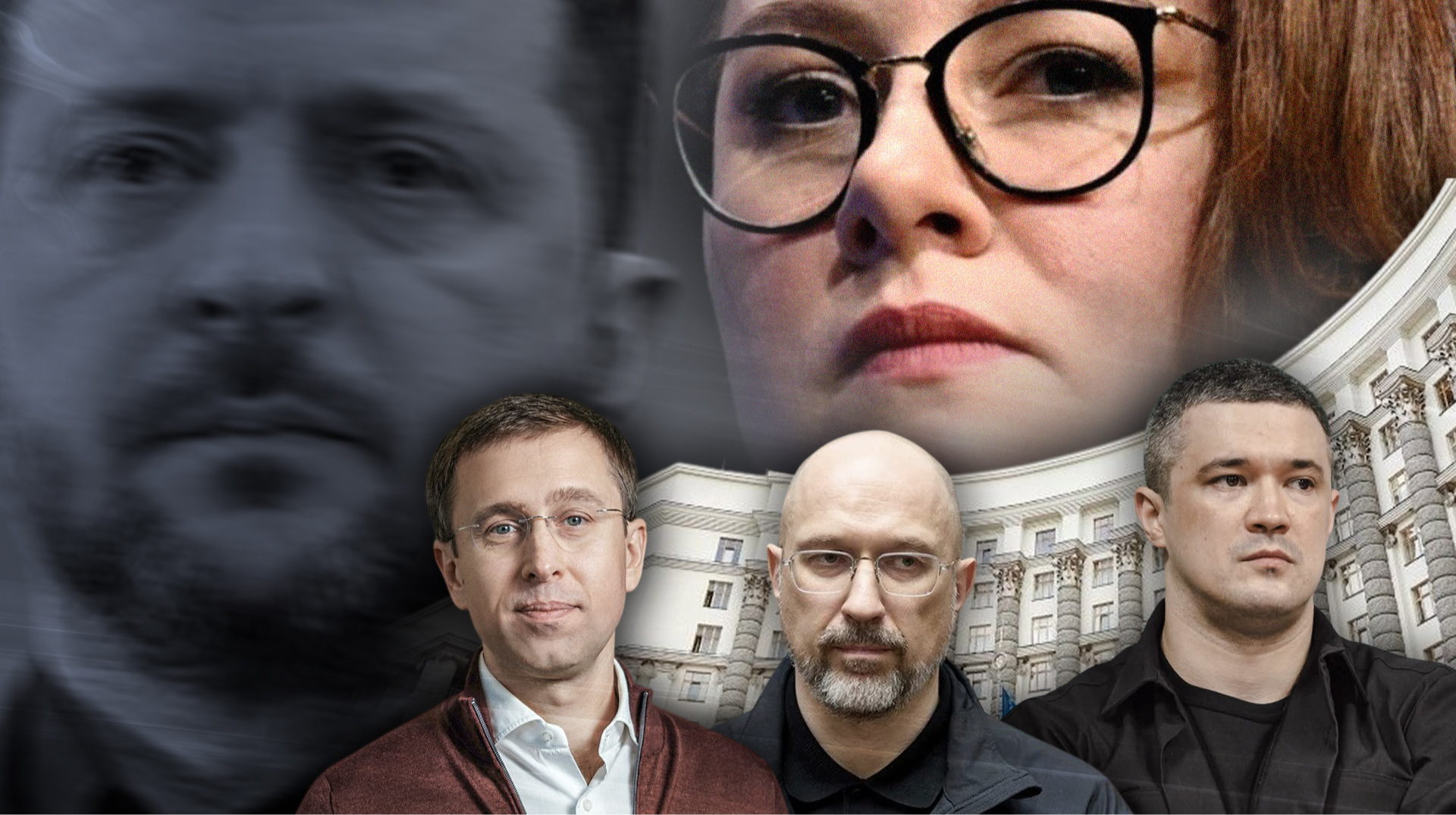
A reshuffle of the Cabinet of Ministers could have implications not only for the government’s personnel but also for the work of parliament and the ministries. Vladimir Skrypets, head of the analytical department at the Laboratory of Legislative Initiatives, writes about this in a column for «Ukrainska Pravda», analysing the resignation of Yulia Svyrydenko’s government.
Briefly about the main points
- The Prime Minister’s resignation means that the entire Cabinet automatically resigns.
- The author points to the limited role of parliament in assessing the government’s performance.
- Parliament did not approve Svyrydenko’s Cabinet’s programme of activities.
- Some of the 142 government bills may have to go through part of the parliamentary procedure again.
- The reorganisation of ministries could take months to restore normal working procedures.
Parliamentary accountability without public scrutiny
Volodymyr Skrypets states that the President cannot appoint or dismiss the Cabinet of Ministers on his own. The Prime Minister, as well as the Ministers of Defence and Foreign Affairs, are appointed by the Verkhovna Rada on the recommendation of the Head of State; other members of the government are appointed on the recommendation of the Prime Minister.
At the same time, the author believes that, in practice, political initiative regarding personnel decisions centres on the president, whilst parliament may find itself in the role of a body that merely formalises decisions that have already been taken. According to him, MPs reported that they had learnt of the planned government reshuffle from the President’s posts and the media.
The column links this to the issue of accountability: the government is accountable to the president and parliament, but is subject to the oversight and accountability of the Verkhovna Rada in particular. The author emphasises that MPs should systematically question ministers, monitor the fulfilment of commitments and evaluate the work of the Cabinet of Ministers, rather than merely voting on personnel decisions.
A government without an approved programme
According to Skrypets, the Svyrydenko government submitted its programme of action to the Verkhovna Rada in September 2025, but it was not approved. Therefore, in the author’s view, there are no parliament-approved targets against which the effectiveness of this Cabinet could be assessed.
The author acknowledges that the government’s work can be analysed in terms of its priority action plans, budget, international commitments, draft legislation and public pledges. However, as he writes, such benchmarks are no substitute for programmes with clearly defined objectives and designated responsible parties.
The column suggests that the new Cabinet of Ministers drew up and publicly presented an action plan setting out measurable targets, deadlines and the bodies responsible, and then submitted it to parliament in good time. Its approval, the author notes, would grant the government a year’s immunity from being forced to resign.
The reorganisation is taking up the new team’s time
Skrypets identifies the reorganisation of the executive branch – which often accompanies personnel changes – as a separate risk. Ministries may be merged, split up, renamed or have their functions transferred to other bodies.
Such changes require new regulations, a redistribution of responsibilities, staff and budgets, as well as coordination with other bodies. The author writes that implementing a reorganisation usually takes around half a year, and during this period a significant proportion of the ministry’s resources is spent on streamlining internal processes.
The analyst cites the Ministry of National Unity as an example of poor management practice. In his view, the new government should avoid a radical restructuring of ministries and ensure a proper handover of responsibilities. Among the possible tools, he mentions handover documents for the Prime Minister and ministers — documents setting out the current state of affairs, critical deadlines, risks and pending decisions.
Bills that will have to start all over again
According to the author’s calculations, based on open data, the Svyrydenko Cabinet tabled 142 draft laws which had not yet been adopted in principle at first reading. Due to the change of government, some of them will have to start the parliamentary process all over again.
This involves a fresh review by the committees, the drafting of conclusions and another first reading. Skrypets emphasises that the work carried out previously will not be lost, but going through the procedure again will take time.
The author believes that delays could affect processes relating to Ukraine’s European integration commitments and international financial support. This is the columnist’s assessment, not an official forecast regarding specific draft laws.
The stability of procedures following a political decision
Staff changes may sometimes be necessary if the structure of the executive branch is not delivering results, writes Skrypets. However, he urges that such decisions be assessed not only in terms of political expediency, but also in terms of the time and resources required to implement them.
The author’s conclusion is that the new Cabinet needs a clear programme of action, a handover of responsibilities and a minimisation of organisational reshuffles. In his view, this could reduce the risk of a loss of momentum in the work of government bodies following a change in leadership.