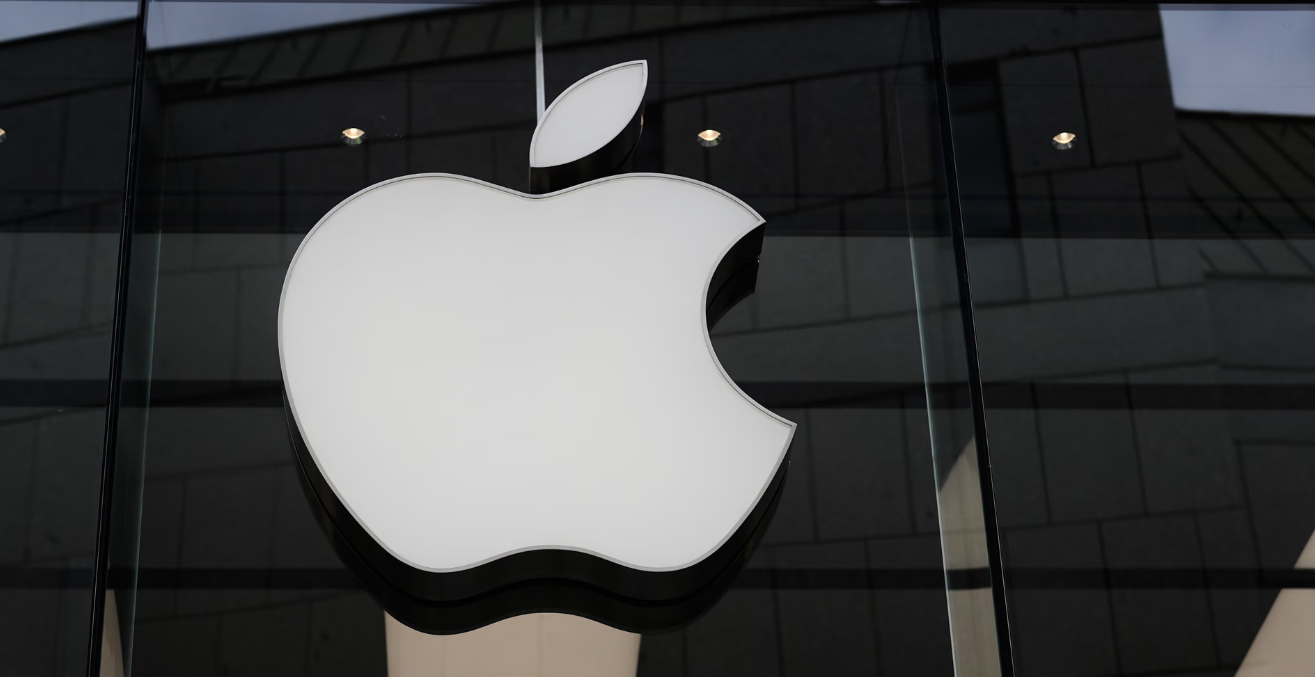
Apple has become only the second company in history to have a market capitalisation exceeding $5 trillion. On Tuesday, the iPhone maker’s shares reached $342.89, corresponding to a valuation of $5.04 trillion, but subsequently slowed their rise. The rally comes against a backdrop of investors pulling out of AI and semiconductor stocks, and expectations of strong demand for Apple’s products.
Briefly about the main points
- Apple reached an intraday market capitalisation of $5.04 trillion.
- Previously, only Nvidia had surpassed the $5 trillion mark.
- Apple shares have risen by 24% since the start of the year.
- The Nasdaq 100 has fallen by more than 10% from its June high.
- Apple has launched a device hire scheme in the US via Klarna.
From Nvidia to the new market leader
At its peak, Apple’s share price stood at $342.89 per share. Later, the shares were trading 0.64% higher at $339.71, and the company’s market capitalisation was close to $4.98 trillion.
Earlier this month Apple has become the world’s most valuable company, overtaking Nvidia. The chipmaker had topped the rankings since June 2025 and became the first company to break the $5 trillion mark last October.
Since the start of the year, Apple’s shares have risen by 24%, significantly outperforming the other six companies in the «Magnificent Seven» group of US tech giants.
Investors are reassessing the value of AI expansion
Apple’s rise coincided with an intensification of the global sell-off in artificial intelligence-related shares. The market is concerned about the scale of borrowing undertaken by AI companies to expand their data centres, as well as the practice of cross-financing within the sector.
At the opening of trading in the US, Intel, AMD, SanDisk, Western Digital and Seagate Technology were down by more than 4%. At one point, the Nasdaq 100 index was down by 1.8%; it has fallen by more than 10% from its record high in early June, which technically constitutes a correction. In South Korea, shares SK Hynix and Samsung Electronics lost more than 10%.
Another factor influencing market sentiment was the news that China had begun mass production of its own DUV systems for chip manufacturing. According to Reuters, citing The Information, these systems currently lag behind ASML’s equipment in terms of performance and reliability and require further testing.
More restrained spending on AI has boosted Apple
Apple has benefited from not joining the massive spending race on AI infrastructure. Due to difficulties in developing its own models, the company is instead using Google’s technology for new services, including the updated Siri. This has enabled it to avoid the substantial infrastructure costs that are causing concern amongst some investors in its competitors.
In contrast, Google., which last week increased its capital expenditure plan for the current year to $205 billion to develop its AI division. The company also reported its first-ever negative free cash flow: for the three months to the end of June, it stood at minus $5.9 billion.
At the same time, Apple is not immune to the effects of the AI boom. In June, it raised prices on some MacBook and iPad models due to rising costs of memory and storage. Editor’s conclusion: Apple’s current advantage lies more in the reduced direct pressure on its cash flows than in complete independence from the AI investment cycle.
Device hire and the upcoming review of expectations
To boost demand, Apple launched the Apple Upgrade programme in the US on Tuesday via the payment company Klarna. Monthly payments start from $17.99 for an iPhone, $11.99 for an Apple Watch or iPad, and $24.99 for a Mac. For the iPhone and Apple Watch, 12- or 24-month terms are available; for the Mac and iPad, 24- or 36-month terms are available.
Once the contract period has ended, the customer can switch to a new device, return their current one or buy it outright by paying the difference up to the retail price. In short, the scheme changes how the price is perceived, but it is not a direct discount. Forrester analyst Dipanjan Chatterjee described it as a response to a price that might otherwise seem unexpectedly high to the buyer, thanks to the predictable monthly payment.
The next test for the market’s assessment will be Apple’s quarterly report following the close of trading on Thursday, 30 July. Analysts expect revenue to grow by more than 15% compared with the previous year; according to the market consensus, the forecast stands at $108.89 billion. These high expectations mean that investors will be assessing not only the growth rate itself, but also the company’s comments on demand and margins.