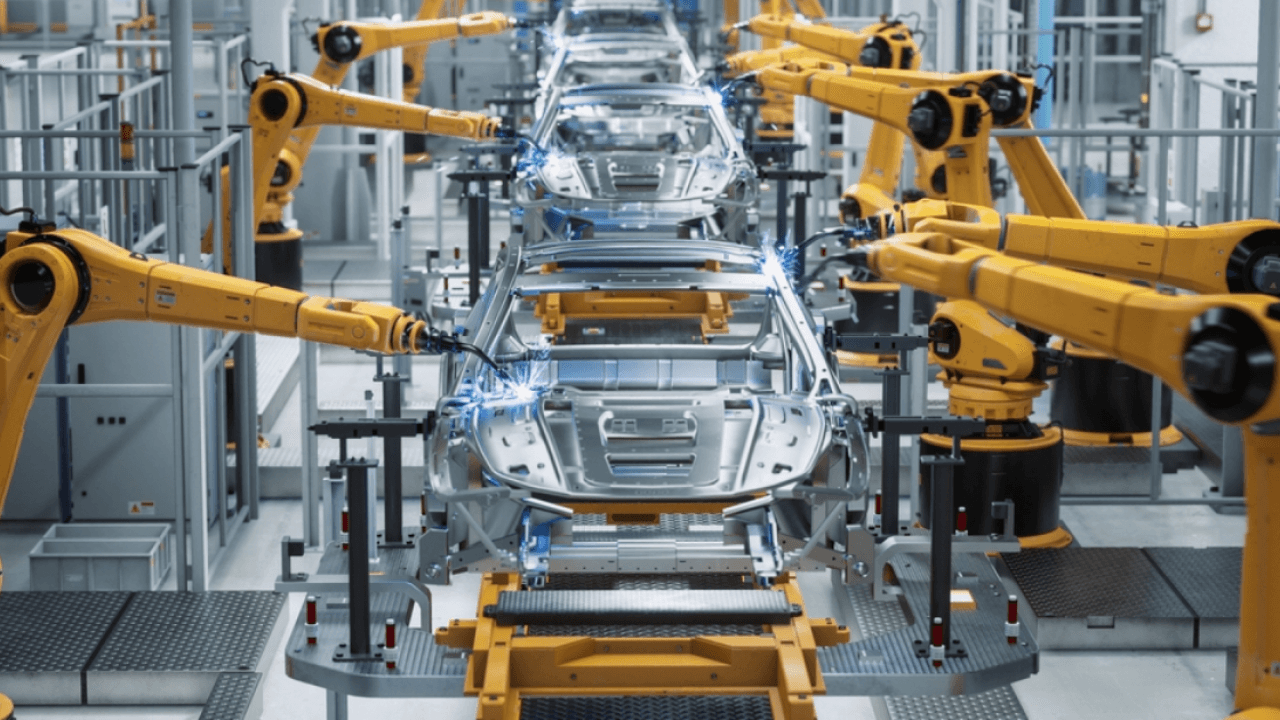
Germany's automotive industry is undergoing a major transformation, with companies shutting down production on a massive scale due to the crisis. Rising costs, volatility in the European market and the shift of investment to Eastern countries are creating new challenges for the industry.
German automotive industry stops production
Recent events have shown that the German automotive industry is facing a difficult situation. Manufacturers and suppliers are being forced to change their production models due to the sharp rise in energy and labour costs, as well as the volatility in the European market. According to gazeta.pl, Some companies have already announced the closure of production facilities, and new investments are directed to Eastern and Central Europe.
One of the most high-profile examples was the company's decision to Mann+Hummel close the plant in Speyer by the end of 2028. Production processes will be gradually transferred to other enterprises of the concern, which will lead to changes for hundreds of employees, mainly in production units. The company notes that this is not related to the quality of the staff, but is a consequence of the need to restructure the entire production system.
Supply chain under pressure
The crisis in Germany's automotive industry is affecting not only major car manufacturers, but also related companies that provide the supply chain. A manufacturer of electrical components Erich Jaeger GmbH, which has been operating for over nine decades, was forced to file for bankruptcy. The company has an international presence and thousands of employees in different countries, but is now struggling to maintain operations and is looking for investors to restructure.
In fact, instability is affecting the entire industry, from large factories to specialised component manufacturers. Rising costs, weak economic growth and the overall volatility of global markets are putting additional pressure on companies.
Production is moving eastwards
Amid the crisis, major market players are increasingly deciding to move production outside Germany. In particular, Daimler Truck is expanding its facilities in the Czech Republic, where it plans to significantly increase truck production and create new jobs. MAN is also taking similar steps, which reflects a general trend of shifting production to the east of Europe, where business conditions are more competitive.
This could lead to further job losses in Germany and increased competition in the region. For the German economy, this means a loss of industrial potential and the need to find new strategies to maintain leadership in the industry.
Why it matters
The massive production shutdown in Germany has a significant impact not only on the national economy but also on the entire European automotive industry. A shift in investment to Eastern and Central Europe could change the balance of power in the region and affect the labour market.
For industry employees, this means the risk of losing their jobs and the need for retraining. For investors and suppliers, it means looking for new opportunities in countries with more favourable conditions. In the long run, these processes may determine the future of European industry and the structure of global supply chains.