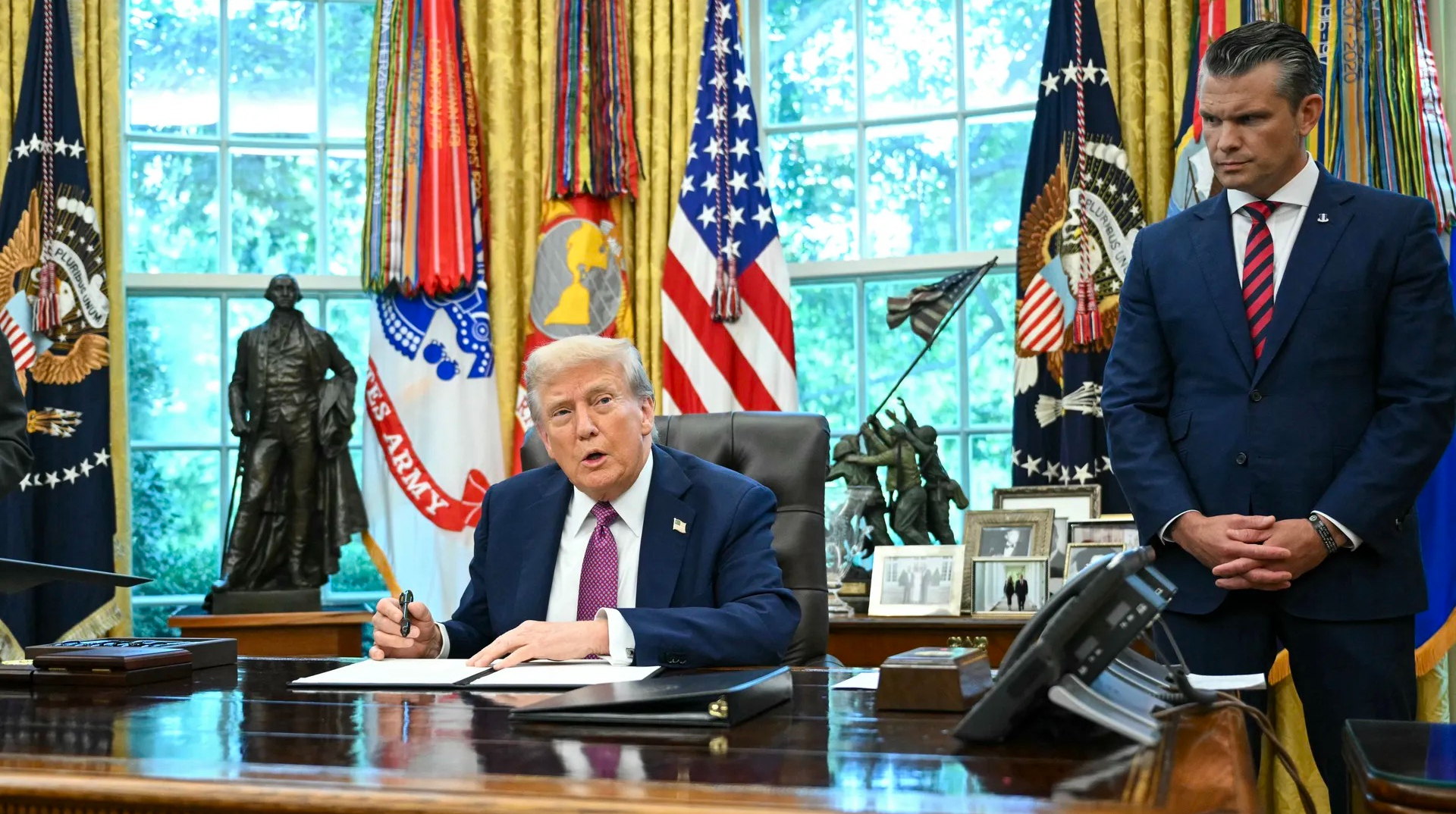
US President Donald Trump has signed a proclamation imposing tariffs ranging from 10% to 100% on imports of drones, docking stations and components. The White House stated that the decision is intended to reduce the country’s reliance on foreign suppliers of critical components, mitigate the associated cybersecurity risks and support the expansion of US manufacturing.
Briefly about the main points
- The highest rate applies to large drones or thermal imaging drones.
- Smaller drones and other components will be subject to a 25% duty.
- Separate rates have been set for goods from several allied countries.
- Most of the tariffs will come into effect in 21 days.
- The Minister for Trade will be able to set up a programme to localise new production.
Which categories of drones are subject to the highest tariffs?
Rate 100% will apply to drones with a maximum take-off mass of more than 25 kilograms or capable of thermal imaging. It will also apply to docking stations for such devices and certain critical components.
A 25% duty is applicable to smaller drones that do not possess characteristics classified by the authorities as sensitive to national security, as well as to other components.
A separate tariff rate of 15% will apply to drones and components originating from the European Union, Japan, Liechtenstein, South Korea, Switzerland and Taiwan. It will apply if virtually all the equipment, software and technology originate from these countries or the US. For drones from the UK, a tariff of 10% has been set under similar conditions.
When will the tariffs come into effect, and for whom has a deferral been provided?
In principle, the new tariffs will come into force 21 days after the proclamation is signed. For components that the authorities do not classify as particularly sensitive, the introduction of duties has been postponed for 180 days.
The same timeframe applies to goods and components for which the US Department of Defence will, within 20 days of the signing, approve an exemption from the Federal Communications Commission’s Covered List.
The US administration attributes the decision to defence and local production
The White House has described the import of drones and their components as a threat to national security, as US commercial and military unmanned systems rely on foreign sources for critical components. The administration also highlighted cybersecurity risks.
The statement emphasises that drones are a key technology in modern armed conflicts and are essential for current and future US military operations. Washington considers it necessary to rapidly scale up domestic production in order to strengthen national and economic security.
The proclamation authorises the Secretary of Commerce to establish a localisation programme for companies making new investments in the manufacture of drones and their components in the United States.