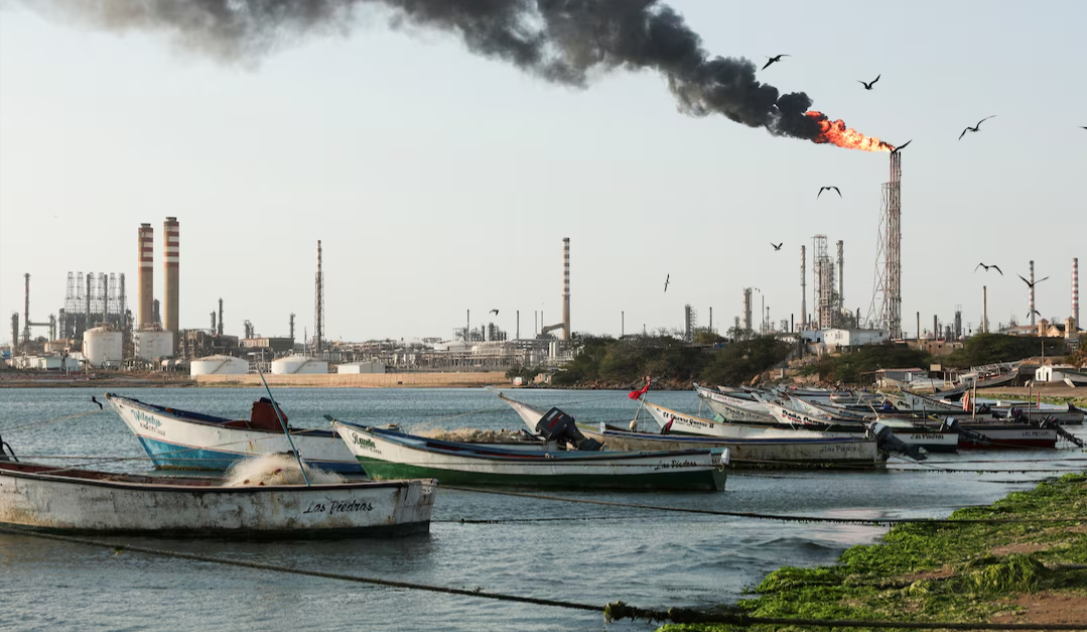
Venezuela’s oil refineries, in particular the Paraguayan complex with a capacity of 955,000 barrels per day, are operating at less than full capacity due to years of underfunding and equipment breakdowns. Experts interviewed by Reuters estimate that the full restoration of refining capacity would cost at least $20 billion. According to an energy analyst, following the devastating earthquakes, the government’s priority has become the reconstruction of the country.
Briefly about the main points
- The total cost of fully restoring Venezuela’s oil refineries is estimated at at least $20 billion.
- The Paraguayan plant is operating at a fraction of its capacity.
- The earthquakes did not cause any direct damage to the refinery, but they did alter the budget priorities.
- Crude oil exports have risen to around 1.2 million barrels per day.
- Foreign companies are in no hurry to invest in the Venezuelan refining sector.
Out-of-date equipment and repairs without systematic upgrades
The Paraguayan oil refining centre in Falcon State comprises the Amuay and Cardón refineries. Its capacity stands at 955,000 barrels per day, although the complex has long been processing significantly less than that. Staff and contractors told Reuters of overflowing open settling tanks, leaks of residue from pipelines and valve stations, and a shortage of equipment.
At Amuay, the flexicoking unit – which used to convert heavy, low-value residues into higher-quality fuel with a lower sulphur content – now stands idle and has turned black. An engineer who recently retired said that the unit had been dismantled for spare parts and could not be restored.
There are also problems at PDVSA’s smaller refineries — Puerto La Cruz and El Palito. Since last year, local contractors have repeatedly carried out repairs to the unstable catalytic cracking unit and the feed system. Minor repairs had previously enabled Amuay and El Palito to increase their refining capacity by around 20,000 barrels per day each.
Earthquakes are putting major investments on hold
Two earthquakes In June, they claimed the lives of more than 5,000 people and caused widespread destruction. They did not damage the refineries themselves, but an accident on a key power line brought El Palito to a standstill for around two weeks. The plant resumed operations in mid-July, but it will be shut down again in the coming weeks for major maintenance and post-earthquake inspections.
Energy analyst Oswaldo Felissola believes that major investments in refining are now likely to be postponed until 2027 or later. Other industry experts interviewed by Reuters share the assessment that at least $20 billion is needed to fully restore capacity.
Oil exports are a top priority
After Washington’s removal of Nicolás Maduro On 3 January, following the easing of sanctions, crude oil production and exports increased. Since January, exports have risen from less than 800,000 to around 1.2 million barrels per day. The White House stated that it is not involved in the reconstruction of Venezuelan refineries, whilst noting that exports have reached a seven-year high.
American and international oil companies have shown an interest in Venezuela, primarily in oil production. It is less profitable for them to refurbish local refineries: American refineries are already adapted to process Venezuelan heavy, sulphurous crude. According to Eric Smith, deputy director of the Energy Institute at Tulane University, larger projects, such as the modernisation of refineries, can only be considered once the country has become stable and creditworthy.
Legislation passed in July allowed private companies to operate oil refineries and sell the fuel they produce, although this had previously been the exclusive preserve of PDVSA. Analysts consider the model to be insufficiently attractive, particularly due to a tax of up to 5% of refiners’ gross revenue. An additional obstacle is state regulation of petrol prices: selling fuel on the domestic market below cost limits the ability to finance the refurbishment of refineries from their own revenues.