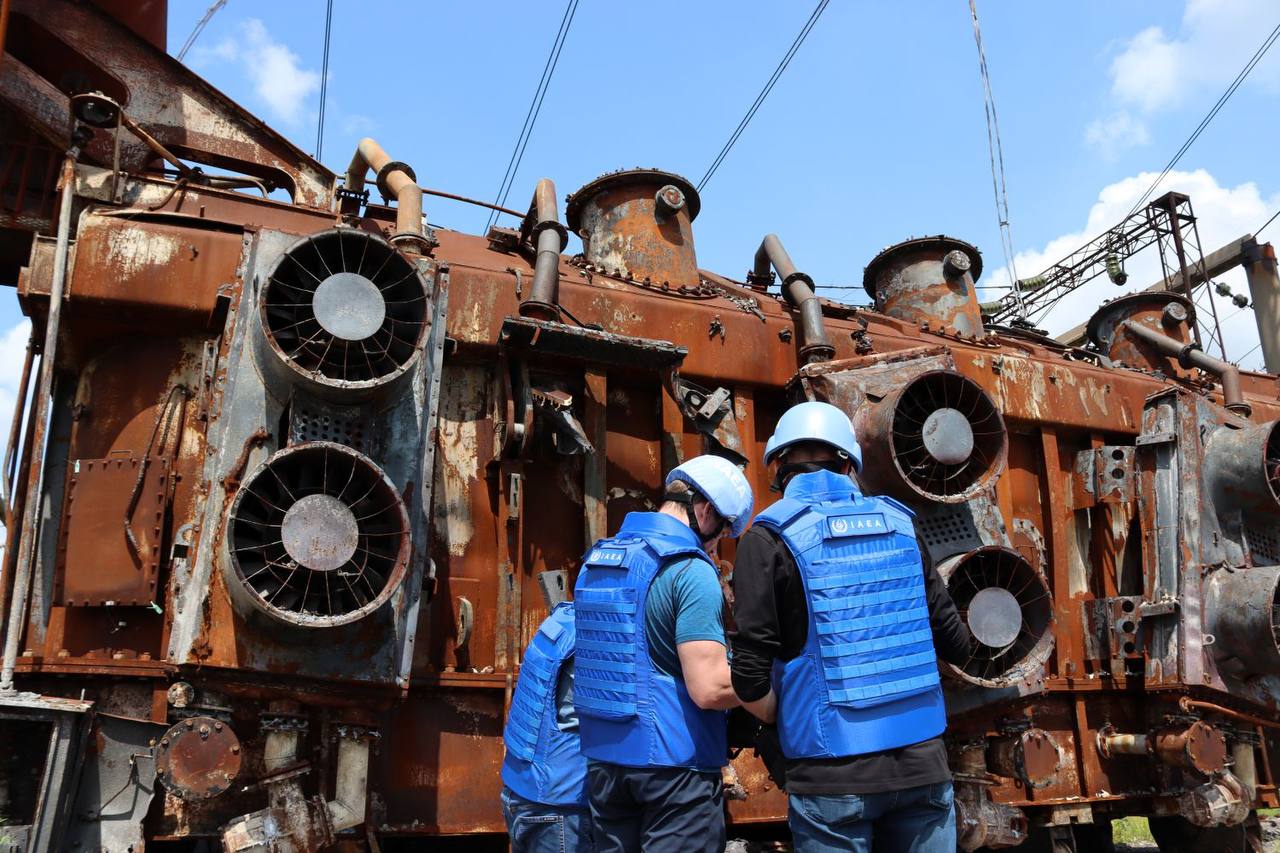
A mission from the International Atomic Energy Agency has completed its latest monitoring of key substations operated by NPC «Ukrenergo». The experts examined the consequences of Russian terrorist attacks on transmission system facilities that supply power for the internal needs of Ukrainian nuclear power stations and feed their output into the main grid.
Briefly about the main points
- The IAEA has completed its latest inspection of Ukrenergo’s key substations.
- The mission investigated the consequences of Russian attacks on energy infrastructure.
- Substations provide external power supply and distribute power from nuclear power stations.
- Comprehensive monitoring became possible following the extension of the mission’s mandate.
- «Ukrenergo has granted inspectors access to key high-voltage facilities.
Inspectors focused on the network’s connectivity and the nuclear power station
The mission focused on the condition of the facilities through which nuclear power stations obtain power for their own needs and feed the electricity they generate into the national grid. The reliability of the external power supply is one of the key elements of nuclear and physical safety: it is required, in particular, for reactor cooling and the operation of other safety systems.
Head of NEC «Ukrenergo» Vitaliy Zaychenko stated that the escalation of Russian terror over the summer, in particular the widespread use of ballistic weapons, had taken the threat to Ukrainian nuclear facilities to a new level. According to him, the company has granted the IAEA access to key high-voltage substations so that the international community can assess the scale of the risks posed by Russian aggression.
Previous inspections carried out by the agency in 2024–2025 had already identified damage to equipment, as well as a reduction in redundancy and network capacity at the sites visited. IAEA noted that repeated or prolonged losses of external power supply may require the activation of emergency power sources and place an additional burden on nuclear power station staff.
From one-off inspections to systematic monitoring
The opportunity to carry out comprehensive inspections of Ukrenergo’s key substations arose following the extension of the IAEA mission’s mandate in September 2024. An agreement to this effect was reached between President Volodymyr Zelenskyy and the agency’s Director General, Rafael Grossi. Since then, international inspectors have been able to monitor the safety situation not only directly at nuclear power station sites, but also at the associated transmission system infrastructure.
Repeat visits indicate that the mission’s work has shifted from one-off damage assessments to regular monitoring of the grid’s condition, which is vital for nuclear safety. The monitoring itself does not physically protect the substations, but it does enable an independent assessment of the consequences of attacks, their impact on the safe operation of the stations, and the need for technical support.
In December 2024, the IAEA Board of Governors specifically emphasised that attacks on infrastructure critical to the external power supply of nuclear power stations pose a direct threat to nuclear safety and security. The accumulation of damage and the reduction of backup systems can exacerbate this vulnerability even without a direct strike on a specific facility.
Extended mandate of the mission
The extension of the mandate enables international inspectors to monitor the security situation at key infrastructure within the electricity transmission system, which supplies power for the nuclear power plants’ own needs and feeds their output into the national grid.