The UK government has announced its intention to ban the activities of Iran’s Islamic Revolutionary Guard Corps (IRGC), the Russian GRU’s volunteer corps and the IMCR group. Following a series of threats, including plots to assassinate journalists and cyber-attacks, the UK Home Office plans to make any support for these organisations a criminal offence. The decision could affect diplomatic relations with Iran and Russia.
Briefly about the main points
- The UK plans to ban the KVIR, the GRU Volunteer Corps and the IMCR.
- Supporting these organisations will constitute a criminal offence.
- The decision was taken following threats against journalists and cyber-attacks.
- Iran condemned Britain’s actions, whilst Jewish communities voiced their support.
Which organisations are subject to the ban?
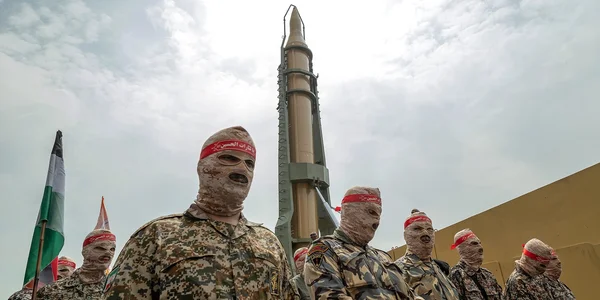
The UK Home Office has announced its intention to add Iran’s Islamic Revolutionary Guard Corps to the list of proscribed terrorist organisations (IRGC), the Russian GRU volunteer corps and the IMCR group. This decision will make it possible to prosecute any support for these organisations as a criminal offence.
The KVIR has already been designated a terrorist organisation in the US, Canada, Bahrain and a number of other countries. Russia’s GRU Volunteer Corps is cited as an organisation linked to Russian military intelligence, whilst the IMCR is accused of attacks on Jewish targets in Britain.
Reasons and grounds for the decision
According to British government officials, the decision was taken following a series of incidents that posed a threat to the country’s security. These included plots to murder journalists from Iran International and cyber-attacks on British targets.
Minister of the Interior James Cleverley stressed that the activities of these organisations pose a real threat to British citizens. The Home Office statement states that such measures are necessary to protect national security and the interests of the state.
Legal consequences and the mechanism for the ban
Once the decision comes into force, any support for or cooperation with the KVIR, the Russian GRU’s volunteer corps or the IMCR will be considered a criminal offence. This applies not only to membership, but also to funding, propaganda or any other form of assistance.
The exact date on which the decision will come into force has not yet been announced. Nor has it been specified exactly which actions or individuals will fall under the new criminal provisions.
Reactions from the parties
Iran officially condemned Britain’s intention, describing it as a politically motivated move. Representatives of Jewish communities in the UK, by contrast, welcomed the ban on the IMCR, emphasising the importance of protection against attacks.
There is currently no mention in open sources of Russia’s reaction to the decision regarding the GRU Volunteer Corps. The EU is continuing to discuss the possibility of similar sanctions against the KVIR, but no final decision has yet been taken.
Possible implications for international relations
A ban on the IRGC in the UK could complicate diplomatic relations with Iran and affect security cooperation in the region. The inclusion of the Russian GRU Volunteer Corps on the list of terrorist organisations could set a precedent for other European countries.
The implementation of the ban provides for criminal liability not only for membership but also for any form of support for these organisations, which could significantly restrict their activities within the UK.