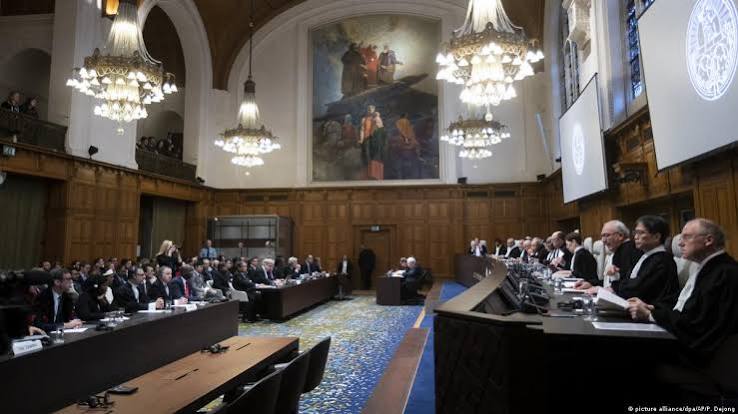
On 19 November 2026, the International Court of Justice in The Hague found Myanmar responsible for the genocide of the Rohingya Muslim minority during the 2017 military operation. The ruling was supported by nine of the 15 judges, who rejected the authorities’ arguments regarding the fight against militants. According to the court’s findings, the security forces killed thousands of civilians, carried out mass rapes and destroyed villages.
What the International Court of Justice ruled
The judges concluded that the actions of the military personnel Myanmar in Rakhine State in 2017 were intended to destroy a substantial part of the Rohingya ethnic and religious group. This meets the legal definition of genocide as set out in the 1948 UN Convention.
President of the International Court of Justice Yuji Iwasawa When announcing the decision, he stated that Myanmar’s security forces had killed civilians, committed sexual violence, treated children cruelly and attacked people trying to flee to Bangladesh.
The court also found that the military had carried out mass executions of men and boys, burnt down hundreds of villages and incited hatred against the Rohingya. According to the court’s estimate, around 10,000 members of the minority were killed.
Why did the court reject Myanmar’s arguments?
The Myanmar authorities claimed that military operation was a legitimate response to attacks by armed groups in Rakhine State.
However, the judges found that the scale of the violence, the nature of the attacks and the systematic persecution of the civilian population indicated an intention to destroy a substantial part of the Rohingya population, rather than merely to counter the insurgents.
This is the first time that the International Court of Justice has directly held a state responsible for committing genocide. Previously, international courts had established the facts of genocide, notably in Rwanda, Srebrenica in Bosnia and Cambodia.
How a military operation triggered a mass exodus of the Rohingya
In August 2017, the Myanmar army launched a large-scale operation following attacks by militants on security forces. The military described its actions as a clearance operation to rid the area of rebel groups.
During the operation, Rohingya settlements suffered widespread destruction. At least 700,000 people were forced to flee Myanmar and seek refuge in neighbouring Bangladesh.
According to the Associated Press, there are currently around 1.2 million Rohingya refugees in Bangladesh. Most live in overcrowded camps in Cox’s Bazar district, where people face limited access to work, poor sanitary conditions and the risk of natural disasters.
What measures is the court requiring Myanmar to take?
The case against Myanmar was brought in 2019 by The Gambia, with the support of the Organisation of Islamic Cooperation. The African state accused Myanmar of violating the Convention on the Prevention and Punishment of the Crime of Genocide.
Under the court’s ruling, Myanmar is obliged to ensure the safe and dignified return of displaced Rohingya to their places of residence, to facilitate family reunification and to provide compensation for the harm caused.
The amount of compensation must be determined separately. The ruling of the International Court of Justice is final and not subject to appeal. However, the court does not have its own mechanism for enforcing its rulings.
How the ruling might affect other international cases
The ruling on Myanmar has attracted the attention of international lawyers, as the International Court of Justice is also hearing other cases relating to the Genocide Convention.
In particular, South Africa accuses Israel of breaching the Convention during military operations in the Gaza Strip. Israel rejects these allegations. Ukraine has brought a separate case against Russia over Moscow’s use of claims of alleged genocide to justify a full-scale invasion.
The ruling on Myanmar may serve as a benchmark for assessing evidence and establishing intent to commit genocide, but it does not determine the outcome of other proceedings.
As of 19 November, Myanmar’s responsibility for the genocide against the Rohingya has been established by a final court ruling. The remaining issues are the determination of compensation, the enforcement of the ruling and the creation of conditions for the safe return of refugees.