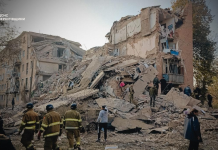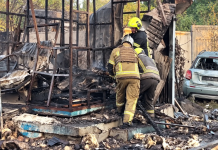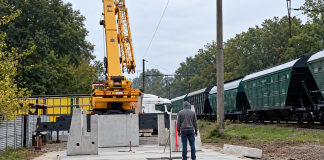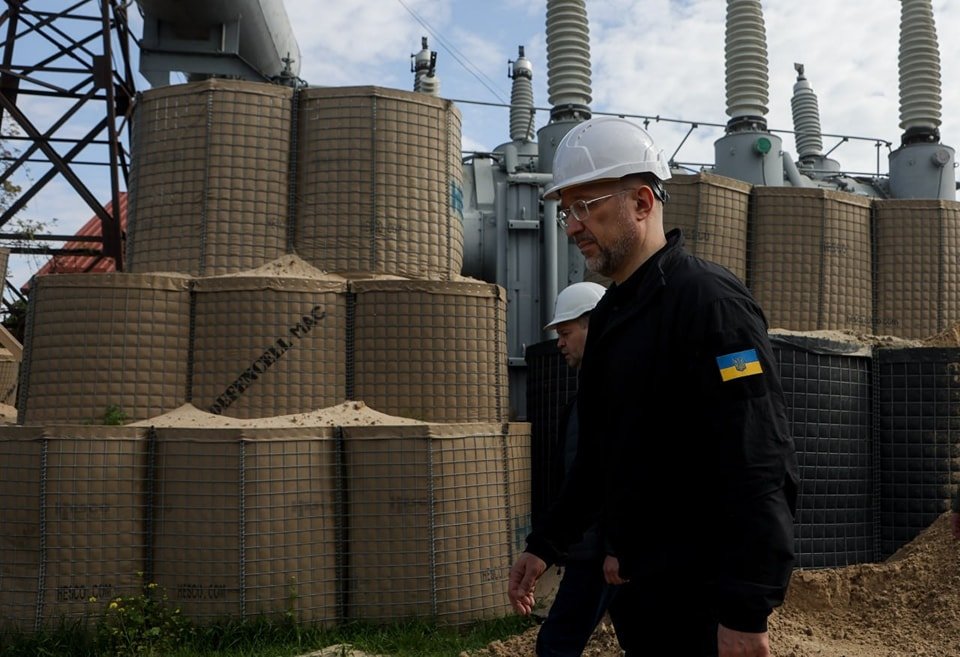
In Ukraine, the construction of around 200 second-level engineering protection structures at priority energy facilities has been completed. These are designed to mitigate the effects of Russian attacks, particularly missile strikes, but cannot guarantee complete resilience in the event of a direct hit by several ballistic missiles. This was stated by First Deputy Prime Minister and Minister of Energy Denys Shmyhal during «Question Time» in the Verkhovna Rada.
Briefly about the main points
- Ukraine has stepped up security at critical energy infrastructure sites.
- Around 200 second-level defence structures have been built.
- Shmyhal warned that it would be a difficult winter.
Around 200 energy facilities have been fitted with enhanced engineering protection
According to Shmygalya, the Ukrainian energy sector’s defence system currently comprises two main components. The first is active defence using air defence systems and electronic warfare capabilities. The second is passive engineering and technical defence.
Monolithic structures are being built at priority energy facilities to contain the effects of strikes and protect the most critical equipment. As of 21 August, approximately 200 second-level defence structures. Work in the regions is continuing.
That said, the claim that such a defence system is supposedly guaranteed to «withstand ballistic missiles» requires clarification. Shmyhal stated explicitly that There is no such thing as 100 per cent protection against multiple direct ballistic impacts.
«When several ballistic missiles, each carrying a half-tonne warhead, are fired at a target, no defence system can offer a 100 per cent guarantee.».
At the same time, according to the minister, the main objective defensive structures — to distinguish between total destruction of the equipment and damage that can be repaired within a few weeks.
Russia continues to target the restored power generation capacity
Preparations for winter are made more difficult by the fact that Russia is attacking facilities that Ukraine has only just managed to repair or build.
Shmyhal reported that, during 2026, around 4.8 GW of generating capacity, with a further 4 GW or so currently undergoing repair and refurbishment. In total, the plan is to refurbish or build more than 10 GW over the course of the year.
At the same time, the minister acknowledged that new Russian strikes could constantly force adjustments to these plans. He cited the example of the attack on one of the energy facilities on 20 August, which once again set back part of the repair programme.
That is precisely why the forecast for available capacity depends not only on the pace of repairs. At present, Ukraine has around 15 GW of available electrical capacity during the evening peak, taking into account imports and cogeneration. The figure is set to rise to 19.6 GW by 1 November and to 21.4 GW by the end of the year, provided that the restored facilities are not destroyed again.
Ukraine is creating thousands of smaller power generation sources
Shmyhal cited decentralisation as one of the key ways to make the power system less vulnerable.
Instead of relying solely on large power stations, Ukraine is creating a network of small, autonomous sources — the so-called energy cells.
According to the minister, around 1.8 GW of distributed gas-fired generation, of which more than 400 MW have been connected this year. The plan is to add a further 800 MW or so by the end of 2026. More than 280 installations are currently at the installation or construction stage.
The logic behind this approach is that it is much easier to put a single large power station out of action than to destroy hundreds or thousands of dispersed generating units at the same time.
Shmyhal noted that the best progress in developing this type of power generation had been made in Kyiv and Kharkiv regions. At the same time, risks remain in Kyiv and the Poltava region.
Tens of billions of hryvnias have been allocated to the energy sector
Separately, the state funds the so-called resilience plans regions.
Parliament has provided for 40 billion UAH for protection, backup power supplies and the development of decentralised heat and electricity generation. Over 35 billion hryvnias of this sum has already been channelled to the regions.
Furthermore, according to Shmyhal, since the start of the year, Ukraine has raised almost €507 million in international aid. The funds and equipment are used for repairs and to build up reserves of transformers, generators, combined heat and power units and other equipment.
At the same time, Ukraine is also working on new defence technologies. On 24 August, Shmyhal announced talks with Finnish defence and technology companies regarding engineering solutions designed to strengthen the security of the energy sector in ballistics and unmanned aerial vehicles.
Shmyhal: Next winter will be a difficult one
The minister did not promise that the coming heating season would be a smooth one.
In his view, The winter of 2026–2027 will be difficult and roughly on a par with the previous one. Right at the start of his speech, he described it as the fifth winter of the war, which would be «no less difficult» due to systematic Russia’s attacks on the energy sector.
At the same time, at the time of his speech, the power grid was operating stably, with no planned power cuts. Shmyhal warned that the situation could change rapidly depending on the intensity of the Russian attacks.
So, Ukraine is, in effect, building a multi-tiered system for the survival of the energy sector: Air defence and electronic warfare systems, concrete protective structures, backup equipment, decentralised power generation and energy storage systems. However, the government does not rule out the possibility of difficult periods regarding electricity and heating in the event of further large-scale attacks.