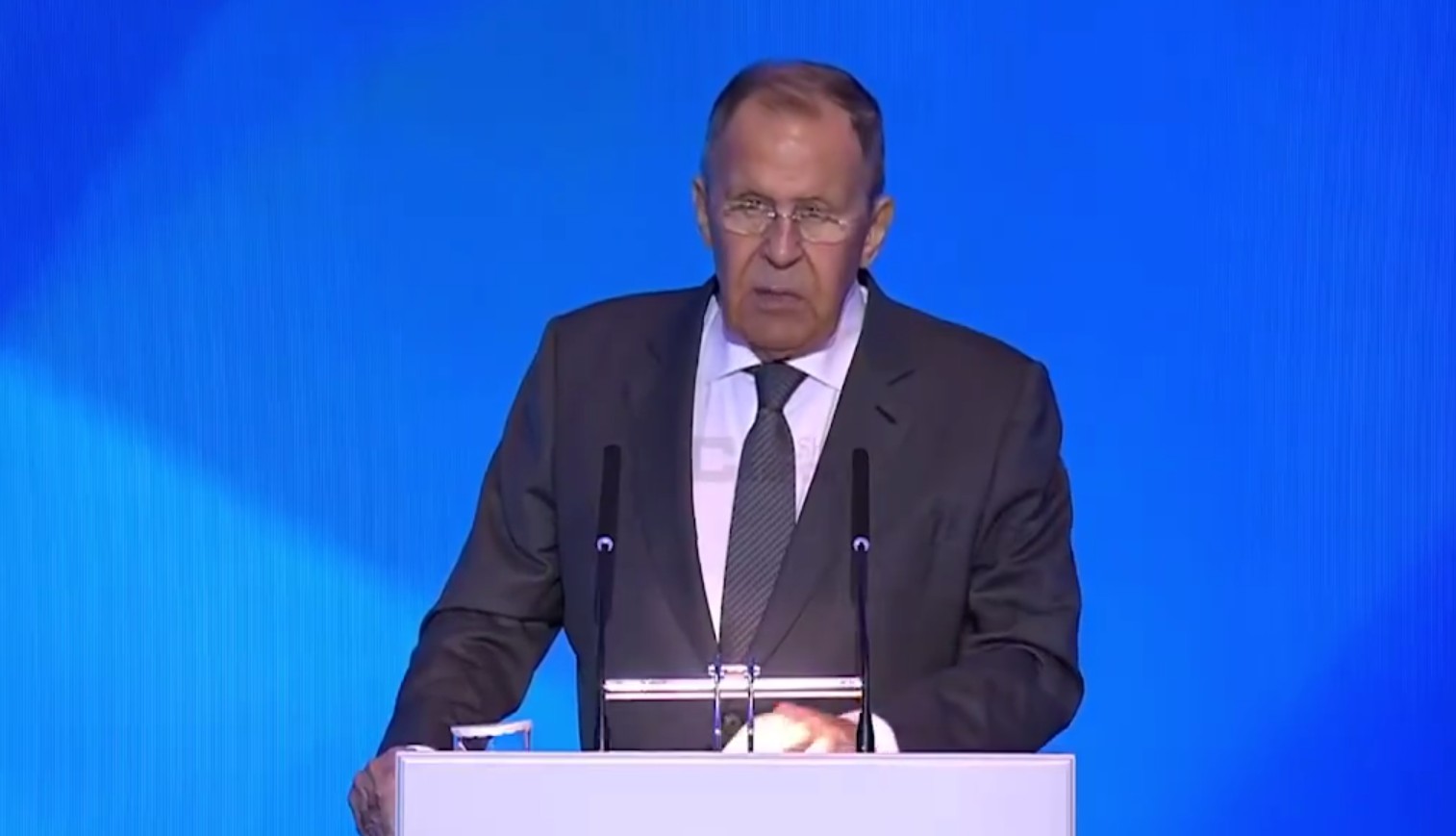
Russian Foreign Minister Sergey Lavrov has stated that Moscow does not support proposals for a temporary ceasefire, in particular an energy, food, air and maritime truce. According to him, such initiatives are allegedly not aimed at achieving peace, but would merely allow Ukraine to rebuild its military capabilities. The Russian Foreign Minister made these remarks on 3 November during an international conference on Eurasian security in Minsk.
Briefly about the main points
- Lavrov rejected proposals for a ceasefire in the energy, food, air and maritime sectors.
- A Russian minister has accused Europe of wanting to give Ukraine time to rearm.
- Moscow is insisting on addressing the so-called root causes of the war rather than a temporary ceasefire.
- Ukraine had previously confirmed its readiness to mutually cease attacks on the energy sector.
Lavrov accused Europe of trying to give Ukraine a respite
Speaking at the plenary session of the 4th Minsk International Conference on Eurasian Security, Lavrov criticised calls by European states for a cessation of hostilities in Ukraine.
The Russian minister referred to proposals for separate agreements providing for a halt to strikes on energy infrastructure, restrictions on air strikes, and the safeguarding of food security and the safety of shipping.
According to Lavrov, the implementation of such initiatives would allow Kyiv to gain time to restore its combat capability with the support of its Western partners.
He also accused the European Union of using the war in Ukraine to confront Russia.
At the same time, the head of the Russian Foreign Ministry stated that Moscow is insisting not on a temporary cessation of hostilities, but on a settlement that would involve addressing the so-called root causes of the conflict.
Russian diplomats use this phrasing to justify their demands regarding Ukraine’s future security status and the European security architecture.
Ukraine has repeatedly called for an end to attacks on the energy sector
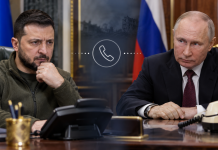
The position set out by Lavrov came against the backdrop of repeated proposals from Kyiv regarding a partial or complete cessation of hostilities.
On 23 September, during a meeting of the UN Security Council, Ukraine’s Minister for Foreign Affairs, Andriy Sibiga, stated that Kyiv was prepared to agree to a full and unconditional ceasefire. He also confirmed his support for an energy and food truce.
On 11 October, President Volodymyr Zelenskyy also stated that Ukraine was prepared to refrain from striking Russian energy facilities, provided that Russia took similar action.
The Ukrainian side emphasised that such agreements must be reciprocal and provide for a genuine cessation of attacks on civilian infrastructure.
However, Russian forces continued to launch attacks on the Ukrainian power grid. On the night of 3 November, there was yet another a large-scale missile and drone attack, as a result of which several regions experienced disruptions to their electricity and heating supplies.
Russia maintains its previous stance on ending the war
Lavrov’s statement is in line with Moscow’s position, which the Russian leadership has repeatedly articulated over recent months.
Back on 23 September, the Russian Foreign Minister stated at a meeting of the UN Security Council, that Russia has no intention of suspending hostilities whilst peace talks are taking place, regardless of their format.
Moscow insists on the need for prior agreement on the political and security conditions for ending the war. Ukraine, for its part, supports a ceasefire as one of the steps towards a peaceful settlement and insists on security guarantees.
During a speech in Minsk on 3 November, Lavrov also stated that he currently sees no prospect of a meaningful dialogue between Russia and the European Union.