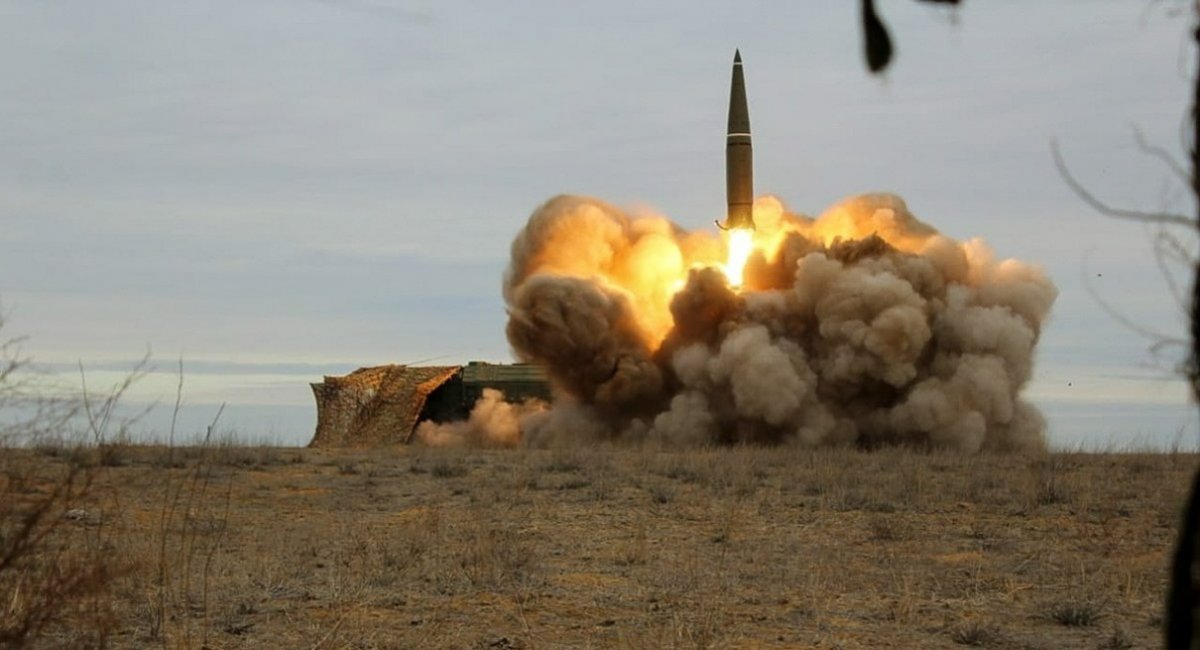
Ukraine is investigating why the United States and other international partners failed to warn of the Russian ballistic missile strike on Kyiv on the evening of 12 October. According to media reports, the US side attributes the lack of warning to the fact that its systems did not detect the missile launches. Meanwhile, the Ukrainian Air Force has officially confirmed that no advance information about the launches was received, and that the aerial targets were only detected during the attack itself. The Ukrainian military, together with its partners, is to investigate the reasons for the delay. Foreign Minister Andriy Sibiga emphasised that cooperation with the US on the exchange of intelligence continues.
- On 12 October, Russia launched a ballistic missile strike on Kyiv.
- Ukraine did not receive advance warning from its partners regarding the missile launches.
- The US explains the situation by saying that it did not detect any launches itself.
- The Air Force detected the missiles whilst the attack was already underway.
Why didn’t the US warn Ukraine about the ballistic missile launch?
After night-time attack on Kyiv Reports have emerged that the US side attributed the lack of warning to the fact that its surveillance systems allegedly failed to detect the Russian missile launches.
According to widely reported information, the Ukrainian side has raised questions regarding the circumstances of the incident. In particular, it is necessary to establish whether this was due to a technical fault, an error in the processing of information, or a delay in its transmission.
None of these versions has been officially confirmed.
The Air Force has confirmed the delay in the air raid alert
On the evening of 12 October, at around 10.10 pm, the Russian army launched a ballistic missile strike on several districts of Kyiv.
According to a preliminary report from the Ukrainian Air Force, the enemy fired up to six ballistic missiles. President Volodymyr Zelenskyy He later reported that five missiles had struck civilian infrastructure.
Ukrainian radar systems detected the aerial targets just as the attack was taking place. No advance warning of the launches from Russian territory had been received. As a result, the air-raid siren in the capital sounded only after the first explosions had gone off.
Spokesperson for the Air Force Yuriy Ignat He reported that similar incidents had occurred in the past. According to him, Ukrainian experts, working alongside international partners, must identify the reasons for the delay and resolve any potential issues.
Sibiga confirmed that the US continues to share intelligence
Minister for Foreign Affairs of Ukraine Andriy Sibiga On 13 October, during the Warsaw Security Forum, he confirmed that intelligence cooperation with the United States is continuing. Commenting on the delay in the air-raid alert, the diplomat attributed it to the specific characteristics of the weaponry used by Russia.
Previously, an electronic warfare specialist Sergey Beskrestnov, known as «The Flash», suggested that S-400 missiles might have been used in the attack, as their launches are more difficult to detect in advance using satellite reconnaissance.
Could the delay have been linked to US pressure on Ukraine?
The issue of the timeliness of intelligence sharing has taken on particular significance following reports in the Financial Times about possible restrictions on US support for Ukraine. According to the newspaper, officials in Washington had previously warned Kyiv of the possible consequences of continuing strikes on Russian oil refineries.
However, reports of political pressure do not prove that the US side deliberately withheld information about the ballistic missile attack on 12 October. At present, Ukrainian officials confirm that intelligence cooperation with the US is continuing. The reasons for the lack of advance warning are to be established following an investigation.