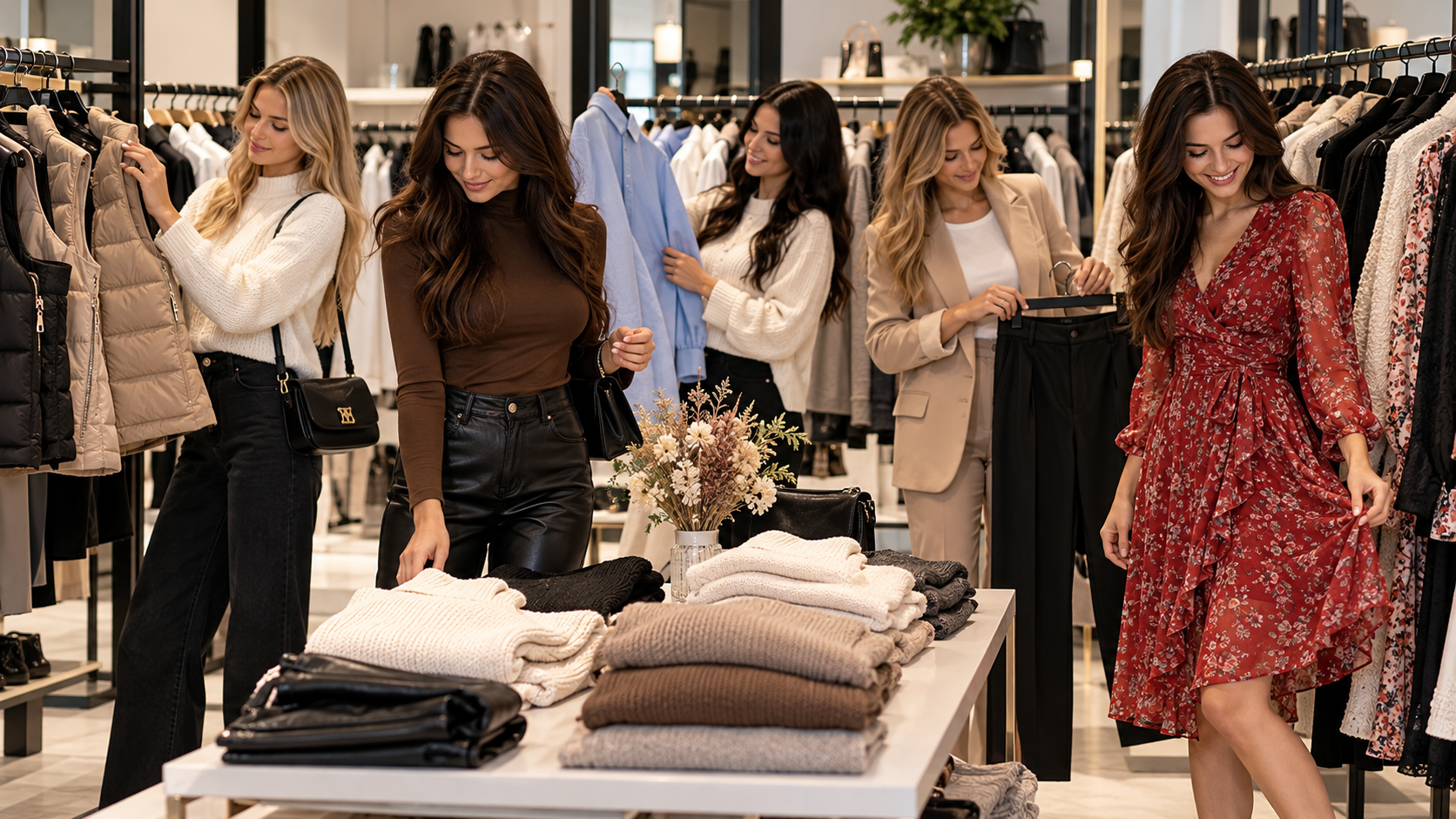
A well-curated range of women’s clothing is one of the key factors in a shop’s success. Customers appreciate a wide choice of styles, on-trend designs, a variety of colours and the ability to find outfits for different occasions. It is therefore important for shop owners to regularly update their collections, keep up with fashion trends and take into account demand for specific categories and sizes. Well-organised wholesale purchasing helps to maintain a diverse range, offer customers exciting new arrivals and ensure stable sales.
What sort of women’s clothing is worth buying in bulk?
It’s best to start with items that are easy to mix and match and remain on-trend throughout the season. In the catalogue Delook the section entitled «Wholesale women’s clothing», where you can select various product categories for a retail shop or online sales.
The product range depends on the shop’s target audience. For example, shoppers looking for everyday clothing tend to focus on jeans, comfortable trousers, shirts and knitwear. If the shop is aimed at a young audience, contemporary suits, sweatshirts, T-shirts and items in on-trend colours will be appropriate.
Essential items you’ll need throughout the year
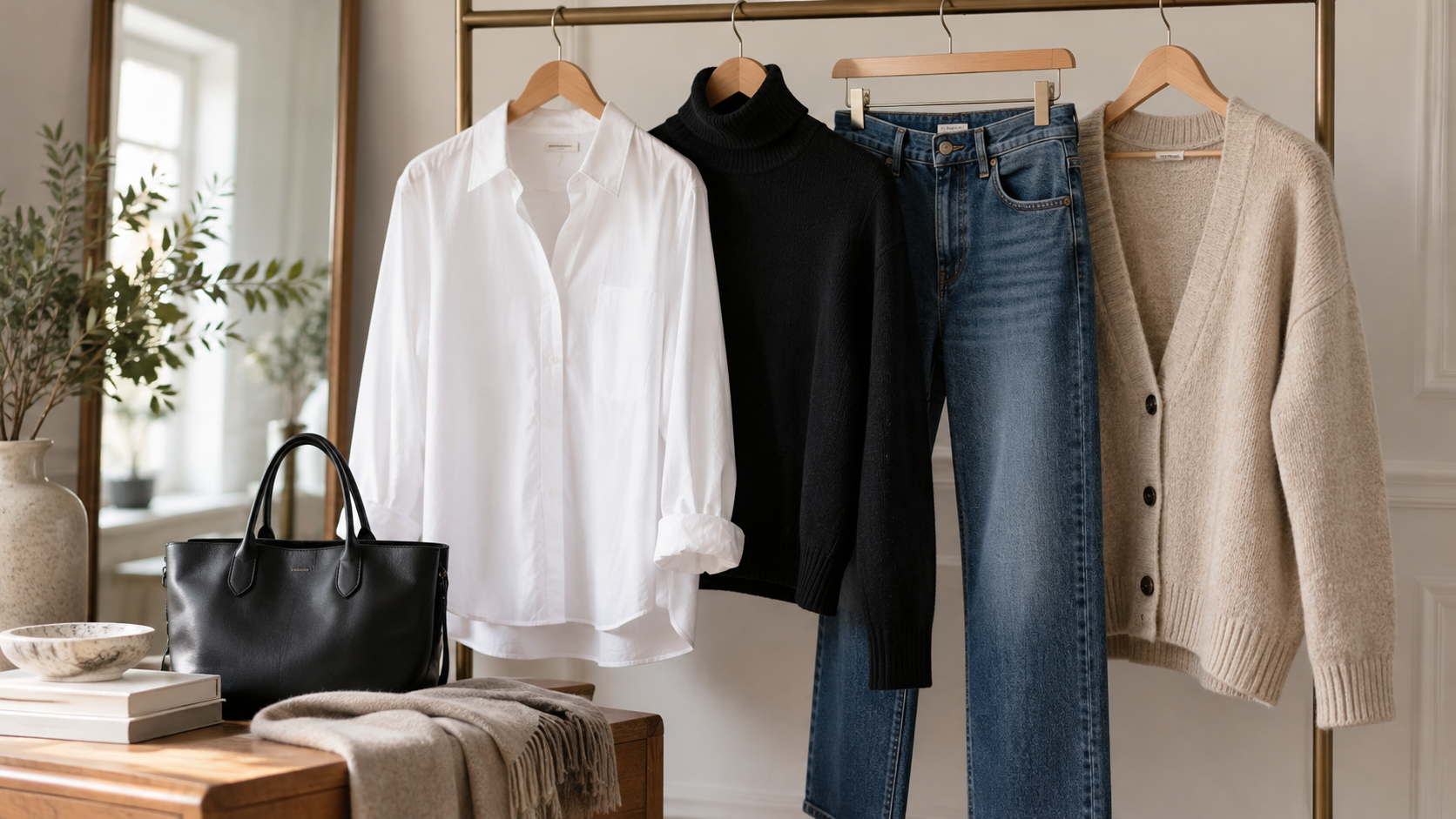
A white shirt, a plain turtleneck, classic jeans or a cosy cardigan — these are the sort of items shoppers choose regardless of short-lived fashion trends. They go well with other clothes and are suitable for a variety of occasions.
It is the basic models that can form the backbone of the range. They are easier to combine into complete outfits, to showcase alongside new arrivals, and to reorder if a particular style is selling well.
Seasonal clothing and the latest fashion trends
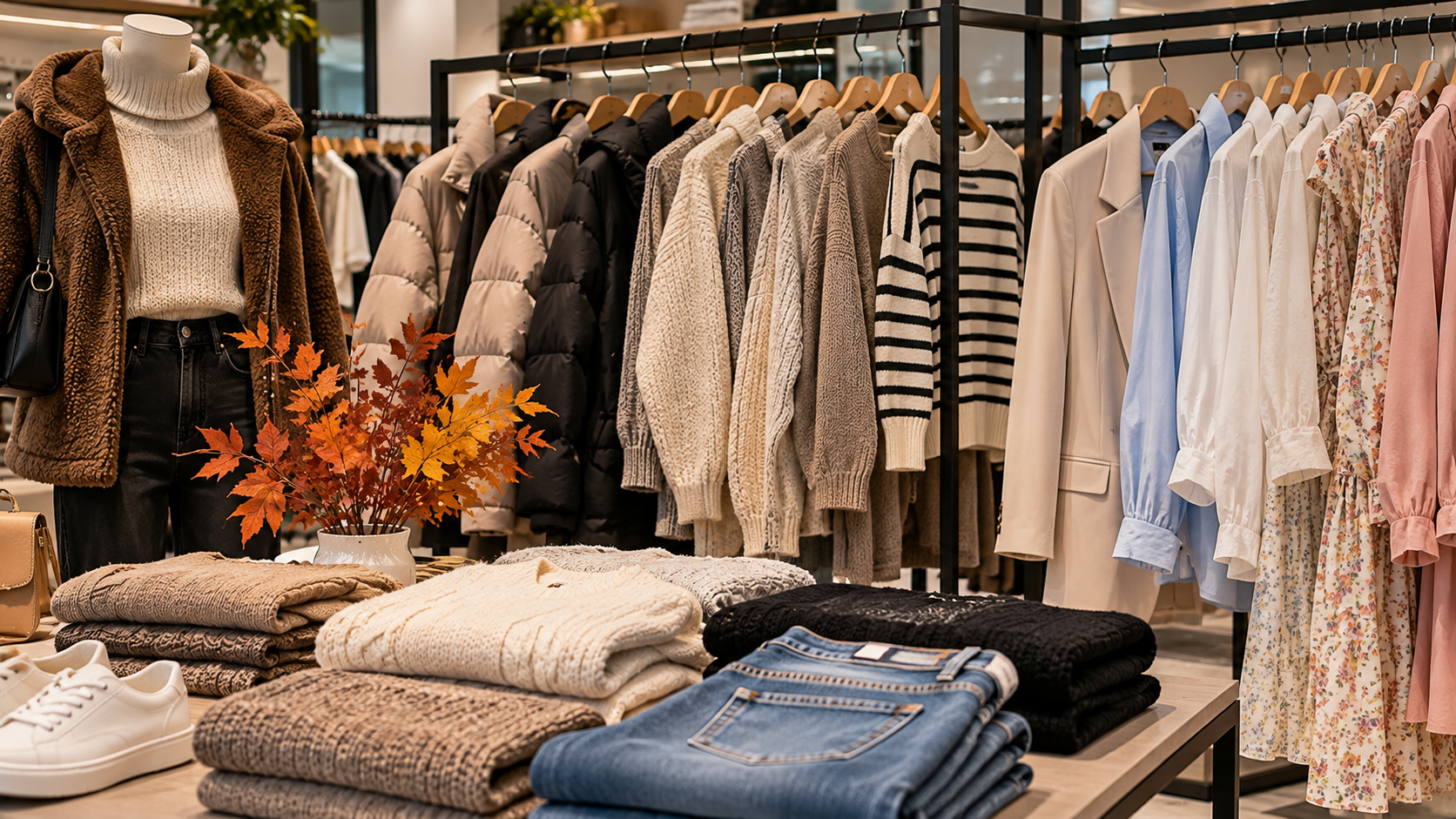
In autumn, there is growing interest in jumpers, warm suits and jackets; in spring, the focus shifts to light jackets, shirts and dresses. However, seasonal stock requires more careful planning.
You shouldn’t buy a large batch just because a particular model is currently popular on social media. It’s better to start with a few styles, gauge how customers react, and only then expand your range.
What to look out for before placing a bulk order
When purchasing wholesale, it is important to consider not only the cost of the clothing but also the characteristics of the items, which influence customers’ choices. The quality of the fabric, the comfort of the cut, fashionable styles and a wide range of sizes all help to create an attractive product range. A careful approach to product selection enables a shop to meet customers’ needs and maintain stable demand.
Before placing an order, it is a good idea to check:
- Fabric and tailoring. Fabric composition, stitch quality, trimmings and care instructions.
- Size range. What sizes are included in the pack, and do they meet the demand in your shop?.
- Colours. Is it possible to choose the shades you want, or is the model only available in a set range of colours?.
- Terms and conditions of purchase. The number of items per pack, the final cost of the order, payment and delivery.
- Option to reorder. Is this popular model available for future purchases?.
Product photographs deserve special attention. For an online shop, it is important that customers can examine the cut, length and details of the product. Where possible, it is worth taking your own photographs of the most popular models to show what they actually look like.
How to plan your purchasing so that stock doesn’t pile up
One of the common mistakes made by small shops is spending almost their entire budget on the first batch of clothes. Even if the styles are popular, funds may later be needed for delivery, advertising or restocking the most popular sizes.
It is wiser to set aside part of the budget for additional purchases. That way, the shop will be able to respond more quickly to demand and avoid tying up all its money in stock.
Analyse not only sales, but also unsold sizes
For example, if a particular pair of jeans sells out quickly in sizes M and L, whilst size XS remains in stock, this needs to be taken into account when placing the next order.
It’s a good idea to keep a simple sales spreadsheet: model, colour, size, date received and number of units sold. Within just a few weeks, you’ll be able to see which products customers really want.
It is just as important to understand your audience. A shop in a small town and an Instagram page offering delivery throughout Ukraine may face very different levels of demand, even if they sell similar clothing.
Delook: a selection of women’s clothing for wholesale purchases
For retailers specialising in women’s clothing, the ease of searching for products is just as important as the product range itself.
The Delook catalogue features dresses, jeans, blouses, shirts, suits, knitwear, outerwear and loungewear. For many items, the product code, colour, season, sizes, number of items per pack and price are listed. This helps you compare styles before placing an order.
It is particularly useful to pay attention to the contents of the pack. If the goods are sold in sets of a specific size, you need to calculate not only the cost of a single item, but also the total amount you will need to invest in the whole batch. This makes it easier to estimate the future mark-up and any potential surplus stock.
For a shop that is just starting out, it is advisable to put together a small range comprising a few product categories. If, on the other hand, the business already has regular customers, it makes sense to plan purchases based on previous sales.
A well-thought-out product range helps the shop to grow
Shoppers return to places where they can find clothes in their size, see new styles and receive clear information about the products. Therefore, stable sales depend not only on price, but also on how well the product range has been put together.
Wholesale purchasing makes it possible to stock various categories of women’s clothing; however, each order must reflect actual demand. It is better to expand your range gradually, test new items in small batches and restock products that have already proved their worth. It is precisely this approach that helps a shop to grow without unnecessary costs or accumulating unsold stock.