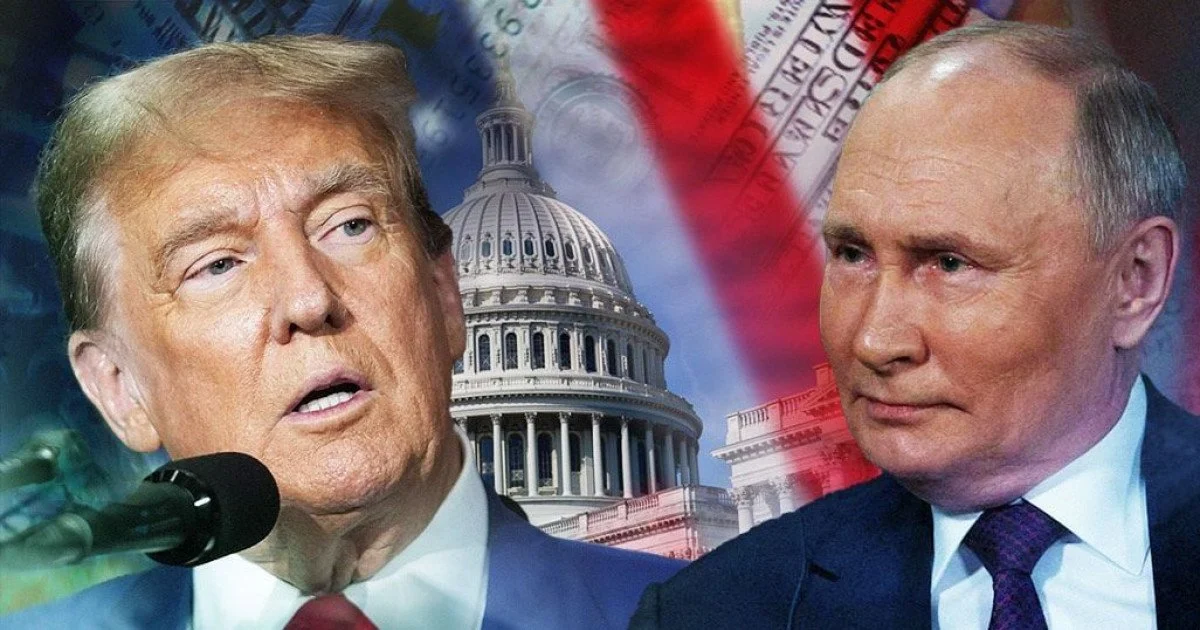
US President Donald Trump may hold a personal conversation with Vladimir Putin in the coming days and try to persuade him to agree to a ceasefire and negotiations by the end of the year. This was reported on 18 September by military and political analyst Serhiy Pavliuchenko. According to him, Washington plans to combine pressure in the form of new sanctions with proposals for future economic cooperation.
- Pavlyuchenko mentioned a possible conversation between Trump and Putin.
- The aim is a ceasefire and negotiations by the end of the year.
- Trump has a new sanctioning tool against Russia.
- At the same time, the US is considering economic incentives for Moscow.
What, according to Pavliuchenko, Trump intends to propose
Pavlyuchenko claims that Trump sees his forthcoming meeting with Putin as an attempt to bring together greater economic pressure and possible incentives. According to him, the US President may warn the Kremlin that, should it refuse to agree to a ceasefire, Washington is prepared to step up its support for Ukraine – particularly with regard to security guarantees – and to sign a new, sweeping sanctions bill.
At the same time, these specific details currently come from Pavlyuchenko himself and not confirmed by a separate statement from the US administration.
Trump already has a ready-made means of applying sanctions
We are talking about Lindsey O. Graham’s Sanctioning Russia and Iran Act, which the US Congress has finally approved on 16 September and submitted it to Trump for his signature. The document provides for new sanctions against Russian officials, banks, the energy sector and the shadow fleet, and also grants the President the power to impose tariffs of up to 100% on major buyers of Russian energy resources.
Back in July, the White House officially backed the bill and stated that it should to strengthen Trump’s ability to put pressure on Russia in order to persuade it to agree to a negotiated settlement.
The Kremlin has already stated that new US sanctions «an unfriendly move» and claimed that their introduction would allegedly complicate negotiations to end the war.
Washington is simultaneously considering business dealings with Russia
At the same time, Trump’s team is exploring the opposite approach — economic incentives for Moscow.
According to The New York Times, the US administration is discussing the possibility of concluding separate economic agreements with Russia even before the war has fully ended. Potential areas of cooperation include energy, investment and other joint projects.
Supporters of this approach believe that the prospect of restoring business ties with the US could persuade part of the Russian elite to back the move towards a peace agreement. At the same time, other members of the administration fear that making economic concessions too early would weaken Washington’s leverage.
Trump’s contacts with Putin are already underway
A possible new conversation would not be the first direct contact in recent times.
Last week, Trump reported that he had already had a «very good» telephone conversation with Putin and suggested that the Russian president wanted a deal regarding Ukraine.
In addition, representatives of Trump travelled to Moscow in early September Steve Witkoff and Jared Kushner, who met with Putin to continue negotiations on the war. The White House officially confirmed this visit. However, Russia has not yet shown any willingness to abandon its key territorial demands. Reuters previously reported that Putin is maintaining a hardline stance and continues to rely on military pressure.
Does Trump really want to end the war before New Year’s Eve?
At the moment The US administration did not announce an official deadline «by New Year’s».
It is therefore correct to say that this is information from Pavlyuchenko regarding a possible plan by Trump, rather than a decision by the White House that has already been confirmed.
At the same time, the general thrust of this approach is in line with Washington’s actions in recent weeks: the US is simultaneously are stepping up sanctions pressure, holding direct talks with Moscow and discussing economic incentives, in an attempt to get the negotiations off the ground.