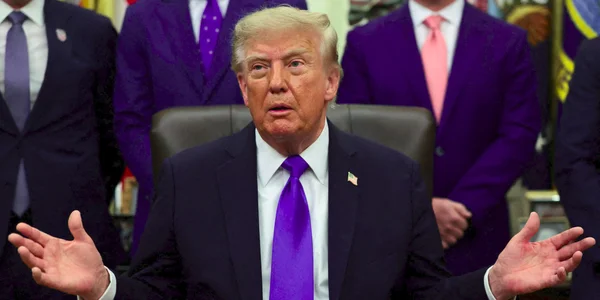
US President Donald Trump stated on 22 September at the UN General Assembly in New York that Washington would, if necessary, use the Lindsey Graham Act to put pressure on Russia. He linked the possible use of new economic instruments to the need to end the war and «stop the killings». However, the president did not announce any specific new sanctions against Moscow.
Briefly about the main points
- Trump has stated that the US is prepared to invoke the Lindsey Graham Act.
- The statement was made during the US President’s address to the UN General Assembly.
- No specific new package of sanctions against Russia has been announced.
- The Act expands the scope of sanctions, tariffs and other restrictive measures.
- Under certain conditions, duties may amount to 100%.
Trump’s statement on the application of the law
Trump said that the US had already signed the law and would make use of its provisions if it deemed it necessary. «We have signed Lindsey Graham’s Act. »If necessary, we will use it. It is time to put an end to the killings,” he said.
The focus was on the administration’s readiness to use new instruments of economic pressure to bring Russia’s war against Ukraine to an end. The speech did not mention any decision to immediately impose specific sanctions or tariffs.
What does Lindsey Graham’s bill provide for?
The Lindsey O. Graham Sanctioning Russia and Iran Act of 2026 extends the sanctions, tariffs and other restrictions against Russia provided for under US law, and renews the existing sanctions against Iran.
According to the Associated Press, under the terms set out in the law, tariffs of up to 100% may be imposed on imports from countries that purchase significant volumes of Russian oil or gas.
Trump signed the bill into law on 18 September. Prior to this, the Senate had approved it by 86 votes to 11, and the House of Representatives by 262 votes to 159. The legislation provides the US administration with additional mechanisms to exert economic pressure on Russia, and their application will depend on Washington’s future decisions.