The BepiColombo mission, a joint venture between the European Space Agency (ESA) and the Japan Aerospace Exploration Agency (JAXA), has successfully entered Mercury’s orbit after more than eight years of space travel. The final manoeuvre on 21 November was marred by an unexpected software glitch, which caused the engines to fire for nine minutes less than planned. At a press conference in London on 27 November, ESA officials confirmed that the probe had entered a slightly higher orbit, but was operating normally and was preparing to separate into two separate research spacecraft in December.
Briefly about the main points
- The joint ESA and JAXA BepiColombo mission, costing $2 billion, has entered Mercury’s orbit – only the second time in history, following NASA’s MESSENGER probe.
- Due to a software glitch, the braking manoeuvre on 21 November lasted 28 minutes instead of the planned 37, after which the spacecraft entered safe mode.
- Instead of a 58-hour orbit, the probe entered a 75-hour orbit; however, the ESA described this as a non-critical deviation.
- On 9–10 December, the MPO and Mio modules will separate, and full-scale scientific operations near Mercury will begin on 6 April 2027.
Dramatic moments of engine stalling and failure
Reaching the orbit of the planet closest to the Sun is considerably more difficult than travelling to the outer gas giants. The Sun’s powerful gravity accelerates spacecraft to enormous speeds, whilst Mercury’s own weak gravity makes it difficult to slow down. To date, only one Earth-based spacecraft has operated around this planet — NASA’s MESSENGER probe between 2011 and 2015.
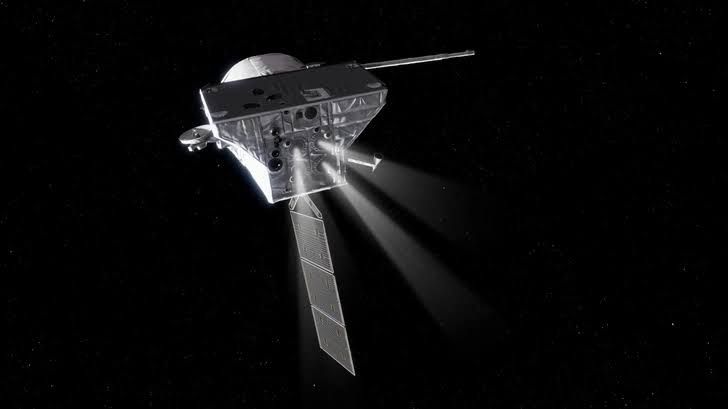
According to European Space Agency, on 21 November, at an altitude of approximately 635 km above Mercury’s surface, the spacecraft began its final deceleration manoeuvre. For the first time in interplanetary missions, engineers employed the «weak stability capture» method (weak stability capture), which had previously only been used near the Moon.
However, at the ESOC control centre in Darmstadt, Germany, the team faced a tense few hours. Instead of the expected 37 minutes, the engines shut down after just 28 minutes due to a software glitch, and communication was re-established ahead of schedule in safe mode.
«The first sign that things weren’t going to plan was that we received a signal earlier than expected — this meant that something was wrong. The entire control room immediately switched to emergency mode,» Ignacio Tanco, ESA’s Head of Operations for the Inner Solar System, told the publication CNN.
After four hours of analysing the telemetry, the experts confirmed that BepiColombo had indeed remained in orbit. Instead of the planned 58-hour orbit, the probe entered a 75-hour orbit — approximately 10,000 km higher at its farthest point than envisaged in the plan. At a briefing in London on 27 November, the ESA noted that this trajectory leaves less of a margin in the event of further malfunctions, but does not hinder the mission’s progress.
An eight-year journey and nine gravitational manoeuvres
BepiColombo was launched on 20 October 2018 on an Ariane 5 rocket from the Kourou spaceport in French Guiana. To gradually reduce its excess velocity, the spacecraft performed nine gravity assist manoeuvres — one near Earth, two near Venus and six near Mercury itself, as we previously described in detail before BepiColombo’s final approach.
The journey was originally intended to last seven years, but due to a technical fault with the solar panels and a drop in the power output of the electric motors on the cruise module, the flight was extended by a further year. In September 2026, the transport module finally separated, handing control over to the orbital probe’s engines.
What’s next: splitting into two probes and scientific research in 2027
The main feature of the mission is that it delivered two independent scientific instruments to Mercury, which had previously been travelling together as a single unit. The engineers still have several key stages ahead of them:
On 9–10 December 2026, the European planetary probe MPO and the Japanese magnetospheric spacecraft Mio will separate and, for the first time in history, begin operating in tandem near Mercury;
On 16 December, the MPO will jettison the Japanese module’s heat shield and begin a series of orbital manoeuvres, which will conclude on 10 March 2027;
On 6 April 2027, both spacecraft will commence their full-scale scientific programme.
Scientists hope to find answers to the main mysteries surrounding the smallest planet in the Solar System: why water ice is preserved in the polar craters of the scorching-hot Mercury, how its enormous iron core was formed, and how the planet generates its own magnetic field.