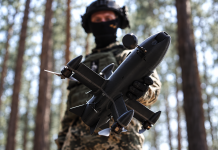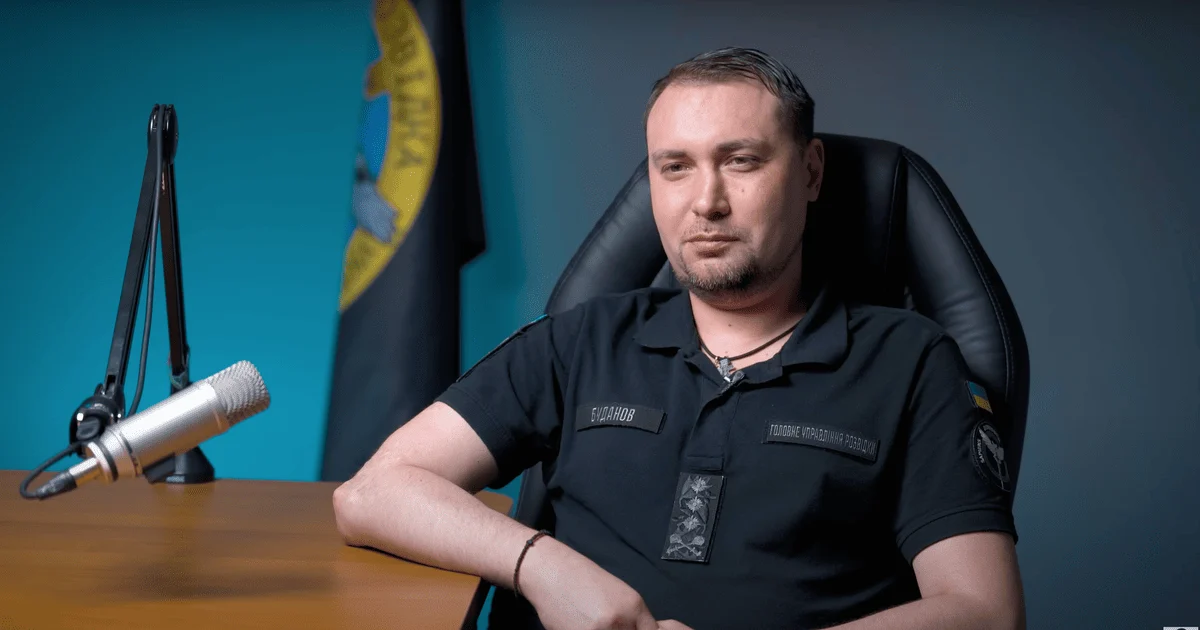
Ukraine is already deploying new interceptors for Russian jet-powered drones in combat conditions and expects to scale up their production to the required levels before the most challenging period of winter. Kirill Budanov, head of the President’s Office, made these remarks in an interview with Euronews published on 30 September. According to him, the technology makes it possible to intercept such targets in most cases.
Briefly about the main points
- The new interceptors are already being used by individual combat units.
- Budanov described mass production as the main priority.
- Jet-powered UAVs can travel at speeds of up to 500 km/h.
- Air defence systems near the Kyiv region sometimes have 10–15 seconds to respond.
- Technologies may be included in the collaboration under the Drone Deal.
From prototypes to operational use
President Volodymyr Zelenskyy It was previously reported that several effective prototypes had been selected in Ukraine following trials. According to him, the systems identified could become one of the main means of defence against Russian jet-powered drones.
On 25 September, discussions took place at Headquarters regarding the acceleration of their production, the results of the trials and the experience of the combat groups. The following day The President’s Office He clarified that the scaling also applies to the component base.
Secretary of the National Security and Defence Council Igor Klimenko On 29 September, it was confirmed that active trials of the new systems were underway and that some combat units were already putting them into practical use.
The speed of jet drones reduces the time required for air defence
According to Euronews, Russian jet-powered attack drones are capable of reaching speeds of around 500 km/h. This is significantly faster than the approximately 300 km/h achieved by the previous generation of interceptors.
Due to the speed of the new targets, some of the existing systems are unable to keep up with them consistently, which is why, in certain cases, the military deploys more expensive anti-aircraft missiles. Military personnel at air defence positions protecting the Kyiv region told Euronews that sometimes there are only 10–15 seconds to react once such a drone is approaching.
According to estimates given by Zelenskyy in September, the interception or suppression rate for guided targets stood at 55–57%. For conventional «Shahed» drones, this figure exceeded 90%.
Production must determine the practical impact of the technology
Budanov He emphasised that the successful deployment of individual systems is not enough: Ukraine needs to move towards mass production on a scale sufficient to counter large-scale attacks. It was this transition that he described as the key challenge.
The National Security and Defence Council also described jet-powered UAVs as a new challenge for air defence, requiring rapid technological solutions and mass production. Scaling up production could ease the burden on more expensive assets AIR DEFENCE and the air force, which are also being deployed to counter high-speed drones.
Collaboration with partners is possible within the framework of Drone Deal
Budanov suggested that technologies for intercepting jet drones could, in the future, form part of cooperation with countries that have signed the Drone Deal with Ukraine. This refers to a future possibility, rather than an announced decision regarding the transfer of any specific technology.
According to Euronews, the partners in such initiatives include Lithuania, Latvia, Estonia, the Netherlands and Denmark. The Drone Deal may involve joint production, technology transfer and the exchange of military expertise.