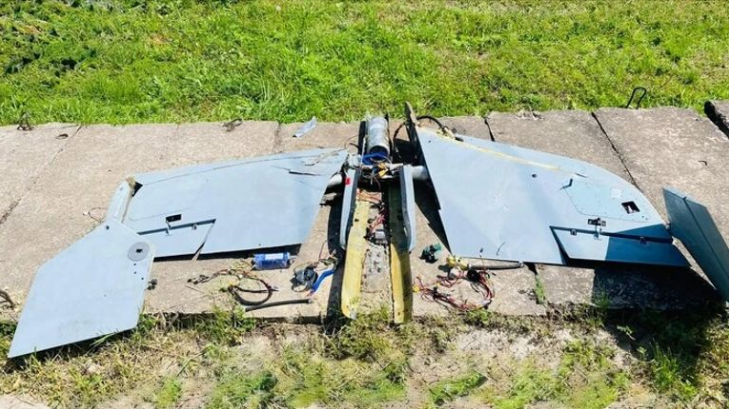
Russian forces have begun deploying a new jet-powered attack drone with a range of up to 100 km and a speed of up to 300 km/h. The drone is equipped with analogue video transmission and a warhead weighing 4–5 kg. Its main purpose is to counter Ukrainian anti-aircraft drones and mobile fire groups.
- Russia is deploying a low-cost jet-powered attack drone with a range of up to 100 km.
- The drone can reach speeds of up to 300 km/h and has a payload of 4–5 kg.
- The drone is equipped with analogue video transmission at a frequency of 3.3 GHz.
- The tests are taking place in southern Ukraine as part of efforts to combat interceptors.
A new type of attack drone on the front line
In southern Ukraine, the widespread use of a new jet-powered strike unmanned aerial vehicle, which is being developed and used by Russian forces. This drone is cheap and simple in design, but offers significant tactical advantages thanks to its high speed and flight range. An adviser to the military command reported that the drone is equipped with analogue video transmission at a frequency of 3.3 GHz.
Specifications of the drone and its armament
The drone’s range is up to 100 kilometres. Most of the recorded strikes take place 30–40 km from the front line. Its cruising speed is approximately 260 km/h, with the ability to accelerate to 300 km/h. The drone’s warhead weighs around 4–5 kg, enabling it to effectively engage small targets and mobile enemy groups.
Tactical purpose and countermeasures
The new drone is the Russian forces’ response to the active use of drones by Ukrainian forces anti-aircraft drones and mobile fire teams. Its low cost and speed enable it to effectively counter air defence systems and carry out reconnaissance and strike missions simultaneously. Experts are calling on military personnel and volunteers to document instances of this drone’s use for further analysis of its guidance and control systems.
The discovery of a new type of attack drone is evidence of the ongoing modernisation of the Russian army’s weaponry. Ukrainian forces will have to adapt their air defence tactics and improve their interception systems in order to effectively counter these new threats. Studying the characteristics of this UAV will help to develop more effective countermeasures in the context of a protracted war.
The need for further research and trophies
Experts emphasise the importance of collecting captured equipment to understand how the drone’s control and guidance systems work. This will enable a more accurate assessment of its capabilities and potential vulnerabilities. Military analysts see this new UAV as an attempt by the Russian Federation to compensate for its losses and reduce the effectiveness of Ukrainian air defence systems.