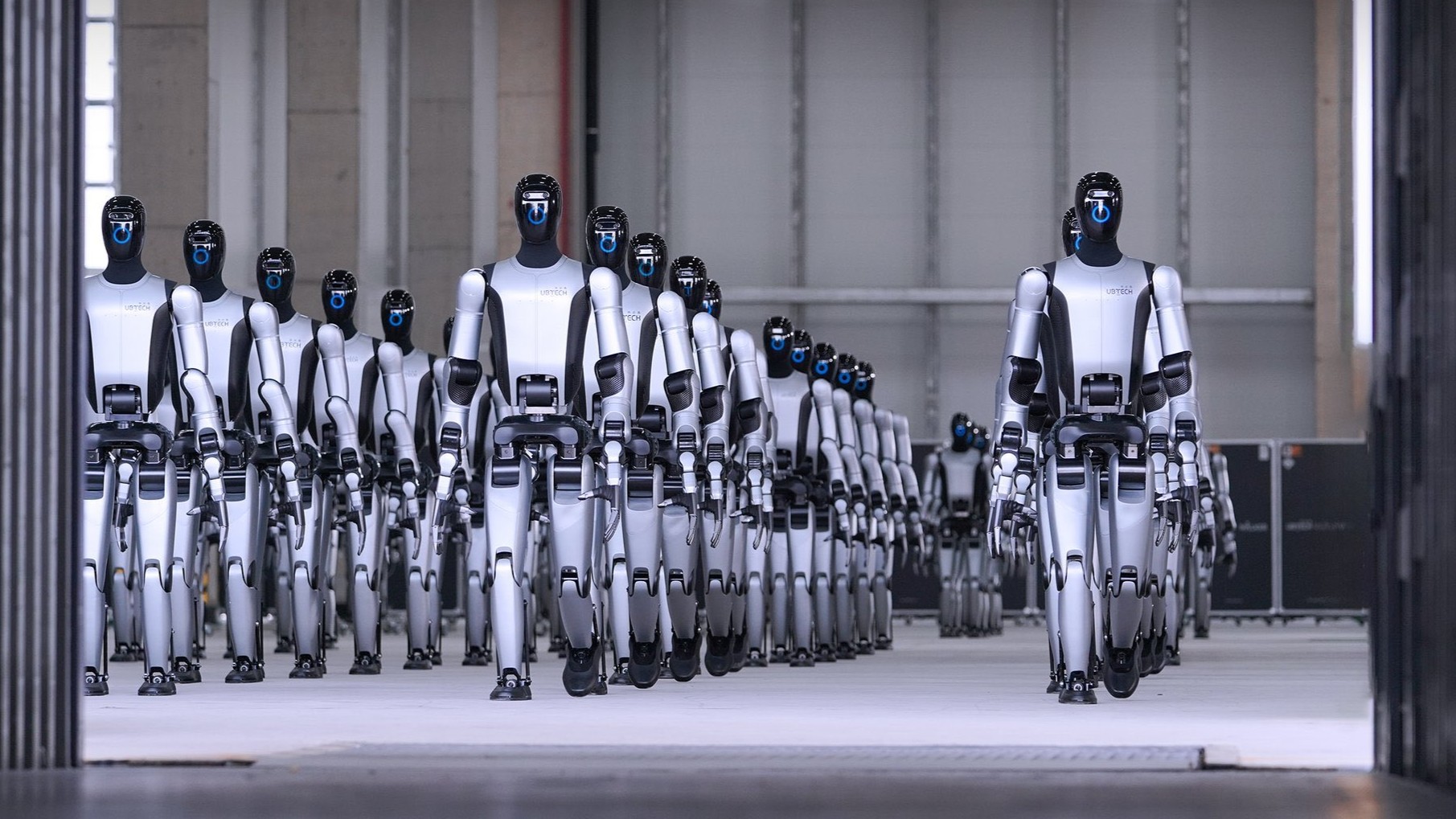
Shares in Unitree, a Chinese manufacturer of humanoid and quadrupedal robots, rose nearly sixfold on their first day of trading on the STAR Market in Shanghai. The debut was a significant event for China’s robotics sector, although the company operates on a limited commercial scale and the US has banned imports of its future models on national security grounds.
Briefly about the main points
- Unitree’s share price rose nearly sixfold on its debut on the STAR Market.
- The company was valued at approximately $50 billion.
- Unitree is profitable, but mainly sells robots to universities and researchers.
- The FCC has banned the import of the company’s future models into the US.
- At least six Chinese robotics firms are preparing to go public.
The launch was well ahead of the market
During the morning session, Unitree shares were trading at 883.87 yuan, compared with the issue price of 150.8 yuan. At the opening, they reached an intraday high of 1,100 yuan, before pulling back from that level. The company’s market capitalisation stood at around $50 billion.
The increase significantly exceeded the average growth in new listings in China since the start of the year — 2,79%. This took place against a backdrop of a 2% fall in China’s benchmark indices and a sell-off in technology shares.
A profitable company with limited commercial applications
Unitree competes with Boston Dynamics, which is owned by the Hyundai Motor Group, and Tesla. Its robots have attracted international attention thanks to demonstrations of running, dancing and martial arts.
The company is profitable, unlike most of its competitors, although few of its robots are used in commercial settings. Many of its products are purchased by research institutions and universities.
The stock market debut coincided with the opening of the World Robot Conference in Beijing, where hundreds of predominantly Chinese companies are showcasing new products. The Chinese authorities hope that advances in robotics will go some way towards offsetting the labour shortage caused by the demographic crisis.
The US market is closed to future models
In July, the US Federal Communications Commission banned the import of future models of foreign humanoid and quadrupedal robots, including Unitree, citing national security concerns. For the company, this closes off the large US market for new models.
Reuters had previously reported that the designs of Unitree’s most successful robot dogs were based on innovations funded by the US Army. This research was published openly to further the development of the industry, and the use of Unitree’s developments was not of an unlawful nature.
In June, the Pentagon added Unitree to its list of Chinese military companies, designating it as part of China’s defence industrial base. This designation is not a sanction, but it restricts the future use of Unitree’s technologies by the US military. The company has stated that its robots are intended for civilian use.
IPO provides additional resources ahead of a new wave of listings
During the IPO, approximately 10% Unitree shares were sold, raising around $900 million. Founder Wang Xinsheng retains around a fifth of the company, and his paper wealth has exceeded $12 billion. Unitree’s investors include Tencent, Alibaba and DeepSeek.
At least six Chinese manufacturers of humanoid robots are preparing to go public. Deep Robotics and Leju Robotics have applied for listing on mainland Chinese stock exchanges, whilst Mech-Mind Robotics, X Square Robot and AgiBot have opted for Hong Kong.