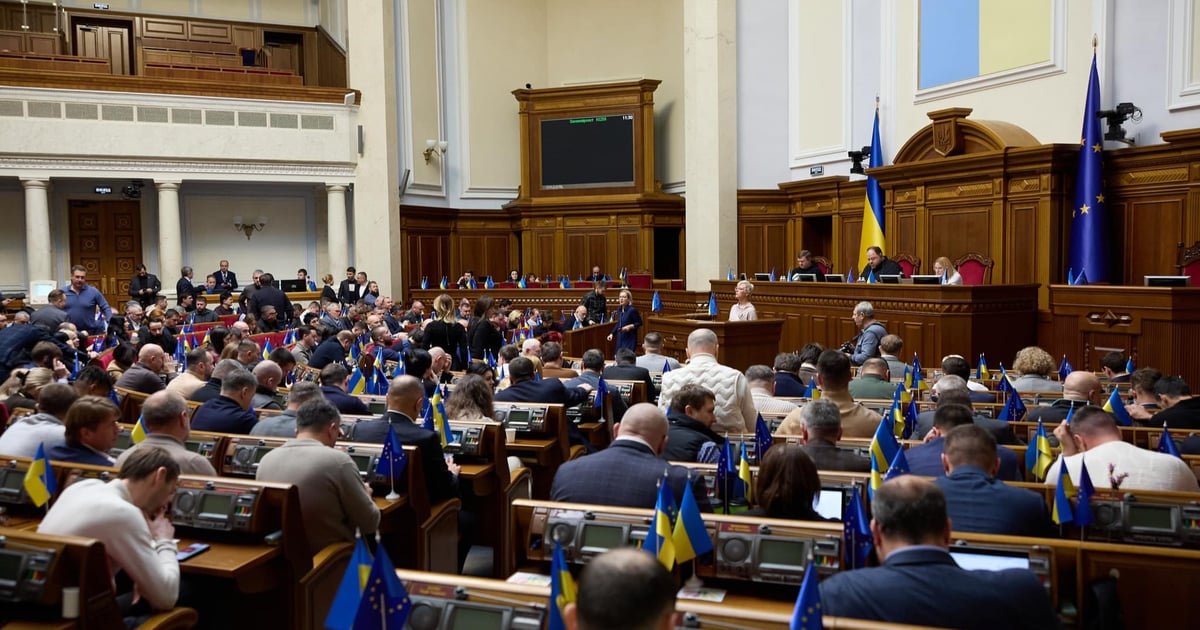
On 16 September, according to the latest reports from parliament, the Verkhovna Rada, approved, in its entirety, Bill No. 10190 on stepping up the fight against electronic communications fraud and fraudulent call centres. The bill had been before Parliament since 2023, and in May 2024 it was passed at first reading by 267 votes. On 14 September 2026, the relevant Committee on Law Enforcement recommended that the bill be adopted at second reading and in its entirety.
- The Rada has approved Bill No. 10190 on electronic fraud.
- Three new separate articles are being introduced into the Criminal Code.
- The activities of fraudulent call centres are to be criminalised.
- Recruiting people into such schemes will be punished separately.
- The establishment or leadership of a fraudulent organisation is punishable by actual prison sentences.
What will now be considered electronic communications fraud?
One of the key changes is the introduction of a new provision in the Criminal Code Article 190-1 — «Electronic communications fraud».
This refers to the unlawful collection, storage, processing or use of personal data and other confidential information with the aim of obtaining another person’s funds or property via electronic means of communication.
Such information includes, in particular, banking confidentiality, payment card details, authorisation codes and other data used to access accounts. This is precisely how the Verkhovna Rada officially described the structure of the bill following the first reading.
In fact, this is about standard diagrams, when fraudsters call pretending to be from a bank, the police or a government agency, they trick people into revealing their card details, CVV code, password or verification code, and then withdraw money from their account.
Separate liability is being introduced for fraudulent call centres
New Article 255-4 of the Criminal Code of Ukraine Liability is provided for establishing an electronic communications fraud organisation, leading it and participating in its activities.
The Verkhovna Rada’s explanatory note to the bill stated that it is proposed that the establishment of, leadership of, or participation in such an organisation should from 7 to 12 years’ imprisonment, with confiscation of property.
This is a fundamental change, as law enforcement agencies will no longer need to attempt to attribute the activities of organised fraudulent office solely under the general provisions on fraud.
The legislator specifically identifies a model in which there is an organisation, managers, operators, conversation scripts, personal data databases and a systematic scheme for extorting money.
Recruiting operators will also constitute a separate offence
Another new provision — Article 255-5 of the Criminal Code.
It sets out the liability for recruiting other people to participate in an electronic communications fraud organisation.
This applies not only to the direct organisers of the call centre, but also to those who recruit new operators for such organisations.
Such «offices» often recruit young people via Telegram, job search websites or personal recommendations, offering high salaries without a clear job description. Once hired, operators are trained to follow pre-written scripts and persuade potential victims to hand over money or confidential information.
Why did it take over two years to pass the law?
Bill No. 10190 was registered back in 25 October 2023. It was drafted by a group of Members of Parliament, including Maksym Pavliuk, Oleksandr Bakumov, Maksym Buzhanskyi and others.
Parliament approved the bill at first reading on 22 May 2024, after which it took more than two years to prepare it for second reading.
The issue came to the fore again in September 2026 following the introduction of Presidential Bill No. 16014, which also concerned the fight against fraudulent call centres.
On 15 September, MPs were unable to proceed immediately to the consideration of Bill No. 16014 due to a procedural vote. Following this, representatives of the relevant committee proposed that Bill No. 10190, which had been prepared earlier, be put to a final vote the very next day. This is explicitly recorded in the minutes of the Verkhovna Rada sitting.
What's next
Once finalised, the bill must go through the standard procedure: the document is forwarded to the Speaker of the Verkhovna Rada for signature, and then to the President.
Once the law comes into force, law enforcement agencies will have specific criminal law provisions at their disposal for investigating the activities of fraudulent call centres, as well as their organisers, operators and recruiters.