Saudi Arabia has announced that the interception and destruction of a Houthi drone near Mecca — Islam’s holiest city. According to the Saudi-led military coalition, the drone was shot down on the evening of 15 September south of the city, before it entered the restricted airspace over Mecca. Coalition spokesperson Turki al-Malki stated that the security of Mecca, Medina and the pilgrims is a priority for the Kingdom «red line», and threatened to take appropriate deterrent measures. The Houthis, meanwhile, rejected claims that they had attempted to attack Mecca.
- Saudi air defences shot down a drone south of Mecca.
- The drone did not enter the restricted airspace above the city.
- Riyadh has described the security of the holy sites as a «red line».
- The Houthis deny that they targeted Mecca.
- The incident occurred against the backdrop of a sharp escalation in the region.
A drone was shot down before it entered Mecca’s airspace
According to the Saudi side, the drone was intercepted at approximately 18:50 local time on 15 September south of Mecca.
The military claim that the aircraft belonged to the Yemeni Houthis and was heading towards the no-fly zone above the holy city. There was no strike on Mecca.
Turki al-Malki stated that Saudi Arabia regards the security of the two main Islamic holy sites — in Mecca and Medina — as a matter on which there can be no compromise.
According to the coalition, this is already a second attempt to attack in the direction of Mecca following the ballistic missile incident in 2017.
The Houthis have denied carrying out an attack on Mecca
A Houthi representative Hazem al-Assad dismissed the allegations Riyadh. He dismissed claims of an attempted attack on Mecca as false and stated that Saudi Arabia had made similar accusations in the past. Thus, the parties are giving conflicting accounts of the drone’s mission.
There is no independent confirmation that it is precisely Mecca There is currently no information as to whether this was the drone’s ultimate objective.
Islamic countries have condemned the incident
The Organisation of Islamic Co-operation, which brings together 57 countries, issued a statement condemning the attacks on Mecca and the Medina area and expressed its support for Saudi Arabia.
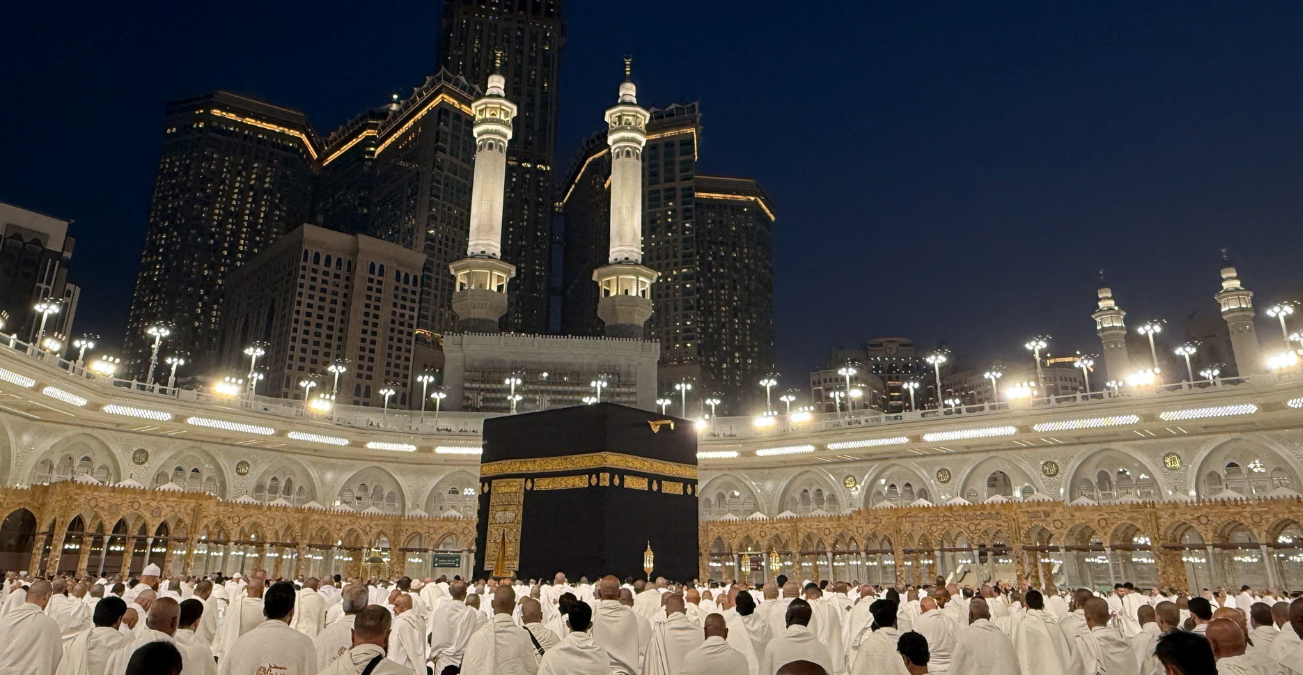
The reaction was particularly strong because of the symbolic significance of Mecca for Muslims around the world. It is here that the Kaaba is situated — the holiest site in Islam and the centre of the annual Hajj pilgrimage.
Any military threat in the vicinity of the city therefore has not only security implications, but also significant religious and political implications.
Saudi Arabia has stepped up its warnings about the threat
In the run-up to the interception of the drone, Saudi Arabia issued widespread air-hazard warnings in several cities, including Mecca, Jeddah, Yanbu, Ta’if and other towns and cities.
The US Embassy has also updated its travel advice for the Kingdom due to the risk of rocket and drone attacks against the backdrop of an escalating regional conflict.
The latest incident took place after a series of Houthi attacks on Saudi Arabian territory over the past week. The group claimed, in particular, to have carried out attacks on military and energy infrastructure.
The escalation is already threatening global oil supplies
The situation surrounding Saudi Arabia has implications far beyond the region.
The Houthis have recently seized further areas of the Yemeni coastline near the Bab el-Mandeb Strait — one of the key maritime routes for global trade and energy. At the same time, the attacks damaged vital Saudi oil infrastructure. Riyadh has already been forced to alter some of its export routes, notably by offering buyers the option of transhipping oil near Oman.
Against the backdrop of these events oil prices have risen, whilst the risk of disruptions in the Red Sea and the Bab el-Mandeb Strait is becoming one of the key factors affecting the global energy market.
The interception of a drone near Mecca could therefore further intensify Saudi Arabia’s military response and increase the risk of further escalation of the conflict with the Houthis.