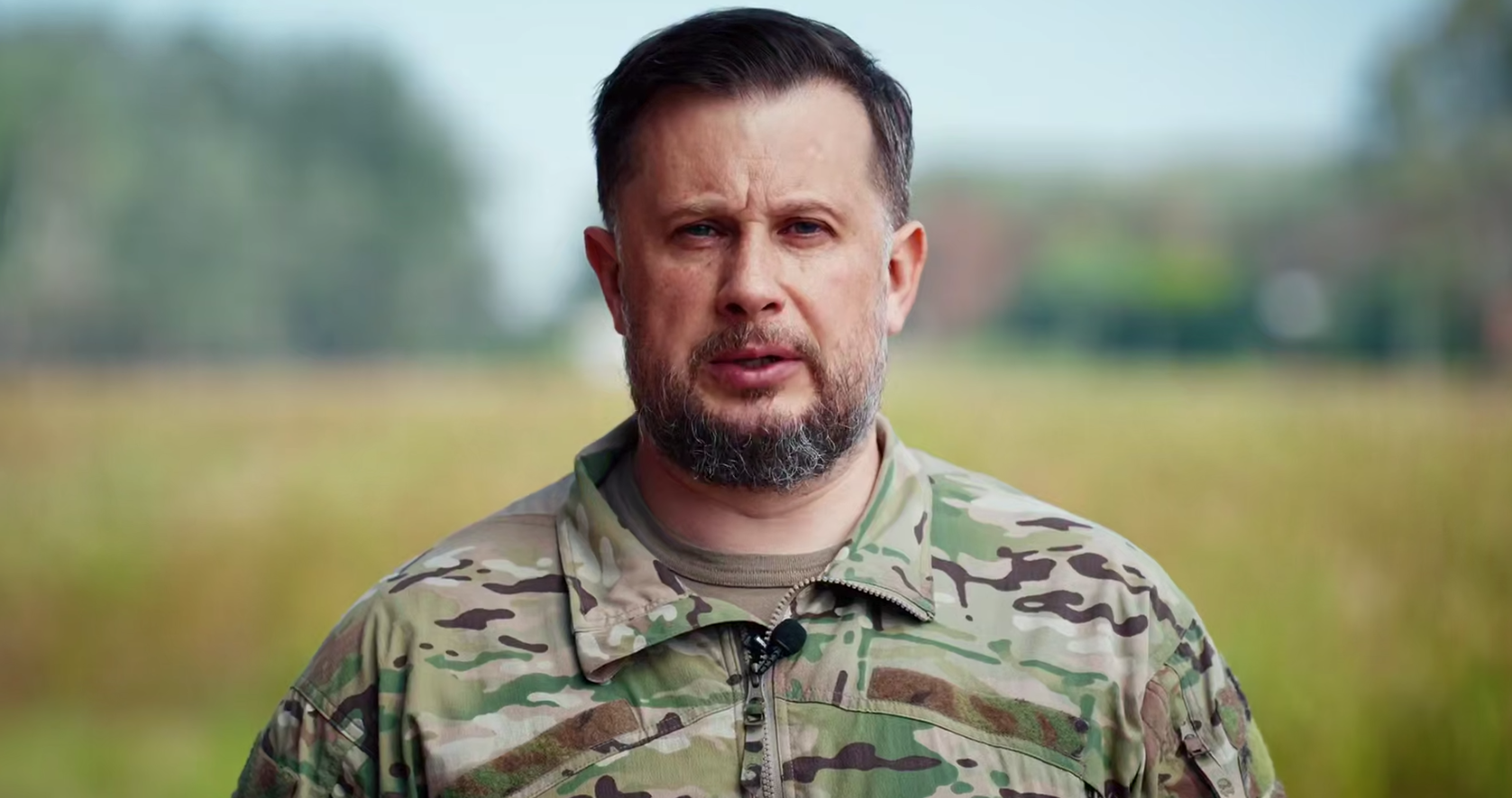
The 3rd Army Corps has announced new developments in the «Vivaldi» offensive operation in the north of the Donetsk region. According to the corps commander, Andriy Biletsky, the Defence Forces have liberated Shandryholove and Derylove, established full control over Drobyshev, and regained control of a further 40 km² of territory for Ukraine. In total, across the two phases of the operation, this figure has reached 125 km².
- Shandryholove and Derylove have been liberated.
- Drobysheve is under the full control of the Defence Forces.
- A total of 125 km² has been reclaimed in two stages.
- Of these, 50 km² have been liberated.
- According to the corps, the Russian Federation’s losses exceeded 3,000 troops.
«Vivaldi» continues: two more settlements have been liberated
On completion the second stage of the operation On 20 September, the commander of the Third Army Corps, Brigadier General, announced Andrii Biletskyi.
According to him, Ukrainian units liberated Shandryholove and Derylove in the Lyman community, and also installed complete control over Drobyshev. During the second phase of the operation, the Defence Forces recaptured a further 40 km² of territory.
DeepState has also updated its map of hostilities: according to the analytical project, Ukrainian forces have recaptured a further approximately 43.5 km² and two settlements along this section of the front line.
125 km² were brought back under control in two stages
The Third Army Corps stated that during the first and second «seasons» of Operation «Vivaldi», the corps and the units attached to it had restored a total of 125 km² of territory.
From this square 50 km², according to the command, were directly de-occupied.
Biletsky officially confirmed the first phase of the operation on 15 September. At that time, it was reported that Novoselivka, Oleksandrivka, Yarova and the outskirts of Korovyi Yar had been cleared of Russian infiltrators, and that Serednie had been liberated. During the first phase, the corps announced that it had cleared 75 km² and de-occupied a further 10 km².
The command associates the name «Vivaldi» with Antonio Vivaldi’s «The Four Seasons». Biletsky had previously emphasised that the first phase announced was merely one of the planned «seasons» of the operation.
Biletsky stated that Russian forces had suffered over 3,000 casualties
According to estimates by the Third Army Corps, during the second phase, Russian troops lost around 800 military personnel, whilst the enemy’s total losses over the two phases exceeded 3,000 people. These figures come from the Ukrainian command; it is impossible to independently verify the exact number of casualties in combat.
The command states that in this sector they are facing units from no fewer than three Russian formations — the 20th and 25th Combined Arms Armies and the 1st Guards Tank Army.
Ground robots are being transported 10 km to the rear
Separately, Biletsky spoke about the use of unmanned and ground-based robotic systems during assault operations.
According to him, UAVs and UGCs are actively operating ahead of the infantry units. The corps commander also stated that heavy drones are being used to deliver An NRC kamikaze advanced more than 10 km behind Russian lines.
Biletsky described the Third Corps as the world’s first military unit to begin deploying ground-based robotic systems using heavy drones. This is the statement made by the corps commander himself; there is currently no independent international confirmation of this claim.
Several brigades and special forces units took part in the offensive
According to a report from the Third Corps, the second phase of the operation was carried out by units the 60th Mechanised Brigade, the 125th Airborne Brigade, the battalion-tactical group of the 3rd Airborne Brigade, the 21st Separate KRAKEN Unmanned Systems Regiment, the 3rd Separate Reconnaissance Battalion and the 25th Separate Anti-Tank Battalion.
Reinforcements were also deployed for the operation: the 66th Mechanised Brigade, a tactical group from the 8th Special Operations Regiment, the «Artan» special unit of the Main Intelligence Directorate of the Ministry of Defence, and the 10th Mobile Border Guard Detachment «DOZOR». The corps had already announced the composition of some of these forces when the first phase of the operation was announced.
According to a statement from the command, during the operation, artillery and unmanned systems targeted command posts, communications hubs, logistics facilities, crossing points and reserves of the Russian forces.
Biletsky stated that the second «season» had come to an end, although the Operation «Vivaldi» continues.