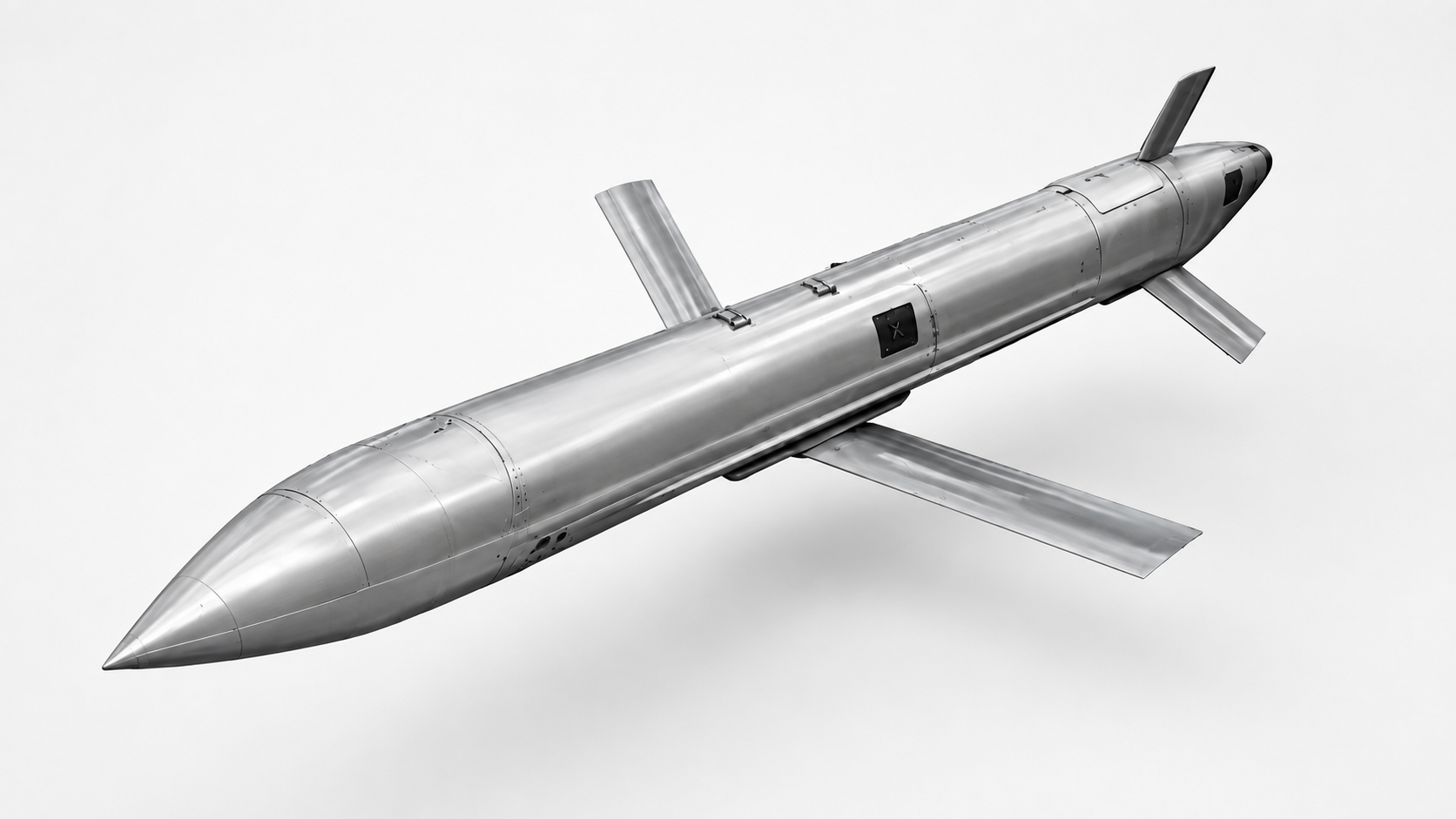
Russia plans to significantly ramp up production of the new «Dan-T» cruise missile and could produce around 10,000 such munitions by 2027. The new missile has a range of up to 500 km, a warhead weighing 135 kg, and can be launched from ground-based launchers as well as from aeroplanes and helicopters. The main threat is the possibility of a mass deployment of relatively cheap missiles to overwhelm Ukraine’s air defences.
Briefly about the main points
- Russia plans to manufacture around 10,000 «Dan-T» missiles in 2027.
- «The »Dan-T’ can be launched from ground-based installations, aeroplanes and helicopters.
- Russia is attempting to switch the missile to its own component base.
- «Dan-T» is approximately 35% cheaper than «Banderol».
Russia is preparing for mass production of the «Dan-T»
The Russian defence industry plans to produce around 10,000 promising «Dan-T» cruise missiles», which could be used to launch attacks on Ukrainian territory.
A Ukrainian veteran and military analyst has spoken of such plans war researcher, who shared new information on Russian munitions on X.
In his view, it is precisely the scale of production that could make the «Dan-T» one of the most serious aerial threats to Ukraine in 2027.
«In my view, in 2027 we should expect an extremely large number of problems from these cheap missiles, which are difficult to intercept. The Russians plan to produce around 10,000 “Dan-T” missiles alone in 2027,» the analyst noted.
This refers specifically to the stated Russian production plan. Actual production volumes will depend on the capacity of the factories, the supply of components and the pace of mass production.
What is known about the specifications of the «Dan-T» missile?»
According to kriegsforscher, The «Dan-T» has a range of around 500 km, and the weight of the warhead is approximately 135 kg.
These specifications enable the munition to be used to strike targets deep within Ukrainian territory.
The following are cited as potential targets for the missile:
- armoured vehicles;
- fortified field positions;
- light infrastructure facilities;
- other stationary and fortified targets.
At the same time, the key feature of the system is not only its range, but a large number of platforms available for launch.
As of August, according to available data, «Dan-T» can be deployed from both ground-based installations and aircraft.
The «Dan-T» can be launched by aeroplanes and helicopters
According to the analyst, the missile is being adapted for use with several types of Russian combat aircraft at once.
The following are cited as possible carriers:
- Su-25SM3;
- Su-30SM;
- Su-34;
- Su-57;
- the Mi-28 attack helicopter.
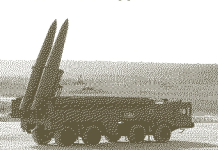
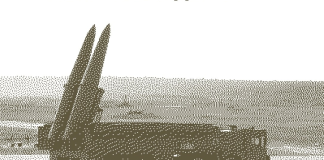
Separately, kriegsforscher shared an image of a probable the «Dan-T» ground-based launcher».
It is built on a wheeled vehicle chassis and is fitted with launch containers for two missiles.
It is the introduction of mobile ground-based launchers that could significantly expand the range of applications for this new munition.
In that case, Russia would not necessarily need to deploy combat aircraft for every launch. The missiles could be deployed across various sites and fired from a greater number of directions.
Why 10,000 missiles could pose a serious problem
The main threat posed by the «Dan-T» lies not only in the specifications of the individual missile.
If the Russian Federation is indeed able to scale up production to a level close to 10,000 units per year, this would mean the possibility of significantly increasing the intensity of missile attacks.
On average, such an annual plan would correspond to production of over 800 missiles a month, although the actual rate of production may be uneven.
The widespread use of cheaper ammunition poses a problem for air defence a separate problem: defenders have to spread their detection and interception resources across a much larger number of targets.
kriegsforscher himself draws attention specifically to the combination of two factors — low cost and ease of interception.
Therefore, the «Dan-T» could potentially be used not only on its own, but as part of combined attacks alongside other Russian air-attack assets.
Russia wants to switch to using its own components
The Deputy Head of the Main Intelligence Directorate of the Ukrainian Ministry of Defence had also spoken about the new missile previously Vadym Skibitskyi.
According to him, one of the key objectives of the Russian defence industry is to ensure that the «Dan-T» utilises Russian-made components to the greatest extent possible.
«The Russians are currently trying to switch entirely to components of their own manufacture. For example, one of the objectives for “Dan-T” is for the entire component base to be their own,» Skibitsky said in an interview on 10 August.
For Moscow, this is important primarily in terms of scaling up production and reducing dependence on imported components.
If Russian manufacturers manage to localise the main component base, this could simplify the mass production of large batches of missiles.
«Dan-T» is compared to the «Banderole» rocket»
In terms of its intended use and some of its characteristics, the «Dan-T» is similar to Russian ammunition S8000 «Banderol».
«The »Banderol« was also designed as a relatively compact, high-precision weapon and can be launched from the Mi-28 attack helicopter and the »Orion’ heavy drone.
However, according to the data provided, the Russian command is considering the possibility of moving, in the long term, to purchasing mainly «Dan-T» units, whilst gradually phasing out the use of «Banderole» units.
One of the main reasons is the price.
Based on available information, The price of «Dan-T» is approximately 35% lower, than in *Banderole*.
For weapons that are to be produced in the thousands, the difference in cost becomes of fundamental importance.
The missiles enhance the guidance system
Development of the «Dan-T» is still ongoing.
According to Table.Briefings, experts are working on equipping the missile the «Kometa-16» antenna array», as well as an electro-optical terminal guidance system.
This involves improving the systems that ensure navigation and accuracy during the final stage of the flight.
This suggests that Russia is attempting to transform the «Dan-T» not merely into a cheap, mass-produced munition, but into a fully-fledged, high-precision cruise missile that can be manufactured in large batches.
How «Dan-T» could change the nature of Russian attacks
If the announced production plan is implemented, Russia will be able to make much wider use of missiles of this class in 2027.
What makes «Dan-T» special is that it combines several features at once:
relatively low cost, a range of up to 500 km, a warhead weighing 135 kg, the ability to be launched from various platforms, and the prospect of large-scale production.
It is the quantity itself that may prove to be the decisive factor.
A single missile of this type does not represent a fundamentally new type of threat to Ukraine’s air defence. However, thousands of such munitions, which can be launched from ground-based mobile launchers and various types of aircraft, are capable of significantly increasing the burden on the air defence system.
Therefore, the proposed plan in 10,000 «Dan-T» units for 2027 It is significant, first and foremost, as an indication that Russia is relying on cheaper, mass-produced and as standardised as possible missile weapons.