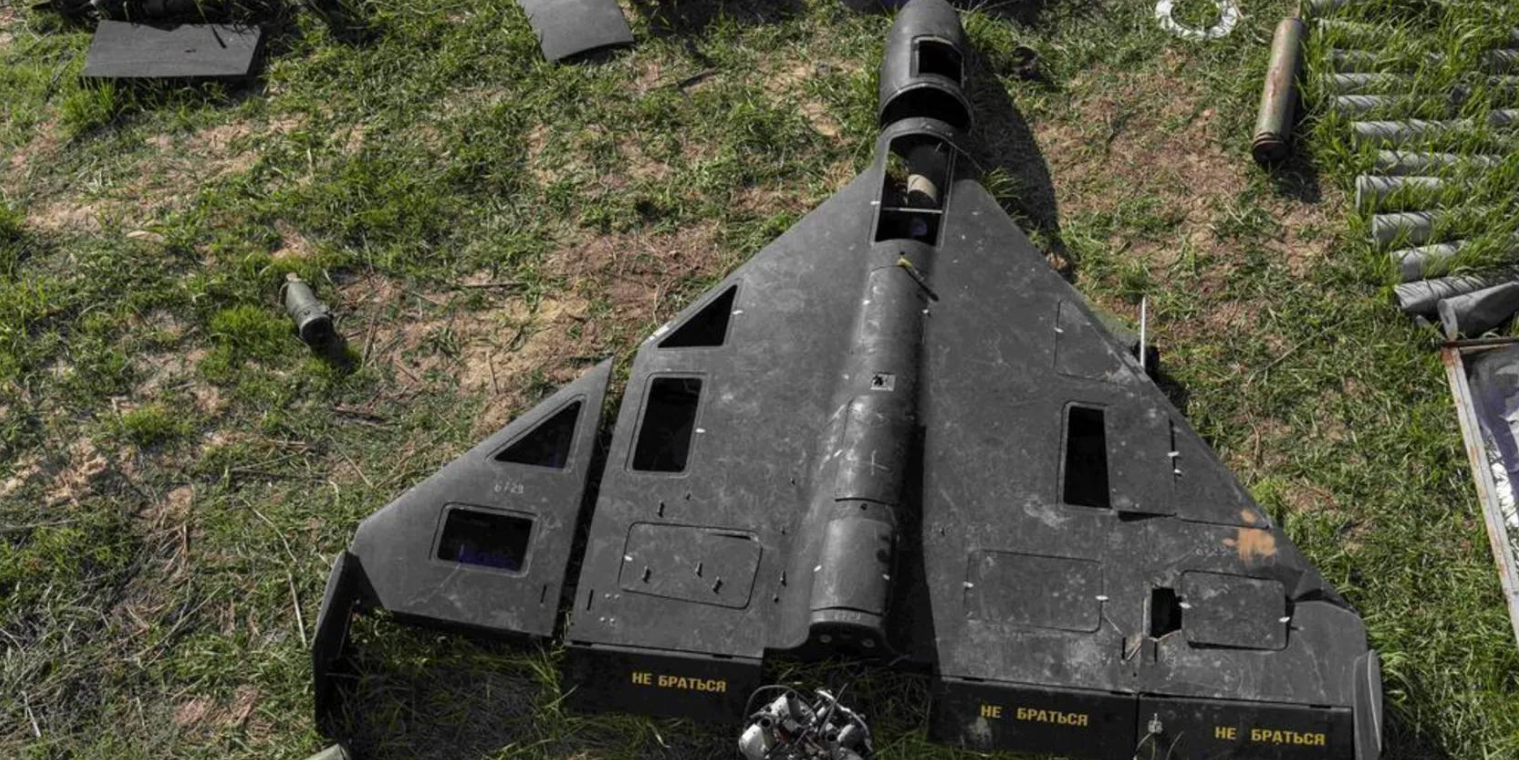
Russian jet-powered drones sometimes shut down their engines during the final stage of flight and continue towards their target by gliding. As a result, the characteristic sound of the drone approaching may suddenly disappear, although the aircraft itself remains in the air and poses a danger. This particular aspect of drone operation was noted by Serhiy Beskrestnov, an adviser to the President of Ukraine on defence technology development, known by the call sign «Flash». He suggested that this might be a method of achieving more precise guidance, though he did not rule out the possibility of a technical fault.
- Russian «Shahed» drones sometimes switch off their engines before impact and continue flying.
- Presidential adviser Sergei Beskrestnov announced this development as early as 26 September.
- It is not yet known whether this was a deliberate manoeuvre or a technical fault.
- The video that has been released shows a «Geran-4 Seeker» drone fitted with a camera and MESH antennas.
- The absence of engine noise does not mean that the aerial threat has passed.
How a drone continues to fly after its engine has been switched off
Unlike a normal descent, gliding allows the aircraft to continue moving forwards for a certain time thanks to its accumulated speed and the aerodynamic properties of its fuselage. Therefore, engine failure does not necessarily mean that the drone has lost control or is no longer capable of hitting its target.
According to observations Beskrestnova, some «Shahed» drones switch to this mode immediately before the attack. The expert suggested that this might be due to the need to reduce speed and approach the selected target with greater precision.
At the same time, he emphasised that there is no definitive answer. The engine shutting down could be either a programmed action or the result of a technical fault.
What is known about the Russian «Geran-4 Siker»?»
The video that has been released shows a drone which Beskrestnov identified as a «Geran-4 Seeker». According to him, the drone is equipped with a front-facing camera for target acquisition and two antennas MESH connectivity at the rear end.
One of the antennas points downwards, the other upwards. This configuration is used for data exchange via a radio network in which individual drones can communicate with one another.
Previously, an expert had reported on the emergence of «Geran-Siker» variants capable of using cameras and automatic guidance systems. This enables Russian forces to vary the nature of their attacks compared with drones that fly only along pre-programmed coordinates.
Why the absence of sound does not mean the danger has passed
A jet engine produces a distinctive noise, which people sometimes use to detect an approaching drone. If the engine stops, this clue may disappear, although the drone will continue to fly.
At the same time, the design does not make the aircraft completely silent: it still generates aerodynamic noise, the volume of which depends on speed and flight conditions.
For civilians, the main rule remains the same: you must not leave your shelter simply because you can no longer hear the sound of a drone. You should follow official announcements regarding air threats and the all-clear signal.