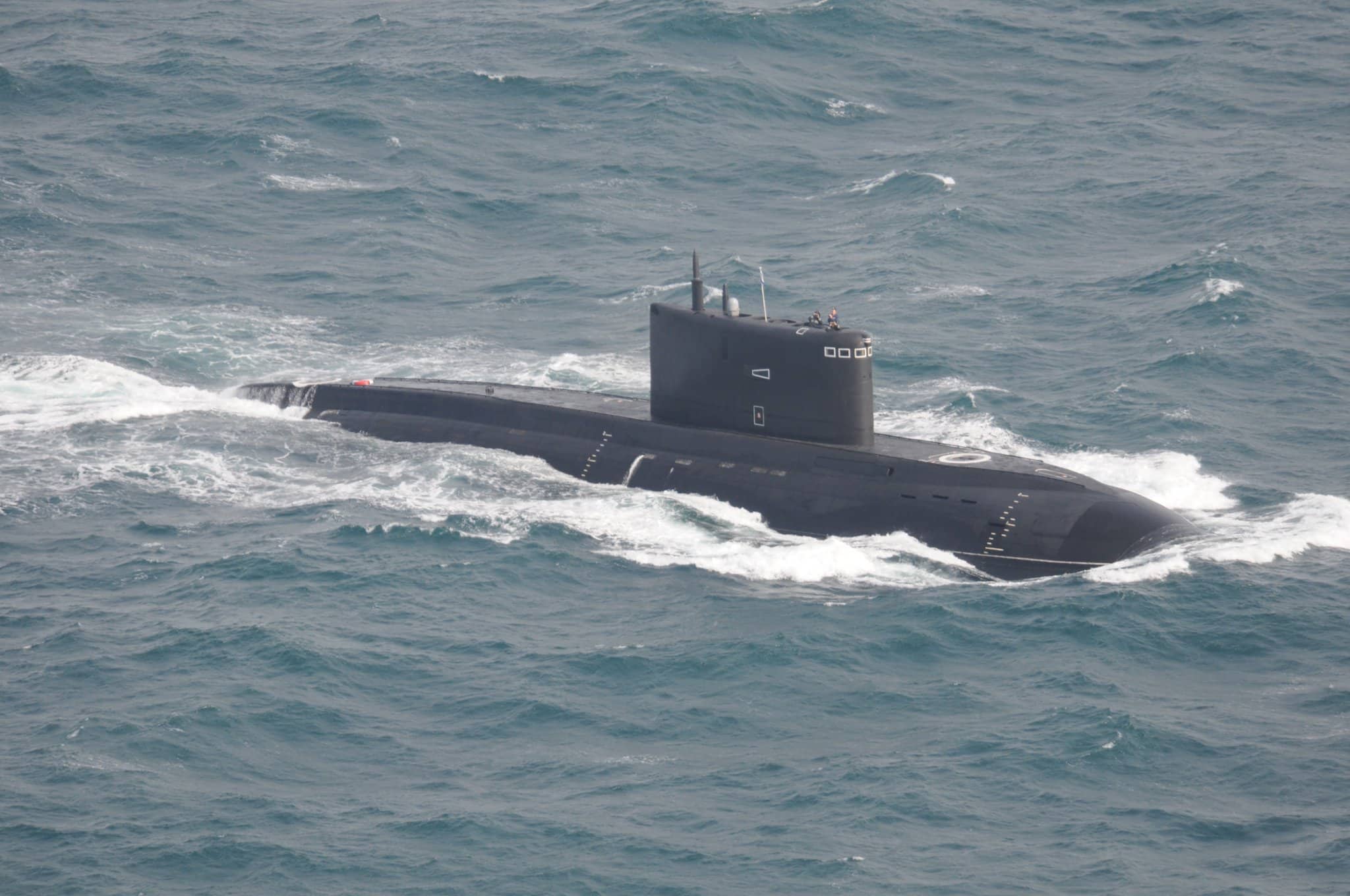
The UK has announced an investment of £90 million (approximately $121 million) in new maritime drones, sensors and artificial intelligence systems to counter Russian underwater threats. The decision was announced on 10 November 2026 by The UK Ministry of Defence. The Royal Navy will use the latest technology to track down Russian submarines and protect critical underwater infrastructure.
- The UK is investing £90 million in marine drones, sensors and artificial intelligence.
- The Atlantic Net system will help to detect Russian submarines in the North Atlantic.
- New technologies will be used to protect undersea internet cables and power grids.
- Ocean Infinity Solutions is set to become a partner of the Royal Navy, helping to create nearly 200 jobs.
- Atlantic Net’s first operational capabilities are scheduled to be launched in 2027.
How Britain will search for Russian submarines
A new surveillance system called Atlantic Net will be established as part of the wider Atlantic Bastion programme, which aims to strengthen the British naval presence in the North Atlantic.
The project involves the deployment of a network of autonomous maritime platforms, underwater sensors and artificial intelligence systems. These will collect and analyse information on the movements of underwater objects, helping the military to detect potential threats more quickly.
According to the British Ministry of Defence, the network will provide warships and Astute-class nuclear submarines with real-time data on the underwater situation.
Artificial intelligence will be used to process data from sensors and detect suspicious activity. At the same time, autonomous vessels will be able to patrol maritime areas without the constant presence of crews.
It is expected that such a system will improve surveillance capabilities and enable the military to respond more quickly to the dangerous approach of submarines to strategic sites.
Why is London stepping up protection of undersea cables?
У the British Government They attribute the new investments to the growing threats to North Atlantic infrastructure.
Cables run along the seabed, providing international internet connectivity, enabling financial transactions and facilitating the exchange of information between continents. In addition, power networks and pipelines have been laid underwater.
According to Reuters, Western officials have repeatedly warned of increased Russian activity near such sites.
In April 2026, the United Kingdom announced that it had deployed warships to deter Russian submarines which, according to London, had been operating near British waters for over a month.
At the time, the British authorities warned Moscow of the consequences of any attempts to damage undersea cables or pipelines. Russia denied the allegations.
In recent years, NATO countries have stepped up their monitoring of undersea communications due to the risks of sabotage and other hostile acts.
Who will be developing Atlantic Net and when will it be launched?
Luke Pollard, the UK Minister for Defence Readiness and Industry, announced the new investments during an international naval conference in Oslo on 10 November.
The Royal Navy plans to carry out the project in collaboration with the British company Ocean Infinity Solutions, which specialises in autonomous maritime technologies.
The framework agreement paves the way for an initial investment of £90 million. Its implementation is expected to help create nearly 200 skilled jobs.
During his speech, Pollard announced that Atlantic Net’s first operational capabilities are scheduled to be delivered as early as 2027.
The system will operate in conjunction with conventional warships and by submarines. It will be developed in cooperation with NATO allies and the Joint Expeditionary Force (JEF).
Consequently, as of 10 November, the UK had announced funding for the initial phase of Atlantic Net and identified an industrial partner. The full network has not yet been rolled out, but its first capabilities are due to become operational next year.