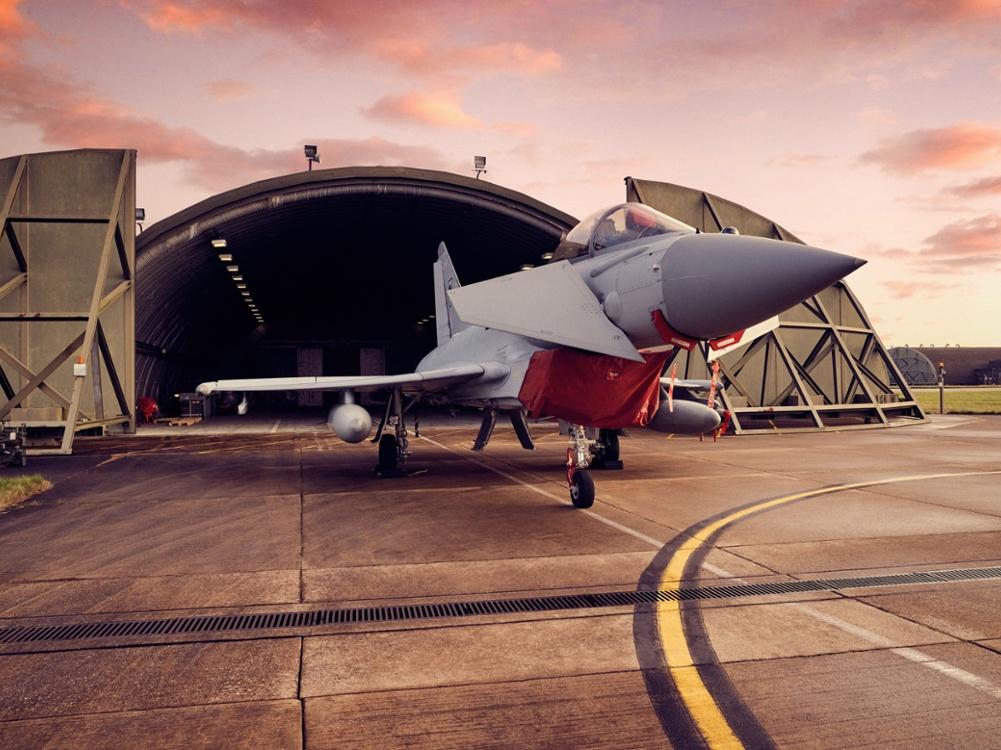
The Royal Air Force (RAF) has begun moving military aircraft into hangars and fortified shelters overnight due to the threat of drone attacks. This was reported by The Times and Sky News on 25 November 2026. According to journalists, the British military is also preparing additional protective measures for aircraft that remain out in the open.
Why has Britain started moving military aircraft into shelters?
According to The Times, Royal Air Force personnel at airbases across the country are moving aircraft into hangars and special protective shelters overnight. These measures are intended to reduce the risk of damage to aircraft in the event of a possible attack drones.
Particular attention is paid to aircraft parked in open areas near runways or at air bases where there are insufficient sheltered hangars.
Sky News journalists note that these decisions indicate a review of approaches to the security of military installations within the UK itself.
At the same time, Reuters reports that the British Ministry of Defence has not provided an immediate comment on the reports. Consequently, the details of the new measures are currently based on media reports rather than on official confirmation from the ministry.
The British military plans to use anti-drone nets
In addition to moving the aircraft to shelters, British military Preparations are being made to install special nets to protect aircraft that cannot be housed in hangars.
According to The Times, this refers, in particular, to nets made of Kevlar — a strong synthetic material used in protective equipment.
Such structures are already widely used in Ukraine to protect military equipment, transport routes and critical infrastructure from Russian drones.
Nets create a physical barrier that can prevent a drone from striking the protected object directly. At the same time, their effectiveness depends on the type of drone, the munition and the design of the protective structure itself.
It is not yet clear how many British air bases will receive such systems, or when their installation will be completed.
Threats to British air bases are on the rise
Reports of tighter security measures for aircraft emerged following a series of incidents relating to the security of UK military installations.
In November, the US military responded to suspected unauthorised drone activity near the air base RAF Lakenheath, where US forces are stationed.
The United States had previously relocated some of its military aircraft from RAF Mildenhall to other bases following reports of a potential security threat.
Another incident concerned RAF Fairford. In October, the US President Donald Trump stated that, due to the threat attributed to Iran, American B-1 bombers had been withdrawn from this airbase.
However, reports of potential threats do not mean that Iran’s or other states’ involvement in every incident has already been proven.
Separately, on 24 November, the British counter-intelligence agency MI5 and the Ministry of Defence warned companies supplying military equipment to Ukraine of an increased risk of sabotage by Russia.
The Royal Air Force is preparing for possible attacks on its own territory
Commander-in-Chief of the Royal Air Force, Air Chief Marshal Sir Garv Smith, stated that it was necessary to practise the rapid redeployment of military aircraft between different air bases.
This involves preparing for a situation where military aircraft will be unable to remain permanently at several large bases due to the risk of attack.
Spreading out the aircraft makes it more difficult for the enemy to destroy or damage a significant number of aircraft at the same time.
According to the commander, the RAF must be prepared to operate in circumstances where even its own territory will not guarantee the safety of military aircraft.
As of 25 November, it is reported that aircraft have been moved to secure shelters, whilst the installation of anti-drone nets is currently in the preparatory stage. The British Ministry of Defence has not yet published a full list of airbases where the new measures are being implemented.