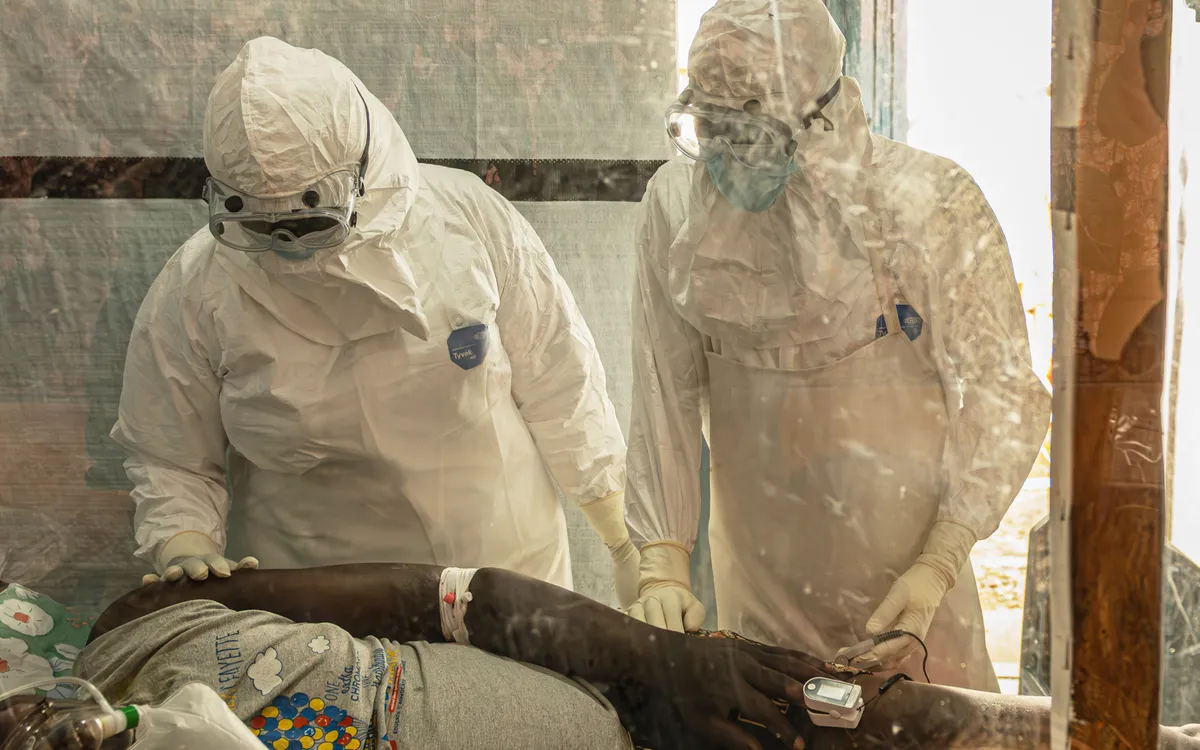
In the Democratic Republic of the Congo, the death toll from Ebola has reached 5,387, whilst the number of confirmed cases has exceeded 11,000. This is the deadliest outbreak in the country’s history and the second largest in the world. The epidemic has spread to eight Congolese provinces and has spread to other African countries. Efforts to contain the virus are being hampered by armed conflict, a lack of medical care and attacks on healthcare workers.
- In the Congo, 11,042 cases of Ebola and 5,387 deaths have been confirmed.
- This is the deadliest Ebola outbreak in the history of the Democratic Republic of the Congo.
- The disease has spread to eight provinces and has spread beyond the country’s borders.
- Fighting and attacks on medical staff are hampering the fight against the virus.
- There is currently no specifically approved vaccine against the Bundibugyo virus strain.
The number of Ebola cases in the Congo has exceeded 11,000
According to the latest figures from the Congolese Ministry of Health, There are 11,042 confirmed cases of infection in the country and 5,387 deaths. The proportion of fatal cases amongst confirmed cases is approximately 49 per cent.
The outbreak was declared on 15 May 2026. Since then, the disease has spread to eight of the country’s 26 provinces. The situation is most serious in Ituri and North Kivu, where the virus continues to spread amongst the local population.
In terms of scale, the current epidemic is second only to the 2014–2016 outbreak in West Africa, when over 28,000 people fell ill and more than 11,000 died.
Hostilities are hampering efforts to tackle the epidemic
One of the main reasons for the rapid spread of Ebola remains the complex security situation in eastern Congo.
In the provinces of Ituri and North Kivu, armed clashes are restricting healthcare workers’ access to communities. Some patients are unable to receive timely treatment, whilst healthcare facilities are operating with a shortage of staff and resources.
The situation is exacerbated by a lack of trust in healthcare professionals. In a number of communities, there have been reports of attacks on healthcare workers and healthcare facilities, caused by misinformation and fear of the disease.
The World Health Organisation has previously reported that a significant proportion of deaths occur outside specialist treatment centres. This points to problems with the timely identification of infected people and access to care.
The virus has spread to other African countries
The current outbreak is caused by a variant of the virus Ebola Bundibugyo. Unlike the Zaire strain, for which there are approved vaccines and specific treatments, no such treatments are currently available for Bundibugyo. Treatment is primarily focused on supporting the body’s vital functions.
Cases linked to the outbreak have already been recorded in Uganda, Kenya and Nigeria. In Kenya, the last Ebola patient was discharged on 11 November, after which a 42-day observation period began, which is required before the outbreak in the country can be declared over.
According to the European Centre for Disease Prevention and Control, the likelihood of infection amongst the population of EU countries remains very low. At the same time, health authorities continue to monitor potential cases of the infection being brought into the country.