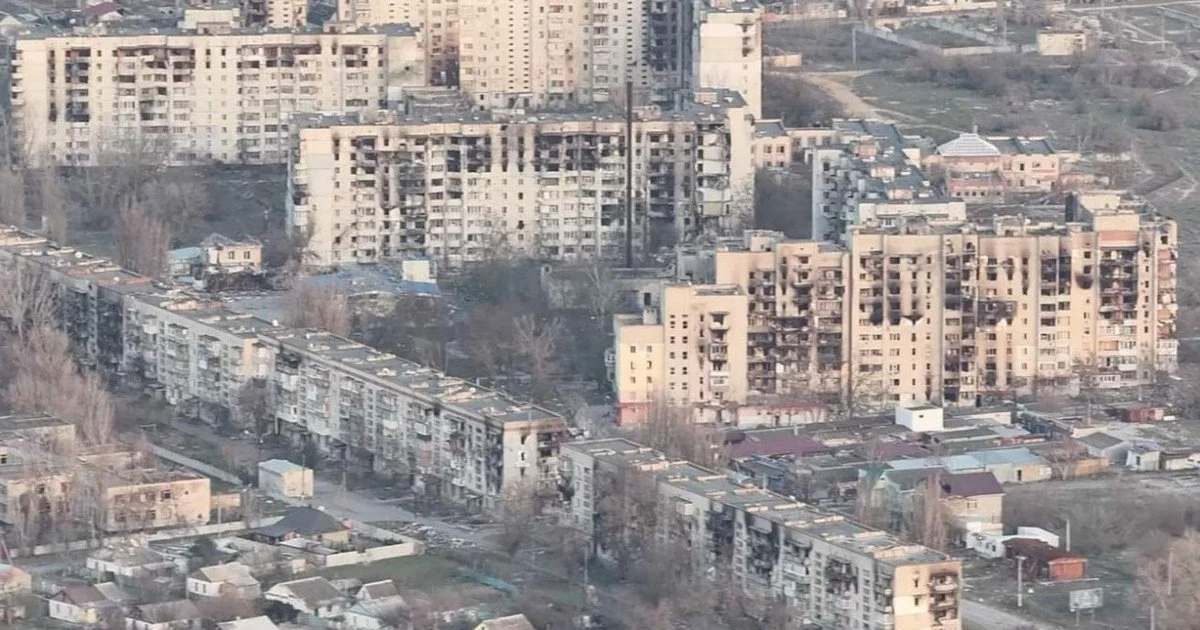
The European Union has called for immediate, safe and unhindered access for humanitarian aid to the temporarily occupied town of Oleshky in the Kherson region. Aja Labib, European Commissioner for Preparedness, Crisis Management and Equality, stated that civilians continue to lack adequate access to food, medicines, clean water and basic assistance. According to estimates by the Ukrainian authorities, there are around 2,000 people in Oleshky itself, including dozens of children.
- The EU has called for urgent humanitarian access to the occupied town of Oleshky.
- Around 2,000 people in the city remain without a reliable supply of food, water and medicines.
- The EU’s humanitarian partners are ready to deliver aid, but require safe access.
- The EU is demanding that civilians be allowed to leave the city.
The European Commission has described the situation in Oleshky as unacceptable
European Commissioner Adja Lyabib On 2 October, she stated that the situation in the occupied town of Oleshky was a cause for serious concern. According to her, civilians had effectively been cut off from basic resources — food, medicines, drinking water and medical care.
The EU has stated that it is in contact with its partners and is using all available channels to organise aid for people in the temporarily occupied territories. Humanitarian organisations are ready to deliver essential supplies, but to do so they need safe, stable and effective access to the area.
Separately, officials in Brussels emphasised that civilians must be allowed to leave the danger zone.
Around 2,000 people remain in Oleshky
According to estimates by the Ukrainian authorities, there are still approximately 2,000 civilians, including around 50 children. Before the full-scale invasion, the town had a population of around 24,000.
The European External Action Service cites a broader figure: up to 6,000 civilians, including more than 180 children, may remain in communities near the front line in the occupied part of the Kherson region, including Oleshky. In other words, this figure does not relate solely to the town itself.
The UN Monitoring Mission had previously reported a severe shortage of food and medical supplies in Oleshky and neighbouring communities. Evacuation and the delivery of essential supplies are further complicated by landmines, hostilities and the constant threat of drones.
Ukraine is delivering aid using drones
Due to the lack of proper land-based humanitarian access, Ukraine is using heavy drones to deliver supplies across the Dnipro. The Ukrainian military and local authorities have delivered to Oleshky approximately 4 tonnes of food and medicines, having dropped off cargo at around 100 locations.
The Ukrainian side claims that the Russian military is obstructing such operations, in particular by shooting down cargo drones and blocking the evacuation of residents. The Russian side acknowledged critical supply problems in the city, but blamed Ukraine for the situation. Independent verification of specific claims from within the occupied city is significantly hampered.
The EU reminds Russia of its obligations as an occupying power
The European Commission’s statement explicitly emphasises that Russia, as an occupying power, has obligations under international humanitarian law. These include protecting the civilian population, facilitating humanitarian aid and ensuring people’s access to essential resources.
The EU has called for safe and unhindered humanitarian access, as well as arrangements for the evacuation of those who wish to leave the city.
Oleshky has been under Russian occupation since 2022. The situation there deteriorated sharply after the destruction of the Kakhovka Hydroelectric Power Station in June 2023, and by 2026 regular supplies of food and medicines had effectively come to a halt. According to international organisations and the Ukrainian authorities, the humanitarian situation continues to deteriorate as winter approaches.