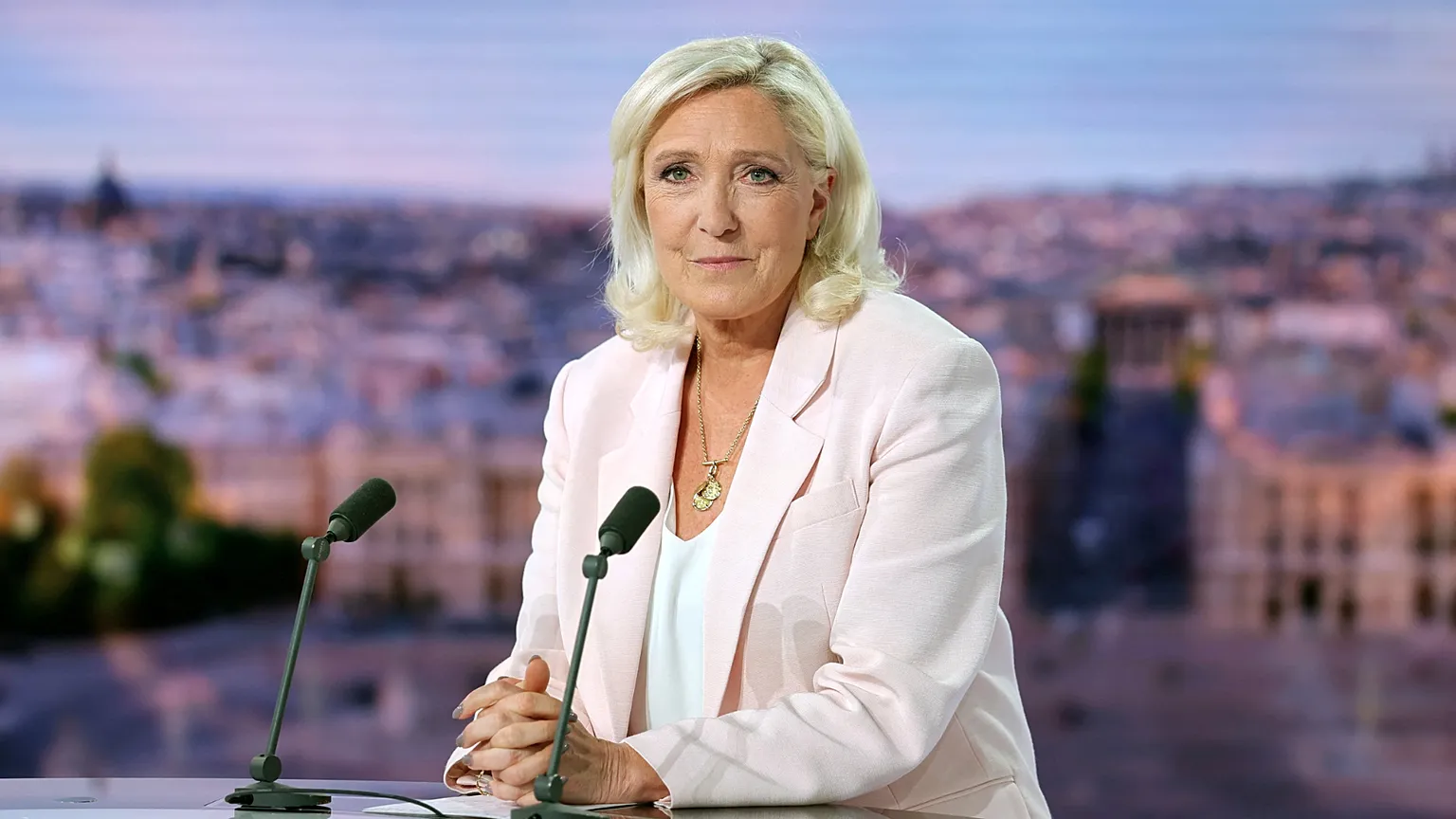
One of the leaders of the French far-right «National Rally» Marine Le Pen stated that, due to the state of public finances, France can no longer provide financial assistance to Ukraine at the current levels. At the same time, she spoke in favour of continuing the training of Ukrainian military personnel and the supply of weapons, and emphasised that her position, as she put it, was not directed against Ukraine. Le Pen made these remarks during a broadcast on LCI.
- Le Pen has called for a reduction in financial aid to Ukraine.
- She cited France’s financial situation as the reason.
- She proposes that arms supplies should continue.
- The current French government continues to support Ukraine.
What Marine Le Pen said
Marine Le Pen drew a distinction between financial and military aid to Ukraine. She stated that Paris could continue to train Ukrainian military personnel and supply equipment for the country’s defence.
However, the direct financial support The politician considers this, on its current scale, to be an excessive burden on the French budget.
«But from a financial point of view, we can’t go on like this,» said Le Pen.
She specifically emphasised that, in her view, this position, «is not an act of hostility towards Ukraine».
Le Pen is calling for negotiations on the war
A representative of the «National Union» also continues to promote the idea of a diplomatic settlement to the Russian-Ukrainian war. She advocates holding a major international conference, the aim of which, she says, is to find a diplomatic way to end the hostilities.
Le Pen’s stance on Russia and Ukraine has long been a subject of political controversy in France. Her opponents, in particular, point to her meeting with Vladimir Putin at the Kremlin during the 2017 presidential campaign.
Budgetary problems have indeed become more acute in France
Le Pen’s statement came against the backdrop of a deterioration in France’s public finances.
On 11 September, the Minister of Finance Roland Lescure stated that the government has lowered its economic growth forecast for 2026 from 0.7% to 0.5% and expects the country to fail to meet its target of reducing the budget deficit to 5% of GDP.
France’s public debt servicing costs this year are estimated at approximately €65 billion, which is €4.5 billion more than planned. The cost of borrowing for Paris has also risen on the financial markets.
These figures confirm the existence of fiscal pressure; however, Le Pen’s conclusion that aid to Ukraine, in particular, should be cut is a matter of her political stance.
The current French government continues to support Ukraine
Official Paris is currently taking a different line. On 15 September, the French Ministry of the Armed Forces reaffirmed its continued support for Ukraine and announced its intention to strengthen defence cooperation, particularly in the field of unmanned aerial vehicles and military technology.
According to the Ukrainian Ministry of Finance, the total amount of French aid from the start of the Russian Federation’s full-scale invasion until September 2026 reached €7.9 billion, of which €400 million is direct bilateral budgetary support.
Furthermore, as at 1 July, France had allocated more than €471 million in humanitarian aid for Ukraine.
Le Pen’s statement therefore does not signify a change in France’s current government policy towards Ukraine. It reflects the position of one of the country’s key opposition figures in the run-up to the 2027 presidential election.