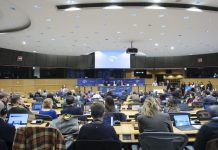
The President of the European Commission, Ursula von der Leyen, delivered her annual State of the European Union address to the European Parliament in Strasbourg on 16 September. She stated that the EU is today both «stronger» and «more vulnerable» than ever before, as it finds itself in «an openly hostile world». Key initiatives include a new framework for relations with Canada, the establishment of a European Security Council, continued support for Ukraine, tighter regulation of social media for children, and changes to economic and energy policy.
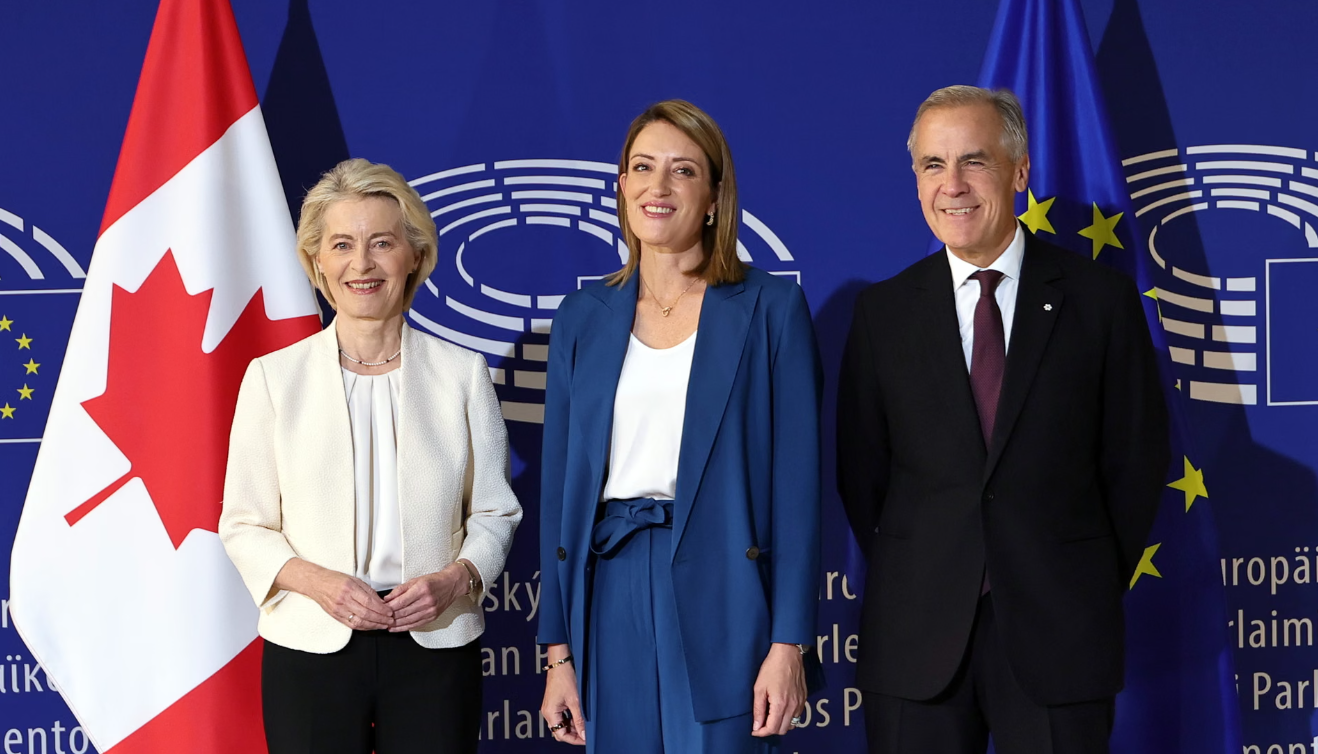
- Von der Leyen has proposed that Canada become the EU’s first «associated member».
- The European Commission wants to establish a European Security Council and a new mechanism for responding to drones, acts of sabotage and cyber-attacks.
- The President of the European Commission has confirmed continued support for Ukraine and an intensification of pressure on Russia.
- The EU is preparing stricter restrictions on children’s access to social media and other online platforms.
Canada may be granted special status within the EU
One of the most high-profile statements Ursula von der Leyen A proposal was put forward to give Canada the opportunity to become the first «associate member» the European Union.
Such a status is not currently provided for in EU treaties, and its introduction will therefore require specific political and legal decisions. Von der Leyen emphasised that Europe and Canada share similar views on democracy, artificial intelligence, climate, geopolitics and critical raw materials.
Canada and the EU are already strengthening their cooperation in the fields of defence, technology, trade and security. The Prime Minister of Canada Mark Carney has arrived in Europe and is due to address the European Parliament.
The European Security Council and the threat from Russia
A significant part of the speech was devoted to security. von der Leyen proposed setting up The European Security Council, which could be joined not only by EU members but also by partners, including Ukraine, the United Kingdom, Canada and Norway.
She also called for the establishment of a mechanism for emergency consultations in cases where a state faces a serious threat that does not yet constitute direct military aggression.
This refers to the intrusion of drones, acts of sabotage, cyber-attacks and other hybrid operations. The mechanism’s operating principle will bear some resemblance to consultations under Article 4 of the NATO Treaty.
Von der Leyen also reaffirmed continued support for Ukraine and stressed the need to counter the Russian threat and strengthen Europe’s ability to guarantee its own security independently.
The EU is set to tighten the rules for social media platforms
Another major initiative concerns children and digital platforms.
The European Commission is proposing to significantly restrict minors’ access to social media, online games and certain chatbot services. The strictest restrictions are planned for children under 13, whilst users aged between 13 and 15 will be able to access these services under specific rules and under the supervision of their parents or guardians.
Von der Leyen stated that platforms with algorithms designed to maximise user engagement could, in effect, «rob children of their childhood».
The new rules still have to go through the legislative process in the EU.
China, Europe’s energy sector and economy
In the economic section of her speech, von der Leyen called for the completion of the reform of the single European market, the simplification of the business environment and the acceleration of innovation.
She paid particular attention to trade relations with China. According to the President of the European Commission, the current imbalance is unsustainable, and the EU intends to use the tools at its disposal to reduce it.
Brussels also plans to accelerate the electrification of the economy and reduce dependence on external suppliers of energy, technology and critical materials.
Artificial Intelligence and the Climate
Separately, von der Leyen called for the development of «AI with human agency», under which people will retain control over key decisions.
She also emphasised the need to discuss the risks posed by the most powerful artificial intelligence models with leading technology companies and to strengthen international cooperation in the field of AI security.
Another priority will be preparing Europe for extreme heat, wildfires and other consequences of climate change. von der Leyen emphasised that adapting to new climatic conditions must become just as important a priority as reducing emissions.
Von der Leyen criticised Serbia
During her speech, the President of the European Commission also referred to the funeral of a man convicted of war crimes Ratko Mladić in Belgrade.
She stated that there is no place in the European Union for the glorification of war criminals. Mladić’s funeral took place in the presence of Serbian officials and with military honours, a move which had previously drawn public criticism from the EU leadership.
Ultimately, von der Leyen’s speech set out a course towards a significantly more independent Europe — with strengthened defence mechanisms, new alliances, stricter regulation of technology platforms and less dependence on external powers in strategic sectors.