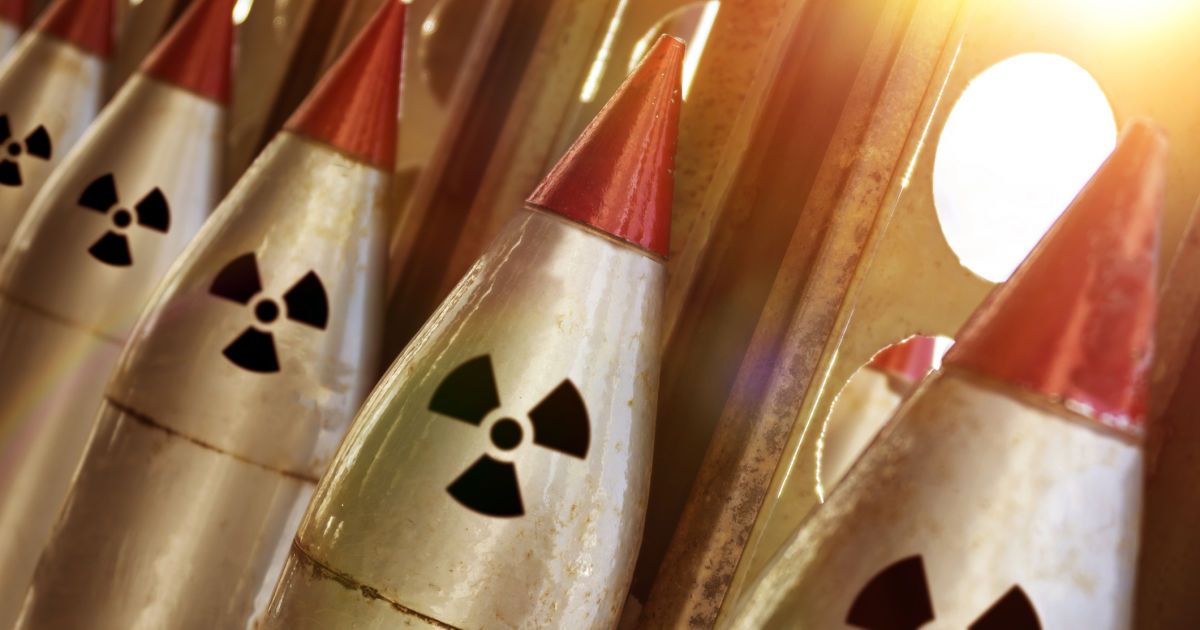
On 22 September, the Lithuanian Seimas supported, at the deliberation stage, the repeal of Article 137 of the Constitution, which prohibits the deployment of weapons of mass destruction and foreign military bases in the country. Ninety-nine MPs voted in favour of the initiative, 13 voted against, and a further five abstained. The amendment could open up the legal possibility for the deployment of NATO nuclear weapons, but no such decision has been taken.
Briefly about the main points
- The Sejm has backed a motion to repeal Article 137 of the Constitution.
- The initiative was approved by 99 MPs, with 13 voting against it.
- Two more votes are required to amend the Constitution.
- The amendment does not imply the automatic deployment of nuclear weapons.
- The authors attribute the changes to security risks posed by Russia.
Which provision is being proposed for removal from the Constitution?
Article 137 stipulates that there must be no weapons of mass destruction or military bases of foreign states on the territory of the Republic of Lithuania. Its scope is absolute: the provision in force contains no exceptions, including for the purposes of NATO’s collective defence.
The initiative specifically concerns the removal of this constitutional obstacle. It does not constitute a decision on the deployment of any weapons or foreign forces within the country.
Two further constitutional votes are required for the amendment
Following approval at the deliberation stage, the bill must undergo two further votes, with at least three months elapsing between them. At each stage, the amendment must be approved by at least two-thirds of the Sejm’s full complement — no fewer than 94 out of 141 MPs.
Speaker of Parliament Juozas Olekas He announced that the first of these votes is scheduled for 6 October. The final vote is tentatively scheduled for 12 January 2027.
The authors link the amendment to the Russian threat
In the explanatory memorandum, the authors of the bill refer to Russia’s full-scale aggression against Ukraine and the escalation nuclear rhetoric Moscow and the modernisation of its nuclear forces. Other factors cited include the development of military infrastructure in the Kaliningrad region and the Russian military presence in Belarus.
According to the proponents, the constitutional ban should not restrict Lithuania’s ability to utilise the Alliance’s full deterrent potential in the event of a threat of aggression or war. Social Democrat Remigijus Motuzas stated during the debate that lifting the restriction should demonstrate to allies and potential adversaries the country’s readiness to be a full part of NATO’s nuclear deterrence.
Legal authorisation does not equate to the deployment of ammunition
Even the definitive removal of Article 137 would not mean that nuclear weapons would automatically appear in Lithuania. It would merely remove the constitutional ban which currently makes such a scenario legally impossible.
Lithuania remains a party to international treaties on the non-proliferation and control of nuclear, chemical and biological weapons. The actual deployment of nuclear weapons would require specific political and military decisions by Vilnius and its NATO allies.
The argument about NATO and Moscow’s reaction
The explanatory note identifies Lithuania as the only NATO member state with a constitutional ban of this nature. Latvia, Estonia and Poland have no such constitutional or legislative restrictions; Finland is also mentioned, where in June 2026 the parliament amended legislation that had restricted the presence of nuclear weapons on the country’s territory.
Kremlin spokesperson Dmitry Peskov had previously stated that the possible deployment of allied nuclear weapons would make Lithuania a target for Russian nuclear forces. Former Russian President Dmitry Medvedev also issued threats against the country over the debate on nuclear deterrence. Lithuanian politicians described these statements as a form of pressure and pointed out that the country is already part of NATO’s collective defence system.