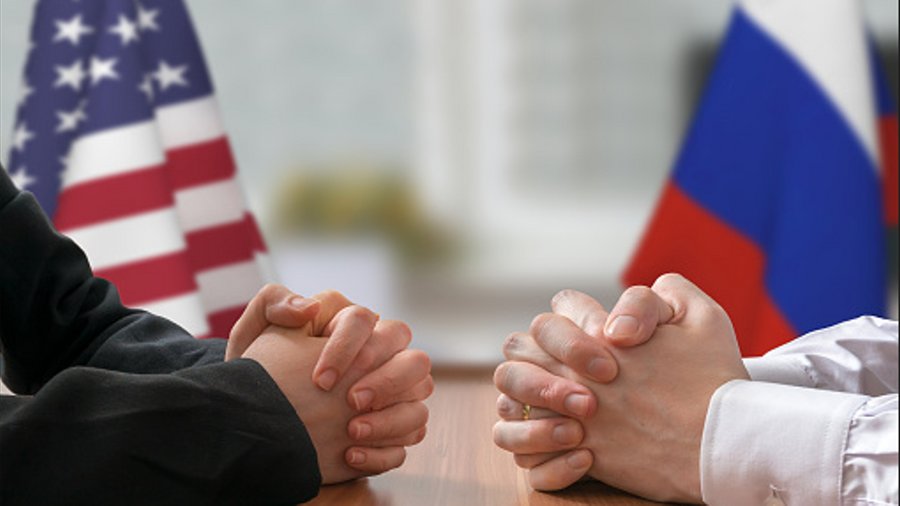
Negotiations between US President Donald Trump’s administration and Russia regarding an end to the war against Ukraine have centred on the possible sale of Lukoil’s international assets, according to The New York Times; key details were confirmed by Reuters. The portfolio includes oil fields, refineries and petrol station networks. The potential deal brings together negotiations, Washington’s sanctions policy and the Russian oil industry.
Briefly about the main points
- Putin raised the issue of assets during his meeting with Witkoff and Kushner.
- The Financial Times estimated Lukoil’s overseas portfolio at $20 billion.
- Lukoil’s deal with Carlyle does not rule out negotiations with other buyers.
- Todd Boeli’s consortium has brought on board the DFC and investors from the Gulf states.
- A change of ownership requires approval from OFAC.
Moscow linked the sale to future business ties
According to the NYT, Vladimir Putin personally raised the issue of a possible sale on 5 September during a meeting at the Kremlin with Steve Witkoff і Jared Kushner. Moscow presented this operation as an example of how, following a political settlement, Russia and the US could resume large-scale business ties.
The meeting lasted over three hours. Reuters reported at the time that the participants had discussed options for ending the war, economic cooperation and major bilateral projects, but no breakthrough in the negotiations was announced.
The non-exclusive agreement with Carlyle is subject to OFAC’s decision
This refers to LUKOIL International GmbH, through which the Russian company owns a significant proportion of its business outside Russia. «Lukoil»announced the sale of its international portfolio in October 2025 following the imposition of Western sanctions.".
In January 2026, the company signed an agreement with the US investment group Carlyle. It is not an exclusive agreement: Lukoil has stated that it is continuing negotiations with other potential buyers. The sale requires approval from the US Treasury Department’s Office of Foreign Assets Control (OFAC).
The Boeli consortium has emerged as a rival to Carlyle for the portfolio
One of Carlyle’s main competitors is a consortium led by an American businessman Todd Boeli. The Financial Times reported that the US International Development Finance Corporation — a US government-owned financial corporation — as well as investors from the UAE and Qatar had joined his proposal.
The FT classified organisations linked to the sheikh as part of its Middle Eastern branch Tahnoun bin Zayed Al Nahyan, and the family business Al-Hayat. The publication also noted that certain investors have business ties to projects linked to Jared Kushner and Steve Witkoff’s family.
According to the US Federal Election Commission, on 31 December 2025, Boeli transferred $1 million to MAGA Inc. — a political action committee that supports Trump. The FT reported on competitors’ concerns regarding the potential dual role of the DFC as a co-investor and OFAC as the body responsible for granting sanctions exemptions.
Sanctions authorisation remains a tool in Washington’s arsenal
In October 2025, the US imposed blocking sanctions against Lukoil and «Rosneft». The US Treasury Department explained this move as an effort to increase pressure on the Russian energy sector, reduce the Kremlin’s revenues and encourage Moscow to end the war.
At the end of September, Putin’s special representative Kirill Dmitriev He met with US officials in the United States. According to a US administration spokesperson, they discussed both the war against Ukraine and possible joint energy projects following the end of hostilities.
The sale of the international business does not in itself mean that the sanctions against Lukoil will be lifted. At the same time, Washington’s control over the OFAC licence gives the US the ability to influence the structure and terms of a potential deal, whilst the company continues to seek buyers.