The Russian Government has earmarked 17.954 billion roubles for the period 2027–2029 for the national project «New Technologies for Health Preservation», which includes research into ageing, tissue bioprinting and technologies for active longevity. The Wall Street Journal linked the development of this area to Vladimir Putin’s personal interest; however, the programme is not identified in the documents as a personal project of the president.
Briefly about the main points
- A total of 17.954 billion roubles has been earmarked for the Russian Federation’s national healthcare project up to 2029.
- The programme covers bioprinting, regenerative medicine and research into ageing.
- The WSJ reported on Putin’s personal interest in combating ageing.
- Putin’s conversation with Xi centred on the prospect of living to the age of 150.
- There are plans to reduce the Russian Federation’s overall expenditure on healthcare.
The project budget and the programme’s official objective
According to The Moscow Times, expenditure on the national project is set to rise from 5.171 billion to 5.737 billion roubles in 2027. In 2028, they are expected to amount to 6.495 billion roubles, and in 2029 — 5.782 billion roubles.
Official documents from the Russian Federation government list preventive medicine, longevity technologies, regenerative biomedicine, as well as biomedical and cognitive technologies as areas covered by the project. The stated objective is to achieve technological sovereignty in the fields of medical technology, pharmaceutical production and medical devices.
Funding for bioprinting, preventive medicine and research into ageing
In 2027, 1.129 billion roubles are earmarked for the «biomedical and cognitive technologies of the future» programme. Part of this sum has been allocated to specific areas of research.
288 million roubles have been earmarked for bioprinting — technologies for creating tissues and, potentially, organs. 625.4 million roubles are to be allocated to preventive medicine technologies for «active and healthy longevity», whilst 137.4 million roubles are to be allocated to research into the causes of ageing.
WSJ In May, it reported that Russian research programmes in this field encompass gene therapy, bioprinting, transplant technologies and experiments involving the cultivation of organs in genetically modified animals. The publication named the daughter of one of the people involved in this field Maria Vorontsova (Putin) and the director of the Kurchatov Institute Mykhailo Kovalchuk.
- 288 million roubles — for bioprinting
- 625.4 million roubles — for preventive healthcare to promote longevity
- 137.4 million roubles — to investigate the causes of ageing
What is known about Putin’s interest in prolonging life
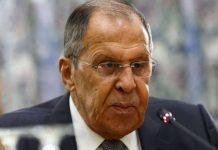
The WSJ linked large-scale studies into longevity in Russia to a personal interest Putin in the fight against ageing. At the same time, the stated objectives of the national project go beyond this topic and relate to the development of medical technologies.
In September 2025, during a parade in Beijing, a conversation between Putin and the President of the People’s Republic of China was broadcast live due to a microphone being left on Xi Jinping. The Russian President’s interpreter spoke about the development of biotechnology and the possibility of repeatedly replacing human organs.
Xi replied that, according to some forecasts, people in this century could live to be 150 years old. Putin later confirmed to journalists that they had discussed life extension. The claim about his the intention to live for 200 years Neither the budgetary documents nor the content of this conversation corroborate this.
Separate funding against a backdrop of cuts to healthcare spending
Funding for the national project forms part of a wider plan to review Russian government expenditure. According to Reuters, the Russian Federation’s total healthcare expenditure in 2027 is set to be cut by 6.8% compared with the previous plan.
At the same time, defence spending is set to rise by approximately 27% — to 17.1 trillion roubles. Reuters described this as Russia’s highest level of defence spending since the start of the full-scale war against Ukraine. The budget also provides for cuts in spending on social policy and education.